Engineering Reference
Feedwater quality is the engineering input that directly drives a steam humidifier's service life, maintenance frequency, production stability and steam purity. No single parameter is meaningful alone, pH, hardness, TDS, conductivity, alkalinity, chloride and silica together describe the feedwater profile. This guide defines all seven parameters in engineering terms; explains how they affect electrode and resistive units differently; and summarises the NKT Nem Kontrol Teknolojileri field process from water analysis to equipment selection.
Why Water Quality Is Critical
In a steam humidifier, water is not a passive raw material. Depending on the device's working principle it is either an active electrical component (electrode architecture) or the engineering input that bounds scaling, corrosion and steam purity (resistive architecture). For that reason, the "water is water, any source will do, no problem" assumption fails frequently in the field.
The thermodynamic reality of evaporation does not change: when 1 L of water evaporates, only H₂O leaves with the air mass. All dissolved salts, ions, minerals and organics remain at the chamber bottom. So each 1 L of 14 fH water leaves roughly 140 mg of CaCO₃ + additional minerals; a 50 kg/h unit running 24 h processes ≈ 1,200 L and produces ≈ 168 g of scale; the typical annual accumulation is in the 50 kg range.
That accumulation either stays on chamber surfaces (planned maintenance) or is removed via drain / blowdown (water waste + heat loss). Which mechanism dominates depends on which parameters break which limits. Each of the seven water parameters enters this equation through a different mechanism.
What Is pH and What It Affects
pH is the measure of water's acidity or basicity. Defined on the logarithmic 0–14 scale: pH = 7 is neutral; below 7 is acidic, above 7 is basic. For steam humidification the ideal range is 6.5–8.5 (near-neutral). Turkish mains water typically falls in the 7.2–7.8 band.
pH Impact in a Steam Humidifier
- pH < 6.5 (acidic): Corrosion of stainless chamber and immersed resistive elements accelerates. Combined with chloride, raises stress-corrosion (pitting) risk.
- pH 6.5–8.5 (ideal): Balanced corrosion, controlled scale deposition. The standard operating band.
- pH 8.5–9.0 (mildly basic): Scale (CaCO₃) deposition accelerates. Softener outlets can cross into this band.
- pH > 9.0 (high basic): Mineral deposition and foaming risk increase. Some well waters or misadjusted softeners show this profile.
pH's Relationship with Other Parameters
pH is closely linked to alkalinity; water with high alkalinity typically holds pH above 8.0. When pH and hardness are evaluated together, the Langelier Saturation Index (LSI) can be calculated, this index indicates whether the water is corrosive or scale-forming. For steam humidification, an LSI between -0.5 and +0.5 is preferred; outside that window, scaling or corrosion accelerates.
What Is Water Hardness?
Water hardness is the combined concentration of calcium (Ca²⁺) and magnesium (Mg²⁺) ions in the water. Turkey uses the French degree (fH); 1 fH = 10 mg/L CaCO₃ equivalent. German (dH) and Anglo-Saxon (gpg) conversions differ.
| Hardness Class | fH | dH | mg/L CaCO₃ | Steam Humidification Profile |
|---|---|---|---|---|
| Very soft | 0–4 | 0–2 | 0–40 | RO/DI or softener outlet. Electrode does not run, resistive ideal. |
| Soft | 4–8 | 2–4.5 | 40–80 | Low scale build-up. Electrode marginal, resistive stable. |
| Medium | 8–14 | 4.5–8 | 80–140 | Typical mains band. Either architecture feasible. |
| Hard | 14–25 | 8–14 | 140–250 | High scale. Electrode cylinder life short; resistive preferred. |
| Very hard | > 25 | > 14 | > 250 | Softener or RO pre-treatment required. Resistive + treatment standard. |
Hardness Effect on the Device
During steam generation, when water is heated to 100°C the solubility of calcium bicarbonate drops; calcium carbonate (CaCO₃) precipitates in the chamber as scale. This deposition rate scales linearly with hardness. 14 fH water leaves half as much scale as 28 fH water; cylinder life and maintenance frequency scale linearly with hardness.
Does a Softener Solve Hardness?
Partially. An ion-exchange softener (sodium-resin) swaps Ca²⁺ and Mg²⁺ for Na⁺; hardness drops but conductivity is unchanged (sodium carries equivalent conductivity). Scale still forms on softened water (as sodium carbonate) but at a lower rate. The full solution is RO or DI pre-treatment; these waters disable electrode units but are ideal for resistive.
What Is TDS?
TDS (Total Dissolved Solids) is the total mass concentration of all dissolved salts, minerals and organics in the water (mg/L ≈ ppm). It is closely related to conductivity; the empirical conversion factor varies 0.5–0.7 depending on composition:
TDS Reference Bands
- < 100 mg/L: Purified or softened water. Ideal for resistive; electrode does not run.
- 100–300 mg/L: Low TDS. Both architectures feasible.
- 300–500 mg/L: Typical mains band. WHO drinking-water acceptable upper limit is 500 ppm.
- 500–800 mg/L: High TDS. Resistive preferred; RO pre-treatment should be evaluated.
- > 800 mg/L: Very high TDS. RO pre-treatment mandatory; resistive + RO is standard.
Consequences of High TDS
Two main risks come with high-TDS water: (1) Chamber load increases, the dissolved-solids mass directly drives chamber-bottom accumulation. (2) Steam can carry a mineral aerosol, especially in electrode systems, steam exiting the cylinder may not be fully pure; mineral particles get reported as HEPA-filter fouling or hygiene-class breach.
What Is Electrical Conductivity?
Electrical conductivity is the water's capacity to conduct an electric current (μS/cm). It is directly proportional to dissolved-ion concentration; more ionic salt means more conductivity. Pure water (H₂O) ≈ 0.055 μS/cm, RO output 5–25 μS/cm, soft mains 100–250 μS/cm, typical city water 250–700 μS/cm, hard well water 800–1,500 μS/cm.
Conductivity = the Electrode Selection Parameter
For an electrode humidifier, conductivity is not a "performance parameter" but an absolute precondition for operation. The typical manufacturer window is 125–1,250 μS/cm:
- < 125 μS/cm: Current cannot flow; the unit stays at 5–20% of rated capacity. RO/DI sits in this band; electrode DOES NOT RUN.
- 125–250 μS/cm: Low performance; capacity 30–60%.
- 250–800 μS/cm: Optimum operating band.
- 800–1,250 μS/cm: High band; cylinder life shortens.
- > 1,250 μS/cm: Overcurrent protection trips; the unit is offline.
For a resistive humidifier, conductivity is not an operating parameter. The unit does not place water in the electrical circuit; steam production is identical whether conductivity is 0 or 5,000 μS/cm.
Alkalinity, Chloride and Silica
Alkalinity
Alkalinity is the water's bicarbonate (HCO₃⁻), carbonate (CO₃²⁻) and hydroxide (OH⁻) ion capacity, reported as mg/L CaCO₃. It measures the water's acid-buffer capacity; high alkalinity both increases scaling and, in some systems, leads to foaming. For steam humidification the preferred upper limit is 200 mg/L CaCO₃. Typical Turkish mains alkalinity sits in the 100–250 mg/L band.
Chloride
Chloride (Cl⁻) ion concentration (mg/L). Chloride ions create stress-corrosion (chloride pitting) risk on stainless-steel chambers and resistive elements. The risk is evaluated together with pH:
- < 100 mg/L: Safe band. AISI 304 stainless steel is sufficient.
- 100–250 mg/L: Medium risk. AISI 316 may be preferred.
- > 250 mg/L: High pitting risk. RO pre-treatment + AISI 316 / Incoloy recommended.
Coastal regions and aged municipal infrastructure require chloride attention. The WHO drinking-water upper limit is 250 mg/L.
Silica
Silica (dissolved SiO₂, mg/L). At high concentrations, silica forms "glass-like" hard scale on chamber surfaces and resists mechanical cleaning. Unlike standard scale, silica deposits do not dissolve in acid; mechanical scraping is required.
- < 10 mg/L: Low silica, standard maintenance sufficient.
- 10–30 mg/L: Medium silica, maintenance period may shorten.
- > 30 mg/L: High silica. RO pre-treatment should be evaluated, RO membranes remove silica.
Silica content can be high in Turkey's volcanic-rock regions (e.g. Cappadocia, parts of Eastern Anatolia).
Figure 1: Steam Humidification 7-Parameter Water Scorecard
Water Quality in Electrode Humidifiers
In the electrode architecture water is part of the electrical circuit; therefore every water-quality parameter directly affects operation. Conductivity is the absolute precondition (125–1,250 μS/cm window); hardness sets cylinder life linearly; TDS increases chamber load; chloride pits the stainless electrodes inside the plastic cylinder.
Practical effects:
- Low conductivity (RO/DI): Unit does not run. Current cannot flow.
- High hardness (> 20 fH): Cylinder life drops to 3–6 months; typically 3–4 cylinders per year instead of the nominal 12 months.
- High TDS (> 700 mg/L): Continuous blowdown required, water waste + heat loss; mineral aerosol fouls HEPA.
- High chloride (> 250 mg/L): Electrode pitting risk; early cylinder failure.
- Seasonal conductivity drift: Capacity changes with seasons; field planning becomes difficult.
Water Quality in Resistive Humidifiers
In the resistive architecture water is not part of the electrical circuit, it only absorbs heat from the resistive element. This structural difference contains the water-quality effect within two categories:
- Device operation: Not affected. Whether conductivity is 0 or 5,000 μS/cm, steam output is the same.
- Maintenance frequency + steam purity: Affected. Hardness sets maintenance period, TDS sets steam purity, chloride sets chamber service life.
Practical consequences:
- RO/DI water: Ideal feed. Scale effectively zero, annual maintenance minimum, steam fully mineral-free.
- Soft mains (50–250 μS/cm): Low scale, one chamber cleaning per year sufficient.
- Typical city water (250–700 μS/cm, 8–18 fH): Standard maintenance profile, 1–2 cleanings per year.
- Hard water (> 18 fH): 2–3 cleanings per year. Unit runs; only maintenance frequency increases.
- Very hard + high TDS: RO pre-treatment evaluated, not for operation but for waste / sustainability.
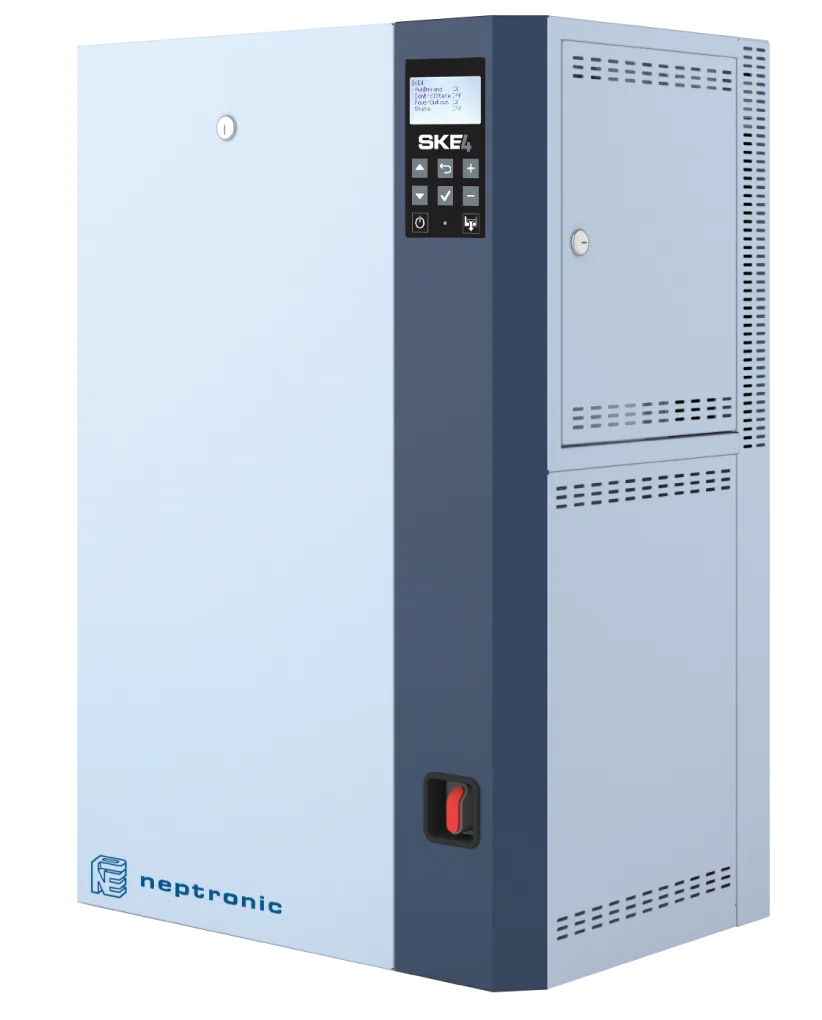
Figure 2: Electrode vs Resistive Water-Quality Impact Matrix
How to Read a Water Analysis
A typical water-analysis report from a certified laboratory contains 10–20 parameters. For steam humidifier selection, the seven critical parameters and three complementary ones should be read in the following order:
First Tier: Device-Type Selection
- Conductivity (μS/cm): Inside the 125–1,250 μS/cm window? Below → resistive required. Above → resistive + treatment.
- Hardness (fH): > 18 fH → resistive preferred. < 4 fH → electrode capacity-limited.
Second Tier: Pre-Treatment Decision
- TDS (mg/L): > 500 mg/L → evaluate RO. > 800 mg/L → RO required.
- Alkalinity (mg/L CaCO₃): > 200 mg/L → blowdown frequency rises. Evaluate scale + foaming risk.
Third Tier: Material Selection
- pH: < 6.5 → corrosion risk; upper-grade material or pH adjustment. 6.5–8.5 → standard.
- Chloride (mg/L): < 100 → AISI 304 sufficient. 100–250 → AISI 316. > 250 → RO + Incoloy.
- Silica (mg/L SiO₂): > 30 → remove via RO; otherwise mechanical-cleaning frequency rises.
Complementary Parameters
- Sulphate (SO₄²⁻): High values can precipitate calcium sulphate (gypsum) scale; rare but a problem.
- Iron (Fe), Manganese (Mn): Common in well water. Values > 0.3 mg/L cause colour residue and deposits.
- Microbiological (TPC, coliform): Mandatory for hygienic sites. UV or chemical disinfection should be evaluated.
NKT Approach: Water Analysis Drives Selection
NKT Nem Kontrol Teknolojileri always positions feedwater analysis before equipment selection. This ordering prevents 80% of field problems. The NKT standard proposal package contains six steps:
- Site water sample: Sample taken from the commissioning point and analysed at a certified lab, 7 primary parameters (pH, hardness, conductivity, TDS, alkalinity, chloride, silica) + 3 complementary parameters (sulphate, iron, microbiology).
- Typical-band measurement: Where possible, sampling in two seasons, Turkish water conductivity can swing 30–50% over the year.
- Water Quality Scorecard: 7 parameters in a single-page report + pre-treatment recommendation (softener / RO / DI required?).
- Equipment selection: Profile + application mapped to resistive (SKE4), steam-to-steam (SKS4), high-pressure atomisation (SKH) or direct steam injection (SKD + Multi-Steam).
- 10-year TCO analysis: Transparent cost comparison covering investment + maintenance + waste + energy + pre-treatment.
- Commissioning + performance validation: Trend log analysis at 6 months; parameter fine-tuning or pre-treatment expansion if required.
This approach is more an engineering service than equipment supply; the right decision underwrites 10+ years of operating reliability. In sites where water quality is uncertain or subject to seasonal drift, the Neptronic SKE4 resistive system stands out as the primary recommendation, its lack of a water window offers structural insurance against field surprises.
Water quality in a steam humidifier cannot be read from a single parameter. The feedwater profile emerges from pH, hardness, TDS, conductivity, alkalinity, chloride and silica (seven core parameters) evaluated together. That profile drives the device-type decision, the pre-treatment decision and the material selection.
Electrode architecture is structurally sensitive to every parameter, conductivity is the absolute precondition of the operating window, hardness drives cylinder life, chloride sources electrode pitting. Resistive architecture removes conductivity from the equation; what remains is water-quality impact at the level of maintenance frequency and steam purity. For that reason, in sites where water quality is uncertain, seasonal drift is high, or hygiene requirements are strict, resistive (Neptronic SKE4) offers structural insurance.
NKT Nem Kontrol Teknolojileri, as Neptronic's official Turkish distributor, places water analysis ahead of equipment selection in every project; the site-sampling → certified-lab analysis → Water Quality Scorecard → device recommendation → 10-year TCO → commissioning → 6-month performance-validation chain is delivered end to end. For precision printing, pharma cleanroom, hospital, museum, data centre and hygienic-facility projects, the resistive SKE4 family is the primary recommendation; where facility steam (boiler) exists the steam-to-steam SKS4 system is an alternative, and where high capacity + adiabatic-cooling secondary benefit is desired the SKH atomisation system is complementary.