Why Is Humidifier Technology Selection So Important?
When selecting a steam humidifier for industrial and commercial buildings, evaluating only the initial purchase price leads to a significant misconception. The true cost can only be accurately measured through the total cost of ownership (TCO, Total Cost of Ownership) encompassing installation, operation, maintenance, and a period exceeding 10 years. There are two fundamental electric steam humidifier technologies in the market: electrode (electrode cylinder) and resistive (heating element) systems. These two technologies differ fundamentally in operating principle, water quality compatibility, control precision, maintenance requirements, and long-term cost.
As NKT, we are the distributor of the Neptronic brand in Turkey, which has been a pioneer of resistive humidifier technology since 1976. In this article, we examine both technologies in all their dimensions.
The article content is based on the engineering report titled "Resistive vs. Electrode Humidifiers" prepared by the Neptronic Technical Support team and NKT's field application experience in Turkey.
Operating Principles: How Is Steam Generated?
Electrode Humidifier
Electrode steam humidifiers boil water by passing alternating current between electrodes inside a disposable plastic cylinder. The water itself serves as the conductive medium: dissolved ions in the mains water (calcium (Ca²⁺), magnesium (Mg²⁺), bicarbonate (HCO₃⁻) and other minerals) are the carriers of electric current. Current density is directly proportional to the ion concentration in the water; therefore, when water quality changes, production capacity changes as well.
Capacity control is achieved by raising and lowering the water level inside the cylinder. This approach is extremely sensitive to water quality, particularly its conductivity.
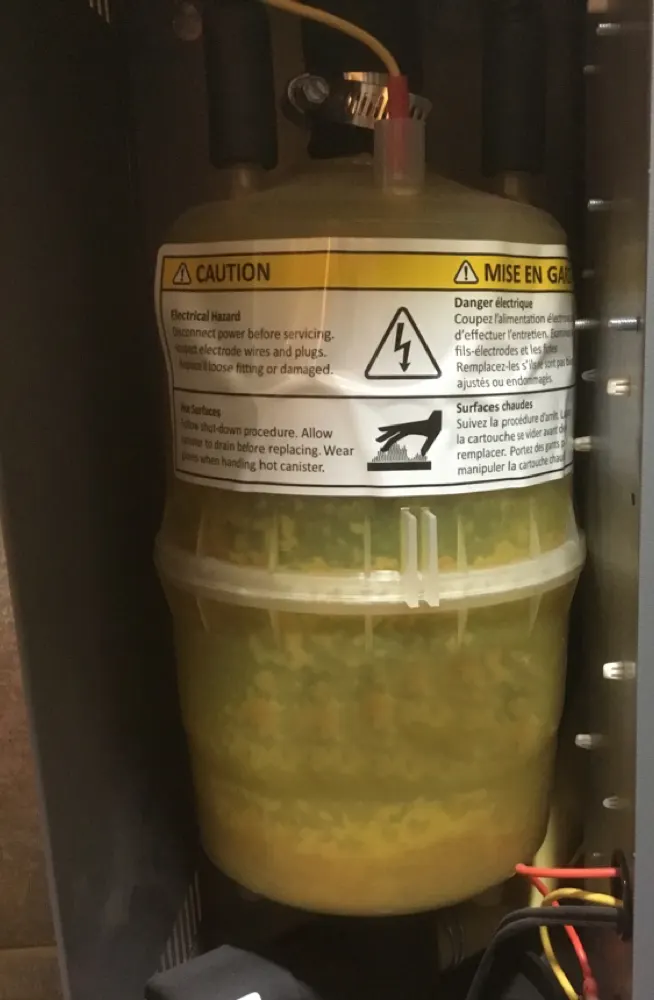
Internal view of an electrode cylinder: mineral load has changed the colour of the water.
Resistive Humidifier
Resistive steam humidifiers boil water using electric heating elements inside a permanent stainless steel evaporation chamber. The ion content or conductivity of the water does not affect this process in any way.
Capacity control is achieved through time-based switching of power applied to the heating elements via Solid State Relays (SSR). SSRs use zero-voltage-crossing SCR control to minimize electromagnetic interference and provide smooth power transitions to the heating elements. This precise control mechanism delivers ±1% RH precision.
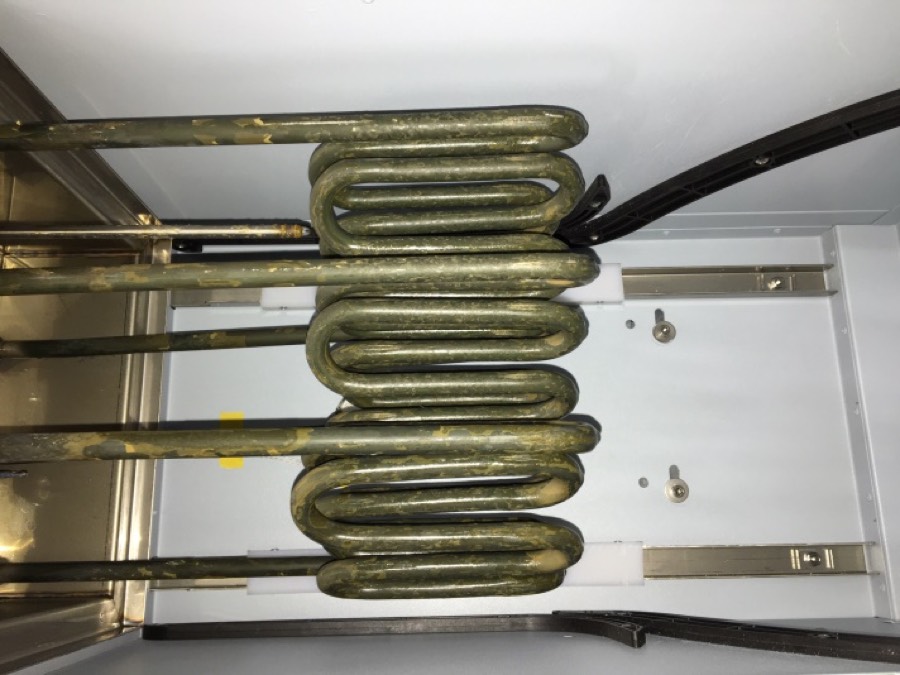
Stainless steel heating elements of a resistive humidifier, long-lasting and individually replaceable.
| Feature | Electrode | Resistive (Neptronic) |
|---|---|---|
| Steam generation method | Ionic conduction (water-dependent) | Thermal conduction (water-independent) |
| Chamber/cylinder | Disposable plastic | Permanent stainless steel |
| Capacity control | Water level variation | SSR / SCR power control |
| Control precision | ±5% RH | ±1% RH |
| Water quality dependency | High (125–1,250 µS/cm) | None (all water types) |
Field Evidence: The Real Condition of Electrode Cylinders
The photographs below were taken from a facility we service in Turkey. They strikingly demonstrate the typical failure mode of electrode cylinders: you can see the damage caused by scale and mineral deposits penetrating the plastic, requiring immediate replacement.
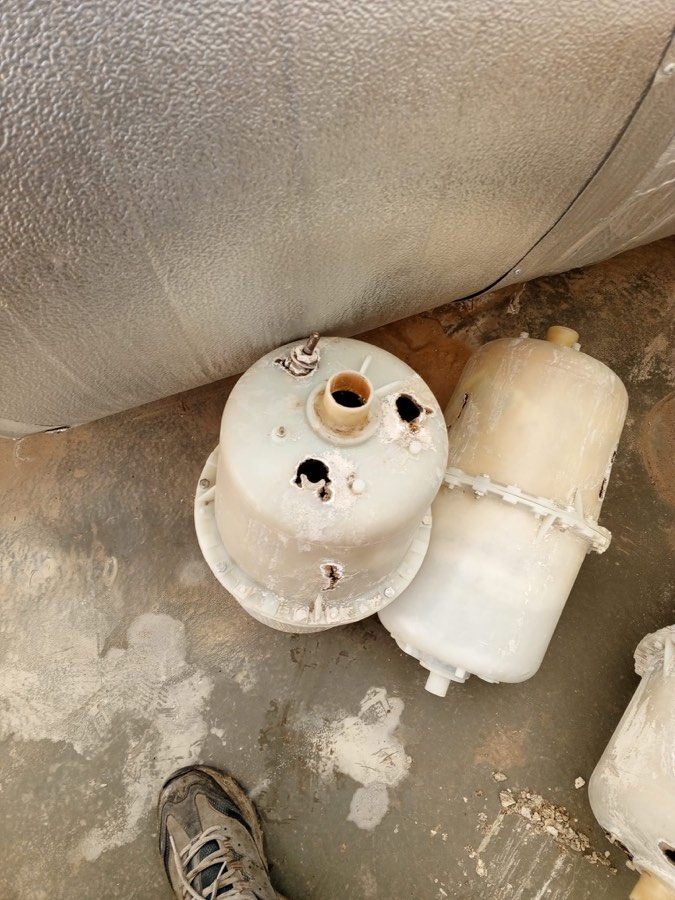
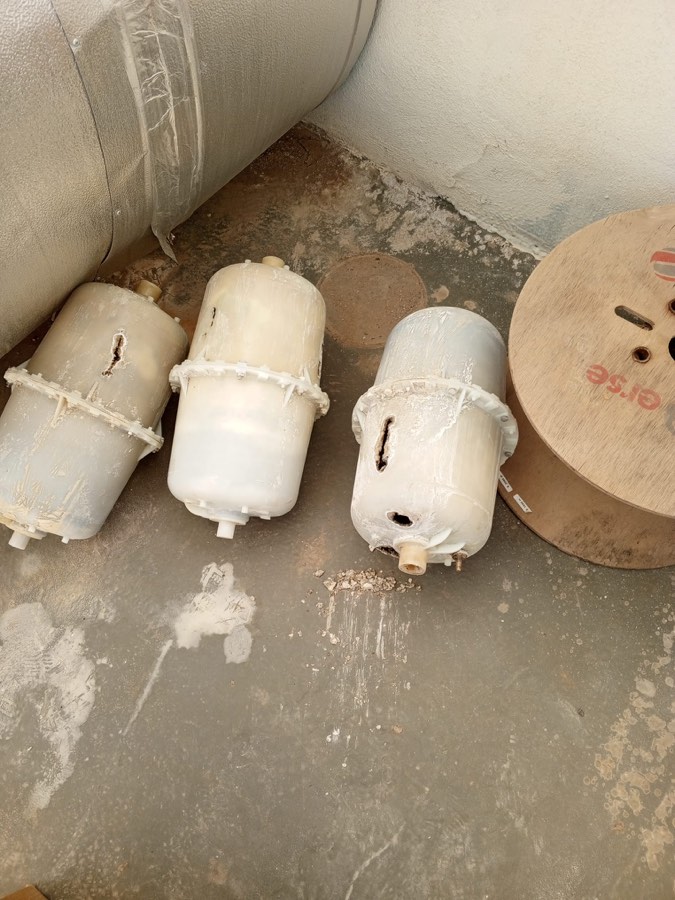
The cylinders shown in the photographs belong to an electrode humidifier operating with high-hardness mains water. Average lifespan: 4–6 months. The replacement cost of each cylinder (product + labour + downtime) rapidly increases total operating costs.
Water Quality Compatibility: The Most Critical Difference
Water quality is the most decisive operational difference between the two technologies.
Electrode Humidifier: Water Requirements
Electrode humidifiers can only operate within a specific conductivity band:
- Below 125 µS/cm (soft/RO/DI water): Insufficient current flow (will not operate
- Above 1,250 µS/cm (very hard water): Excessive current) uncontrolled heating (accelerated scale buildup
- Particulate pre-filter is mandatory
Resistive Humidifier) Water Compatibility
Operates without issues with any water type:
- Mains water
- Softened water
- RO water
- DI/pure water
| Water Type | Electrode | Resistive (Neptronic) |
|---|---|---|
| Mains Water (medium hardness) | Compatible | Compatible |
| Very Hard Mains (>1250 µS/cm) | Problematic | Compatible |
| Softened Water | Caution | Compatible |
| Reverse Osmosis (RO) Water | Incompatible | Ideal |
| Deionized (DI) Pure Water | Incompatible | Ideal |
Since electrode humidifiers depend on water conductivity, current conduction is not possible in RO or DI water, and the unit will not operate.
Capacity Control and Humidity Precision
In industrial and commercial applications, the precision of humidity control is directly decisive for product quality, patient safety, and process efficiency. The difference in control precision fundamentally separates the application areas of the two technologies.
Electrode
- Water level variation (slow response
- Conductivity fluctuation) control deviation
- ±5% RH
- Inadequate for critical applications
Resistive (Neptronic)
- Instant precise power adjustment via SSR
- Independent of water quality
- ±1% RH
- Hospital / museum / pharmaceutical / cleanroom compatible
According to ASHRAE standards, operating rooms and neonatal units require ±2% RH precision. Only resistive technology meets this requirement.
Scale Buildup and Maintenance
During steam generation, the evaporation of water causes the minerals within to remain behind and accumulate as scale (calcium carbonate, CaCO₃) and magnesium salts. These mineral deposits coat heat transfer surfaces, block current conduction, and directly reduce equipment performance. The two technologies handle this issue in very different ways.
Scale Issue in Electrode Systems
Scale coats the electrodes, blocks current conduction, capacity drops, and cylinder replacement becomes mandatory. CaCO₃ and magnesium salt deposits adhere to the inner walls of the plastic cylinder, both reducing the contact surface of the electrodes and compromising the structural integrity of the cylinder. Cylinder replacement must be performed 1–3 times per season.
Scale Management in Resistive Systems
The stainless steel chamber is permanent. Regular flush cycles minimize scale. The Neptronic SKE4 features tool-free chamber removal, allowing cleaning to be completed within minutes. With RO/DI water, maintenance requirements are near zero.
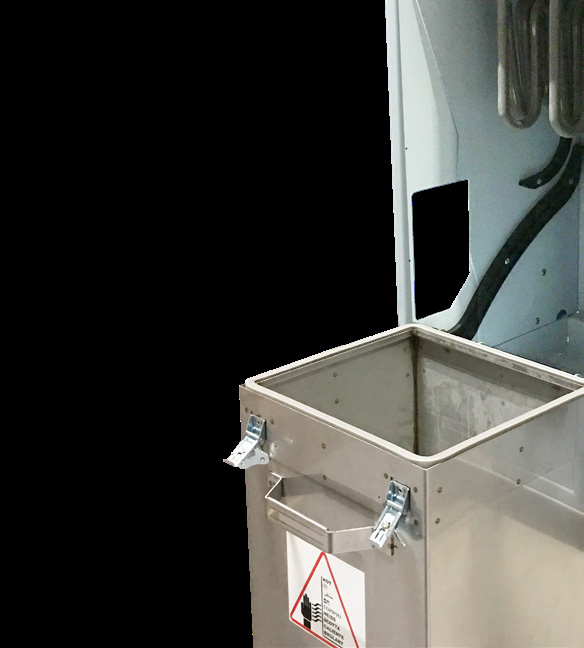
Neptronic SKE4, tool-free chamber removal and cleaning: completed within minutes.
| Maintenance Parameter | Electrode | Resistive (Neptronic SKE4) |
|---|---|---|
| Primary maintenance task | Cylinder replacement | Chamber cleaning |
| Frequency (mains water) | 1–3 times per season | 1–2 times per year |
| Frequency (RO/DI water) | Incompatible | Near zero |
| Tool requirement | Standard toolkit | Tool-free (SKE4) |
| Consumables | Disposable cylinder | None |
| Downtime | 30–60 minutes | 5–10 minutes |
Environmental Impact: The Disposable Plastic Crisis
Sustainability and ESG requirements are playing an increasingly decisive role in industrial equipment selection. Humidifier technology presents a bipolar picture in this regard as well.
Electrode: Environmental Problem
- Each cylinder is single-use
- 1–3 plastic waste items per season
- Recycling not possible
- ESG negative
Resistive: Environmental Advantage
- 15–20 year chamber lifespan
- Zero consumable waste
- ESG and green building compatible
Under the European Union's Single-Use Plastics Directive (SUP, Single-Use Plastics Directive, 2019/904), restrictions on industrial single-use plastic products are becoming increasingly stringent. The plastic waste generated by electrode cylinders has the potential to create additional costs and compliance issues within the framework of these regulations in the future. Resistive systems eliminate this risk entirely.
10-Year Total Cost of Ownership (TCO)
A true cost comparison is only meaningful from a 10-year TCO perspective. The reference scenario below demonstrates the long-term impact of cylinder costs.
Cylinders/unit: 2 pcs
Cylinder replacement: Average 2 times per season
Analysis period: 10 years
Total cylinders = 2 × 2 × 10 = 40 cylinders
Initial purchase and installation costs are comparable. However, the Neptronic SKE4 includes a built-in disconnect switch, eliminating the cost of a separate wall-mounted disconnect.
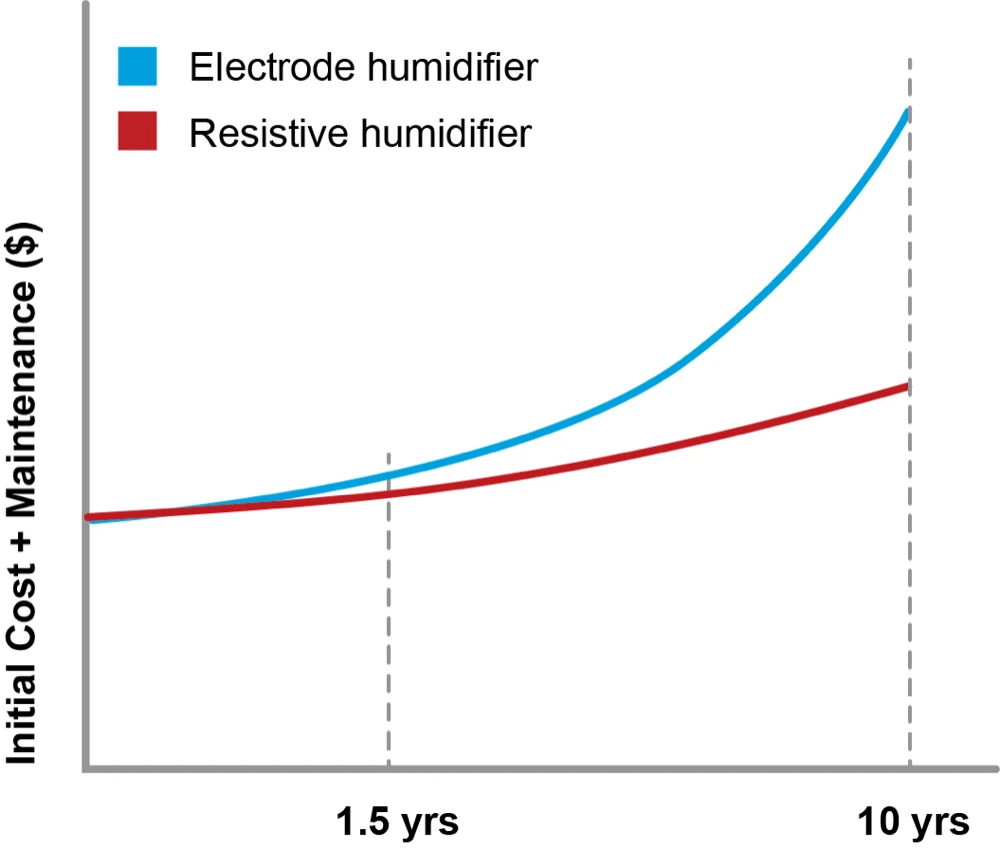
From Neptronic's technical report: 10-year total cost comparison of electrode vs. resistive humidifiers.
Cost Calculator
Compare electrode and resistive humidifier costs for your own facility using the calculator below.
TCO Comparison Calculator
Installation Cost
According to Neptronic's technical report, the initial purchase and installation cost between an equivalent-capacity Neptronic SKE4 resistive humidifier and an electrode humidifier are comparable. However, the Neptronic SKE4 includes a built-in disconnect switch in all models; this feature eliminates the need for a separate wall-mounted disconnect, reducing both installation cost and saving space.
Which Technology for Which Application?
| Application | Recommended | Rationale |
|---|---|---|
| Hospital, operating room | Resistive | ±1% RH precision, sterile steam |
| Museum, archive | Resistive | Critical precision, long-term reliability |
| Pharmaceutical and biotechnology | Resistive | Pure water compatibility, GMP requirement |
| Cleanroom (ISO 1–8) | Resistive | RO/DI water compatible |
| Data center | Resistive | High reliability, low maintenance |
| Office / commercial building | Either | Standard application, compare TCO |
| Hard mains water regions | Resistive | Electrode lifespan drastically shortened |
| Facilities with RO/DI water infrastructure | Resistive | Near zero maintenance |
Neptronic SKE4
Neptronic is an engineering company that has been designing and manufacturing HVAC products in Montreal, Canada since 1976. With an R&D team of more than 200 engineers, it designs and manufactures all of its products in its 7,500 m² (80,000 ft²) production facility. It exports more than 75% of its production to over 60 countries.
SKE4 Key Features
- Built-in disconnect switch (no separate wall disconnect required
- Patent-pending water level detection system
- Tool-free maintenance) chamber removes within seconds
- ±1% RH precision, zero-voltage-crossing SCR control
- Wide water quality range (0–2,000 µS/cm)
- Long product lifespan (15–20 years)
- Individually replaceable heating elements, no full chamber replacement needed
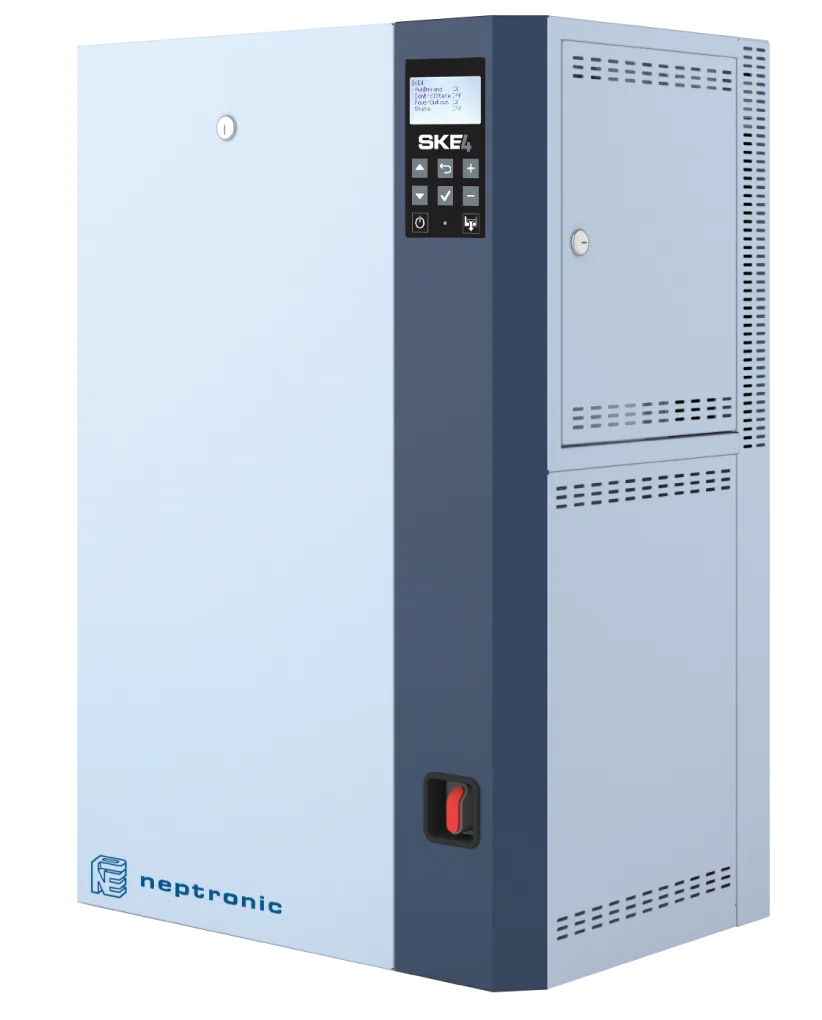
As NKT Humidity Control Technologies, we are the official distributor of Neptronic humidifier systems in Turkey. We provide full support from facility needs analysis to installation and commissioning, periodic maintenance and spare parts supply.
Frequently Asked Questions
Is the initial cost of a resistive humidifier higher?
No. The initial purchase and installation cost between an equivalent-capacity Neptronic SKE4 and an electrode humidifier is comparable. Thanks to the built-in disconnect switch feature, installation cost can often be lower.
We have hard mains water. How often is maintenance required with a resistive system?
Depending on water hardness and operating hours, 1–2 chamber cleanings per year are sufficient. In facilities fed with an RO system, annual cleaning is largely eliminated. With the Neptronic SKE4, it is performed tool-free and quickly.
Can we use DI or RO water?
Yes, it is the ideal choice for resistive humidifiers. No scale forms, and maintenance drops to practically zero. In electrode systems, DI/RO water is completely prohibited, the unit will not operate.
Are electrode cylinders really disposable?
Yes. They are made of disposable plastic. When scale accumulates, they are discarded and replaced with new ones. This is both costly and generates significant plastic waste.
Which technology should I choose for a hospital or pharmaceutical facility?
Definitely resistive. ASHRAE 170 and cGMP standards require ±2% RH. Resistive provides ±1% RH; electrode at ±5% RH is inadequate.
How is Neptronic service and spare parts availability in Turkey?
As NKT, we are the official distributor of Neptronic in Turkey. Spare parts from stock, commissioning, and periodic maintenance are provided.
A comprehensive comparison of the two technologies across all dimensions reveals a clear picture in favor of resistive steam humidifiers:
| Criterion | Electrode | Resistive (Neptronic SKE4) |
|---|---|---|
| Operating principle | Ionic conduction | Thermal conduction |
| Water quality | Limited (125–1250 µS/cm) | All water types |
| Precision | ±5% RH | ±1% RH |
| Maintenance | 1–3 cylinders/season | 1 cleaning/year |
| Consumable waste | High (plastic) | Zero |
| 10-year TCO | High | Low |
| Critical application | No | Yes |
| Environmental impact | Plastic waste | Minimal |
Resistive humidifier technology demonstrates a comprehensive superiority over electrode systems in terms of water quality flexibility, high control precision, low maintenance burden, and environmental sustainability. Particularly from a 10-year total cost of ownership perspective (when the cumulative impact of cylinder replacement costs is factored in) resistive technology offers a decisive economic advantage. The Neptronic SKE4 is a tangible reflection of engineering expertise accumulated since 1976, the R&D efforts of more than 200 engineers, and field-proven reliability.