What Is Laminated Glass?
Laminated glass is a type of safety glass produced by bonding two or more glass layers together under heat and pressure with a polymeric interlayer placed between them. Thanks to this structure, when the glass breaks, the fragments stay bonded to the interlayer, preventing large, sharp shards from scattering. The most widely used interlayer in laminated glass production is Polyvinyl Butyral (PVB) film. PVB forms an elastic bond between the glass layers and filters out most ultraviolet radiation, protecting interiors from UV exposure.
With these properties, laminated glass is used across a wide range of applications, from automotive windshields and architectural façades to security, ballistic and marine glazing. Although lamination looks simple, it depends on many sensitive parameters. Foremost among them are the temperature and humidity conditions of the lay-up room where the interlayer is laid.
The most critical quality criterion in laminated glass is correct and uniform adhesion between the glass and the interlayer. With PVB, this adhesion depends largely on the film's moisture content, and the film's moisture content depends on the relative humidity of the lay-up room. Lamination rooms are therefore kept under continuous humidity control with dehumidifiers able to reach low dew points, such as the silica gel rotor dehumidifiers of TFT – Tecnofrigo Tuscany (Italy).
Lamination Materials and Moisture Sensitivity
Interlayer selection directly determines the mechanical, optical and safety properties of laminated glass. Each material has a different relationship with moisture, so production conditions should be set according to the material type and the manufacturer's processing guide.
PVB: Polyvinyl Butyral
PVB is the most widely used interlayer in glass lamination. It is obtained by reacting polyvinyl alcohol with butyraldehyde. Because its free hydroxyl (-OH) groups bind water molecules, PVB is hygroscopic: the film takes up or releases moisture until it reaches equilibrium with the relative humidity around it. According to the equilibrium curves published by PVB manufacturers, film moisture is roughly 0.35–0.45% at 30% RH and 0.7–0.8% at 50% RH, rising above 2% at 80% RH.
PVB manufacturers recommend keeping film moisture at lay-up at approximately 0.4–0.5% (manufacturers' technical manuals specify moisture as a product-specific target with a tight tolerance). As film moisture rises, glass-to-PVB adhesion decreases; well above the target, the risk of bubbles, edge delamination and low adhesion increases. If moisture is too low, adhesion can become excessive and impair the impact performance of the glass. What keeps this balance is the relative humidity of the room in which the film is handled.
Storage and Processing Conditions (PVB manufacturers' recommendations)
| Parameter | Storage | Lay-up room |
|---|---|---|
| Temperature | Refrigerated rolls ≤ 8 °C; PE-interleaved rolls ≤ 30 °C (sealed) | ≈ 16–20 °C (common practice 18–20 °C) |
| Relative Humidity | No control needed while sealed; opened rolls 25–30% RH | ≈ 22–30% RH (common practice 25–30%) |
| Packaging | Original moisture-barrier packaging | Controlled opening; remaining roll resealed |
| Sunlight | Dark | Protected from direct sunlight |
The moisture of a sealed PVB roll is set at the factory; as soon as the packaging is opened, the film starts exchanging moisture with the room. According to PVB manufacturers' guides, refrigerated rolls brought into a lay-up room at 8 °C or above should be unwound and processed or cut to size within 2–3 hours. Unused sections should be returned to moisture-barrier packaging.
EVA: Ethylene-Vinyl Acetate
EVA is an alternative interlayer used mainly for solar module encapsulation and in some decorative or architectural laminated glass. It is less hygroscopic than PVB; nevertheless, manufacturers recommend storing EVA films sealed in a dry, cool place and processing them in a controlled environment. Moisture can promote bubble formation and impair adhesion during encapsulation.
SentryGlas (Ionoplast)
SentryGlas (formerly SentryGlas Plus, SGP) is an ionoplast structural interlayer. According to the manufacturer, it is tougher and considerably stiffer than conventional PVB, which is why it is used in structural glazing, balustrades and high-rise façades. The manufacturer states that SentryGlas is less susceptible to moisture, weathering and edge defects than PVB. Even so, a clean, dust-free and controlled lay-up environment remains a prerequisite for quality production.
Material Comparison
| Material | Moisture Sensitivity | Environmental Approach |
|---|---|---|
| PVB | High | Lay-up room ≈ 16–20 °C, 22–30% RH; film moisture ≈ 0.4–0.5% |
| EVA | Medium | Dry, sealed storage; processing in a controlled environment |
| SentryGlas | Low | Clean, controlled lay-up environment per the manufacturer's guide |
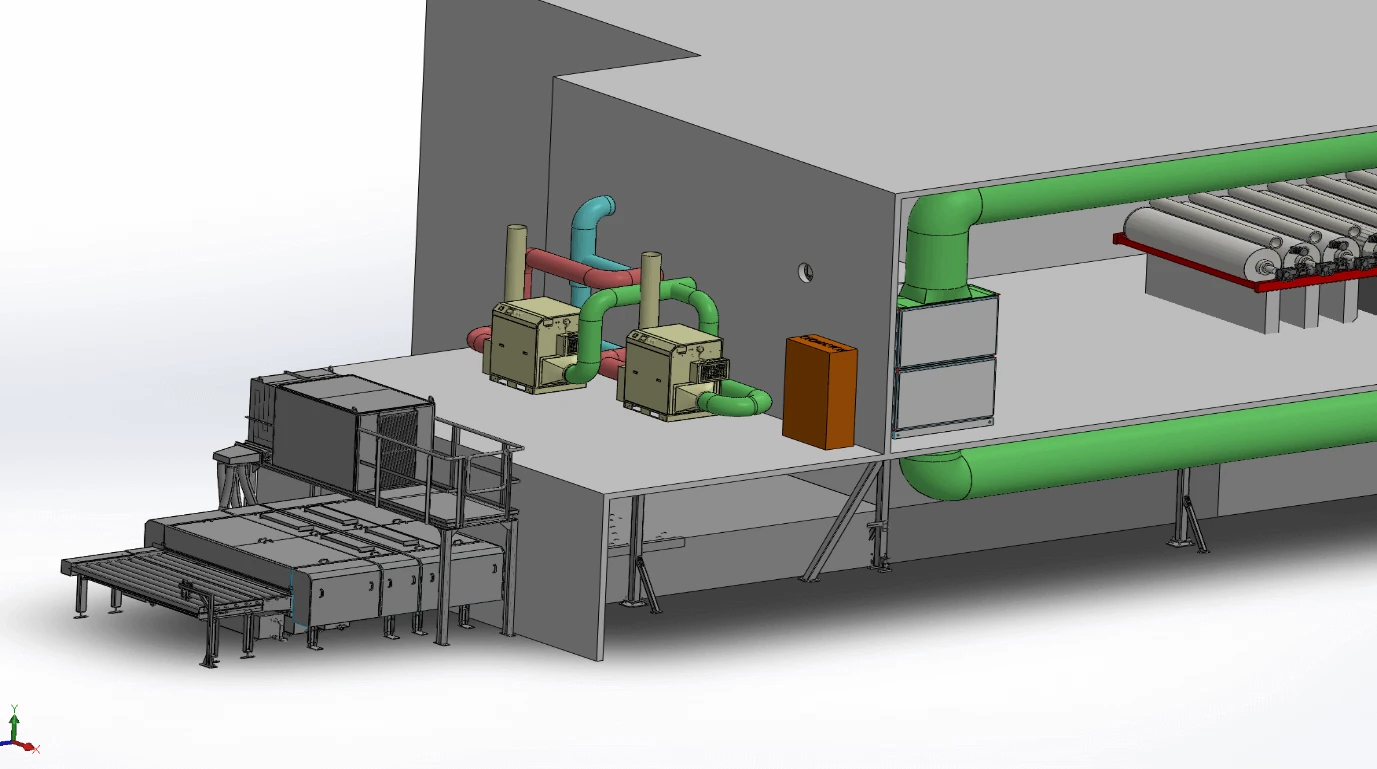
Why Is Humidity Control Mandatory?
When lay-up room humidity is not controlled, PVB moisture varies with the season and the day. Adhesion then differs from batch to batch, and defects appear after autoclaving or during the service life of the glass.
Moisture-Related Defects
How Is Adhesion Measured? The Pummel Test
Glass-to-PVB adhesion is commonly checked in the industry with the pummel test. A laminated sample is cooled to about −18 °C, broken by hammering, and the amount of glass still adhering to the PVB is rated on a scale from 0 (no adhesion) to 10 (full adhesion). For architectural glass, pummel values of 3–7 are commonly targeted; the target depends on the application. Higher film moisture lowers the pummel value, lower moisture raises it. A stable room humidity is therefore a prerequisite for consistent pummel values.
Production Efficiency
Moisture-related defects often appear after the autoclave, when all the labor and energy have already been invested in the glass. Some defects, such as edge delamination, show up only months after installation and turn into warranty claims. Keeping lay-up room humidity stable is the most direct way to reduce scrap and rework.
The Humidity-Controlled Lay-up Room
A lay-up room is a dust-free, conditioned space in which dehumidification, filtration, ventilation and pressure management work together. Because particles such as dust and fibers trapped between glass and film cause optical defects, filtration is as important as humidity control.
Target Conditions
Air at 18 °C / 25% RH has a vapor pressure of 5.15 hPa and a humidity ratio of 3.2 g/kg; its dew point is about −2 °C. At 20 °C / 30% RH the dew point is +1.9 °C (4.3 g/kg), and at 16 °C / 22% RH, the low end of the manufacturer's band, about −6 °C (2.5 g/kg). In other words, a lay-up room needs a dew point around 0 °C. The practical lower limit of condensation (refrigerant) dehumidifiers is about +5 °C dew point (≈ 37% RH at 20 °C), so a silica gel rotor dehumidifier is required for the lay-up room. A hybrid solution with a cooling coil ahead of the rotor offers an energy advantage when it must handle humid summer outdoor air.
Filtration Stages
| Stage | Filter Class (EN 779 / ISO 16890) | Purpose |
|---|---|---|
| 1st Stage (Pre) | G4 / ISO Coarse ≥ 60% | Coarse dust and fibers; protects rotor and coils |
| 2nd Stage (Medium) | F7 / ISO ePM1 ≥ 50% | Fine dust |
| 3rd Stage (Fine) | F9 / ISO ePM1 ≥ 80% | Very fine particles |
| 4th Stage (Final – if required) | H13 HEPA (EN 1822) | ≥ 99.95% at MPPS; lines with high optical-quality requirements |
Filters are replaced based on monitored pressure drop (ΔP), not on a fixed calendar; the interval depends on the dust load of the environment. The room cleanliness class (ISO 14644-1) and filter stages are selected according to the optical quality required for the glass and the customer specification.
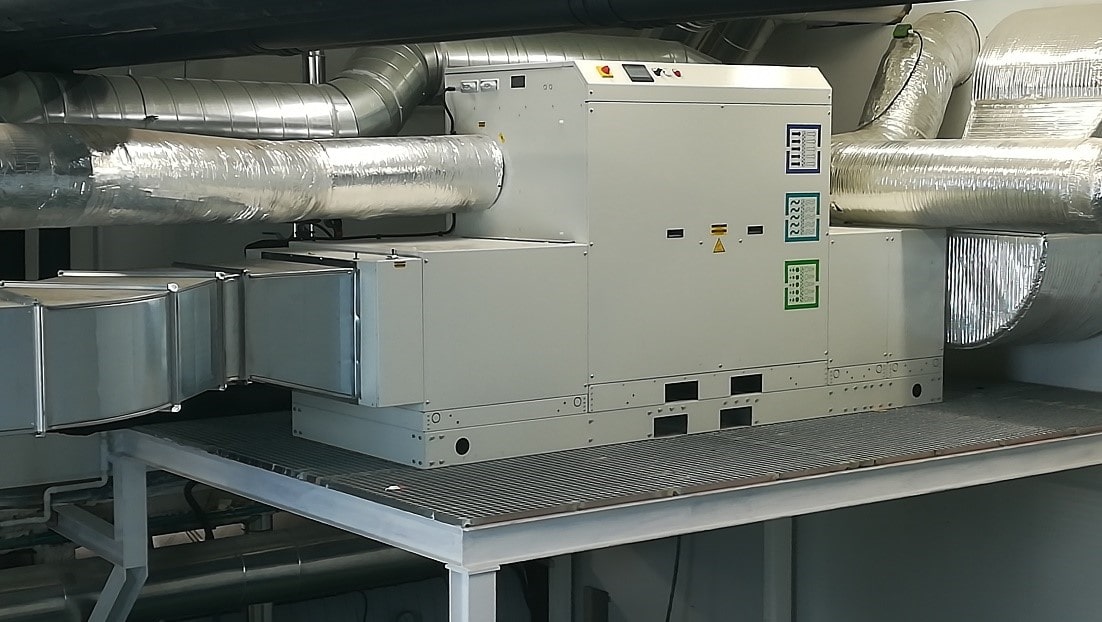
In the lay-up room, PVB film is laid in a dust-free, humidity-controlled environment.
Positive Pressure
Keeping the lay-up room at typically +10…+15 Pa relative to adjacent areas prevents humid, dusty air from entering through door openings and leaks. For this principle to work effectively:
- The airtightness of walls, ceiling and cable penetrations should be checked regularly.
- Doors should be gasketed and self-closing; where possible, personnel and materials should pass through an airlock.
- The pressure differential should be monitored continuously, with an alarm when it falls below the set lower limit.
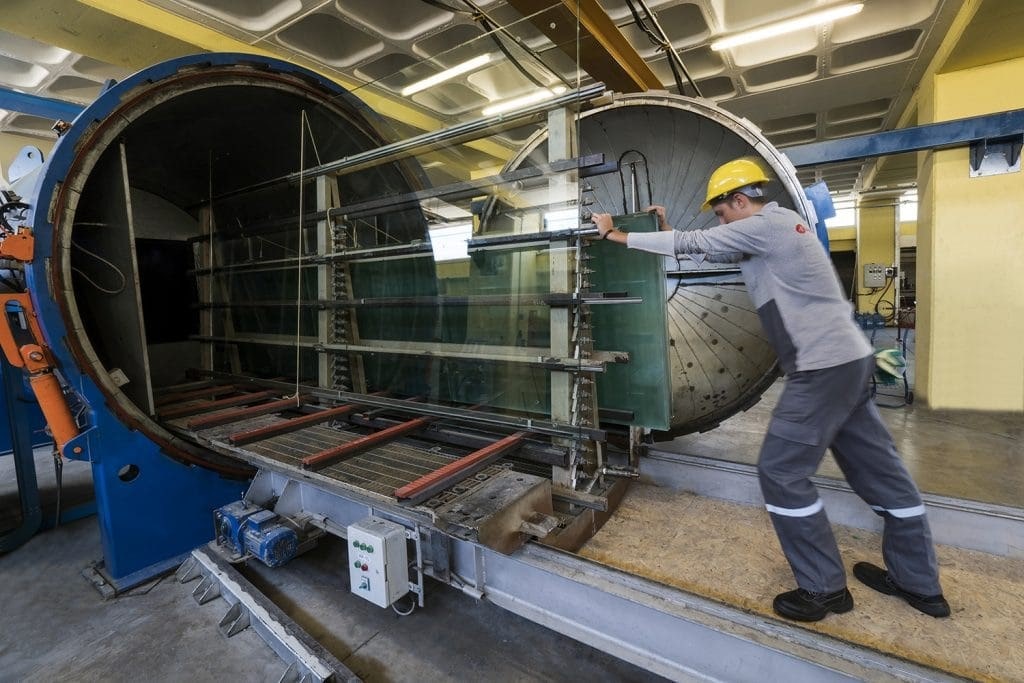
Positive-pressure ventilation keeps humid, contaminated outside air out of the lamination room and reduces the load on the dehumidifier.
Equipment Selection: TFT Silica Gel Rotor Dehumidifiers
The dew point of about −2…+2 °C needed in a lay-up room is far below the efficient operating range of condensation dehumidifiers (+10 °C dew point and above). Silica gel rotor dehumidifiers reach this dew point reliably regardless of temperature, and with the right design far lower dew points (−40 °C and below) are possible.
Technology Comparison
| Technology | Operating Principle | Practical Dew Point Limit | For a Lay-up Room |
|---|---|---|---|
| Condensation | Cooling air below its dew point | ≈ +5 °C (efficient: +10 °C and above) | Insufficient (only as a pre-cooling stage) |
| Silica gel rotor | Physical adsorption on silica gel | −40 °C and below | Suitable |
| Hybrid (cooling coil + rotor) | Pre-cooling + adsorption | Same as rotor | Energy advantage with humid outdoor air |
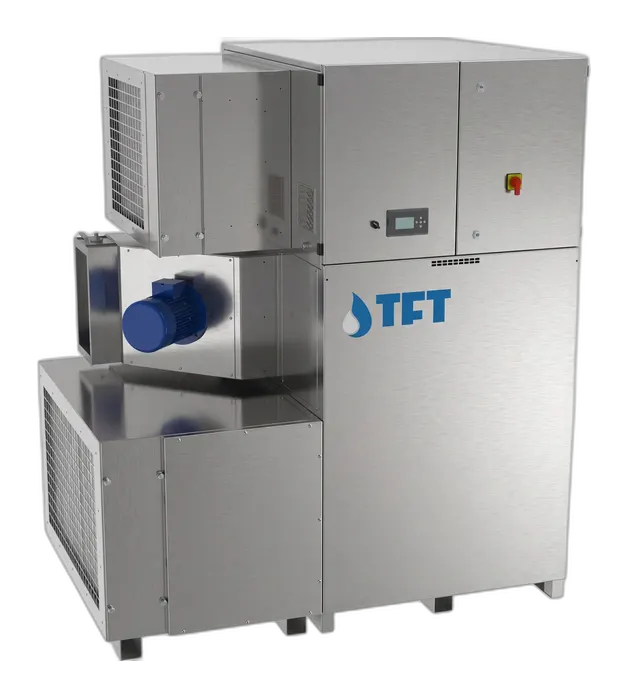
TFT AD and ADP series silica gel rotor dehumidifiers and Hybrid systems are suitable for glass lamination plants. The unit is selected according to the room's moisture load and the required dry-air flow; NKT – Nem Kontrol Teknolojileri provides technical support in unit selection and supplies the equipment.
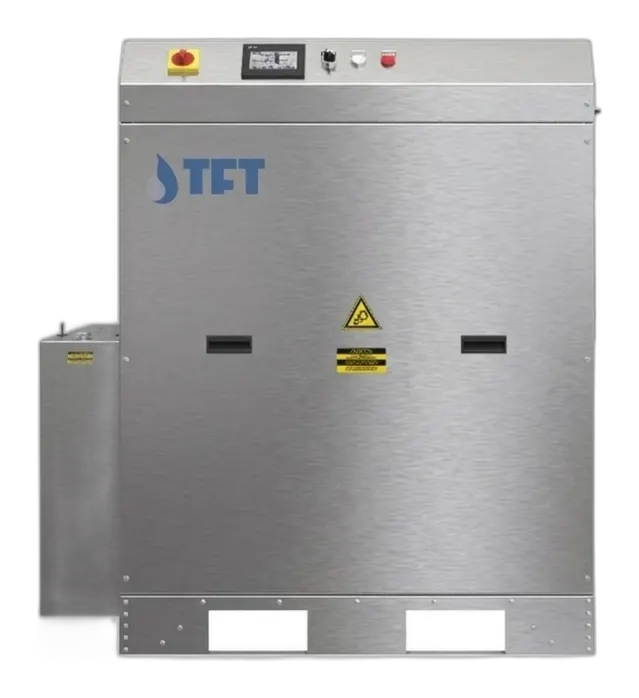
Moisture Load Components
Dehumidifier capacity is determined by the total moisture load entering the room:
- Fresh air load: Moisture carried by the outdoor air supplied for positive pressure and for personnel. In lay-up rooms this is usually the largest component; in Istanbul, bringing summer design outdoor air of about 17 g/kg down to 20 °C / 30% RH (4.3 g/kg) requires about 15 kg/h of moisture removal for every 1,000 m³/h of fresh air.
- Infiltration load: Humid air entering through door openings and wall and ceiling penetrations.
- Personnel load: Roughly 70–120 g of moisture per person per hour, depending on activity level.
A safety margin of 15–25% (20% in practice) is added to the total moisture load. On lines where downtime is unacceptable, a redundant (N+1) arrangement, in which one unit can carry the load while the other is serviced, may be considered.
Maintenance and Monitoring
Continuous Monitoring
Continuous recording of temperature and relative humidity in the lay-up room is necessary so that quality problems can be traced back:
- Temperature and humidity are logged continuously with a calibrated sensor, and records are linked to production batches.
- An alarm is raised when conditions leave the target band (for example above 30% RH or below 16 °C).
- The record retention period is set by the plant's quality system and the customer specification.
- Humidity sensors are verified regularly against a traceable reference (typically once or twice a year).
Periodic Maintenance
| Task | Frequency |
|---|---|
| Pre-filter inspection and pressure drop (ΔP) tracking | Monthly |
| Fine filter ΔP tracking | Monthly |
| Humidity sensor verification / calibration | Every 6–12 months |
| Periodic maintenance of the silica gel rotor dehumidifier (filters, rotor, reactivation heater, belt and seals) | Per the manufacturer's maintenance plan |
| Room airtightness and positive pressure check | Annual |
| HEPA filter replacement | Based on ΔP and test results |
NKT – Nem Kontrol Teknolojileri provides technical service and spare parts for the TFT units it supplies.
Common Production Issues and Solutions
| Issue | Symptoms | Likely Cause | Solution / Prevention |
|---|---|---|---|
| Delamination | Visible separation, usually from the edge | Film moisture above the manufacturer's target (≈ 0.4–0.5%), low adhesion | Keep room humidity stable at 25–30% RH; shorten open-roll time |
| Bubbles | Bubbles after autoclaving or under thermal load | Insufficient de-airing, excess film moisture | Control pre-bonding (de-airing) and autoclave parameters; control film moisture |
| Haze | Milky appearance at the edge | PVB that has absorbed moisture | Shorten holding time of rolls and cut film; control room humidity |
| Inconsistent adhesion | Batch-to-batch differences in pummel values | Seasonal and daily variation in room humidity | Stable humidity all year; continuous logging |
| Dust-related optical defects | Point defects between glass and film | Insufficient filtration or negative pressure | Filter stages, positive pressure and clean working discipline |
| Static electricity and dust attraction | Film attracts dust, difficult laying | Humidity lower than necessary | Do not let humidity drop below the target band; ionization if needed |
Cost Assessment
The return on humidity control depends on the plant's current scrap rate, product mix and climate, so quoting a general percentage or payback period would be misleading. A sound assessment considers the following together:
- Moisture-related scrap and rework costs (rejections after autoclaving, cutting waste)
- Edge delamination appearing in the field and warranty claims
- Operating cost of the unit: in a silica gel rotor dehumidifier, most of the energy goes to rotor reactivation; using steam, natural gas or waste heat for reactivation typically reduces operating cost by 40–60% compared with electric reactivation
- Reducing the rotor load in summer with a pre-cooled (hybrid) configuration
NKT – Nem Kontrol Teknolojileri supplies TFT silica gel rotor and hybrid dehumidifiers for glass lamination rooms, provides technical support in unit selection, and offers technical service and spare parts for installed units.