Lithium-ion battery manufacturing has become one of the most strategically important industrial processes of the 21st century. Growing demand across a wide spectrum (from electric vehicles and energy storage systems to consumer electronics and the defense industry) makes it imperative to continuously increase both the capacity and the quality of manufacturing infrastructure, with humidity control in battery production at the forefront. Global battery production capacity is growing significantly each year, which in turn drives exponential growth in investments in dry room infrastructure. According to international analyses, battery production capacity is projected to multiply several times over by 2030.
One of the most critical engineering parameters underlying this growth is humidity control in the battery manufacturing environment. Lithium is an element that is, by nature, extremely reactive with water. When lithium comes into contact with water, the following exothermic reaction occurs:
This reaction not only degrades battery cell performance; it also produces flammable hydrogen gas, creating an explosion risk. Moisture exposure can reduce a battery cell's storage capacity by 10–30%, shorten cycle life, and in the worst case trigger a thermal runaway event. For this reason, reducing ambient humidity to ultra-low dew point levels in lithium battery manufacturing is not an option, it is a necessity.
This guide comprehensively addresses all aspects of humidity control in lithium-ion battery manufacturing. It examines (from an engineering perspective) every topic from moisture sensitivity at each stage of the production process to desiccant dehumidifier technology, and from dry room design parameters to energy optimization. Our goal as NKT, Humidity Control Technologies is to provide industry professionals and decision-makers with a comprehensive technical reference.
Lithium Battery Manufacturing Process and Moisture Sensitivity
The lithium-ion battery manufacturing process is a complex structure composed of different, interconnected process steps. At each step, ambient humidity affects product quality through different mechanisms. Correctly understanding these process requirements when selecting an industrial dehumidifier is important for proper system sizing. According to real factory data, not all processes have the same moisture sensitivity: anode-side processes (powder preparation, mixing, electrode line) can tolerate up to 30% RH, while the cathode side requires 10% RH; the most critical zones (assembly, pouch line and electrolyte filling) operate at 1% RH (approximately -45°C dew point). In modern facilities, each zone is supplied by a separate air handling system and maintained at a constant temperature of 23±2°C. This multi-zone approach both increases energy efficiency and provides optimal humidity conditions for each process.
DP ≈ -45°C · AH ≈ 0.06 g/kg
DP ≈ -14°C · AH ≈ 1.7 g/kg
DP ≈ 4°C · AH ≈ 5.1 g/kg
DP ≈ 4°C · AH ≈ 5.1 g/kg
Electrode Preparation Stages
In the slurry mixing stage (the first step of production) the active cathode or anode material (e.g. NMC, LFP or graphite), binder (PVDF or CMC/SBR), conductive additive (carbon black) and solvent (NMP or water) are combined into a homogeneous suspension. Materials used on the cathode side, such as NMC (nickel-manganese-cobalt) and NCA (nickel-cobalt-aluminium), are highly moisture-sensitive. These materials adsorb ambient moisture and form layers of lithium carbonate (Li2CO3) and lithium hydroxide (LiOH) on their surfaces. This layer reduces ionic conductivity and negatively affects first-cycle capacity. According to real factory data, a maximum of 30% RH (approximately -4°C dew point at 23°C) is considered sufficient for anode powder preparation and mixing, while the cathode powder preparation and mixing environment requires a maximum of 10% RH (approximately -14°C dew point). This difference stems from the fact that cathode materials (NMC, NCA) are far more sensitive to moisture than anode materials (graphite).
The prepared slurry is coated in a thin layer onto aluminium (cathode) or copper (anode) foil using slot-die or comma coating methods. In this electrode coating stage, humidity control and the homogeneity of coating thickness are critically important for electrode manufacturing. Rising ambient humidity can alter the rheological properties of water-based anode slurries in particular, impairing coating homogeneity. In NMP-based cathode slurries, moisture affects the gelling behaviour of the PVDF binder, reducing adhesion strength. A maximum of 30% RH is required for the anode electrode line and a maximum of 10% RH for the cathode electrode line. Positioning the coating cabinet within the dry room and directing dehumidifier-supplied dry air straight to the coating zone is standard practice. The coated electrodes then pass through conveyor-type drying ovens to remove the solvent (NMP or water). This stage generally takes place within a closed system, with oven temperatures maintained between 80–140°C. At the oven outlet, electrode moisture content is targeted to fall below 200 ppm. Since there is a risk of moisture exposure in the transition zone between the oven outlet and the next process step, transition tunnels must also be protected with dry air. The dried electrodes are compressed to the desired porosity and density by passing them between high-pressure cylinders (calendering). Although no direct chemical moisture reaction occurs in this mechanical process step, the electrode's surface area increases after calendering, making it more susceptible to moisture adsorption. The calendering environment must be maintained at 30% RH on the anode side and 10% RH on the cathode side. The entire cathode electrode line (coating, drying, calendering, slitting) is supplied at 10% RH by the same humidity zone (Zone B).
Cell Assembly Stages
In the slitting stage, where wide electrode rolls are cut into strips sized for individual cells, fresh metal foil is exposed at the cut surfaces. Copper anode foil in particular oxidises rapidly in humid conditions, reducing conductivity. At this stage, the cathode side operates at 10% RH and the anode side at 30% RH. In modern factories, slitting/cutting operations are located in the same humidity zone as the corresponding electrode line. The cut electrodes are assembled together with the separator using z-fold stacking for prismatic cells or jelly-roll winding for cylindrical cells. In this stacking/winding stage, the electrodes and separator come into direct contact for the first time; any moisture contamination on the electrode surfaces becomes trapped inside the cell at this point. 1% RH (approximately -45°C dew point at 23°C) is mandatory. The stacked or wound electrode assembly is placed inside a metal enclosure (can) and the tab connections are made by ultrasonic or laser welding. The cell has not yet been sealed and the electrolyte filling hole is open; as a result, the cell interior is directly exposed to ambient air. In accordance with battery assembly line humidity requirements, the entire assembly zone (including cell assembly, the pouch line and the dry room storage) must be maintained at 1% RH. In real factory practice, these areas are located in what is called Zone A, the most critical humidity zone.
Vacuum Drying, Electrolyte Filling and Formation
Assembled cells that have not yet been filled with electrolyte are dried in vacuum ovens at temperatures of 80–120°C and pressures of 10–100 Pa for 12–48 hours. The aim is to completely remove any remaining moisture residues in the electrode pores and separator. The target moisture level is in the range of 10–20 ppm per cell. The environment into which cells are transferred after vacuum drying must be 1% RH (approximately -45°C dew point); otherwise, the gains achieved during the drying process are lost within minutes.
The most moisture-sensitive stage of lithium battery manufacturing is the electrolyte filling process. LiPF6 (lithium hexafluorophosphate) salt (the main component of the electrolyte used) undergoes an extremely dangerous decomposition reaction when it comes into contact with water:
HF (hydrofluoric acid) is both extremely hazardous to human health and causes irreversible damage to the internal components of the battery cell. POF3 is in the gas phase and leads to a pressure build-up inside the cell. 1% RH (approximately -45°C dew point at 23°C) is an absolute requirement for the electrolyte filling room. According to real factory data, electrolyte filling, along with the assembly line and pouch line, is located in the most strictly controlled 1% RH zone.
The electrolyte itself is a hygroscopic liquid and rapidly absorbs ambient moisture. If the ambient dew point rises above the target value during the filling operation, the entire batch may fail quality standards. For this reason, electrolyte filling rooms are the most strictly controlled zones in dry room design and are generally designed with dual-rotor configurations.
After electrolyte filling, cells undergo their initial charge–discharge cycles (formation). During this process, a SEI (Solid Electrolyte Interphase) layer forms on the anode surface. The SEI layer is critical for the long-term operation of the battery and cannot form correctly in the presence of moisture. Formation rooms are generally maintained at 10% RH; the LQC (Line Quality Control) room is also located in this zone. In the ageing stage, cells are held at room temperature or elevated temperature for several weeks to allow defective cells to be identified.
Different cathode chemistries exhibit different levels of sensitivity to moisture. NMC811 (high nickel) is the most sensitive; LiOH/Li2CO3 formation rapidly occurs due to surface Li residues. NCA is highly sensitive and exhibits mechanisms similar to NMC. NMC622/NMC532 is more stable owing to its moderate nickel content. LFP (Lithium Iron Phosphate), thanks to its olivine crystal structure, is the most water-resistant cathode material. This difference in sensitivity is an important input for dehumidifier selection and dry room design.
Dew Point Classification and Dry Room Design Parameters
Different process steps in lithium battery production facilities require different humidity levels. Designing an entire facility to a single dew point level is both technically unnecessary and economically inefficient. Modern facilities have adopted a multi-zone approach. In this approach, the facility is divided into zones with different %RH targets, and each zone is supplied by its own independent air handling system. In a real lithium battery factory, typically 4 main humidity zones are defined. The table below shows the humidity zones in a real factory:
| Process Step | Max. %RH | Approx. Dew Point (at 23°C) | Criticality Level |
|---|---|---|---|
| Anode Powder Preparation | 30% | ~4°C | Medium |
| Anode Mixing | 30% | ~4°C | Medium |
| Anode Electrode Line | 30% | ~4°C | Medium |
| Cathode Powder Preparation | 30% | ~4°C | Medium |
| Cathode Mixing | 10% | ~-14°C | Medium-High |
| Cathode Electrode Line | 10% | ~-14°C | Medium-High |
| Cell Assembly | 1% | ~-45°C | Critical |
| Pouch Line | 1% | ~-45°C | Critical |
| Electrolyte Filling | 1% | ~-45°C | Critical |
| Dry Room Storage | 1% | ~-45°C | Critical |
Real Factory Humidity Zones
The table below shows the humidity zoning of a real lithium battery factory. Each zone is equipped with its own independent dehumidification and filtration system. All zones use 4-stage filtration (G4 → F7 → F9 → H13 HEPA).
| Humidity Zone | Room / Area Name | Max. %RH | Temperature | Filter Class |
|---|---|---|---|---|
| Zone A | Dry Room Assembly Line, Pouch Line, Dry Room Storage, Quality Control Room | 1% RH | 23±2°C | G4-F7-F9-H13 |
| Zone B | Cathode Powder Room, Cathode Mixing, Cathode Electrode Line | 10% RH | 23±2°C | G4-F7-F9-H13 |
| Zone C | Anode Powder Room, Anode Mixing, Anode Electrode Line | 30% RH | 23±2°C | G4-F7-F9-H13 |
| Zone D | Cathode Coating Cabinet Surroundings, Anode Coating Cabinet Surroundings | 30% RH | 23±2°C | G4-F7-F9-H13 |
Important Note: It is widely accepted in the literature that cathode materials such as NMC and NCA are far more sensitive to moisture than graphite-based anode materials. The exact humidity requirements for each facility may vary depending on the cell chemistry used, production scale, quality targets and customer specifications. These values should be used as a reference in facility design, and final specifications should be determined through detailed process analysis.
In the multi-zone approach, it is recommended that the humidity difference between adjacent zones be gradual. Material moves from the low-sensitivity zone (Zone D, 30% RH) to the medium-sensitivity zone (Zone B/C, 10–30% RH) and then to the high-sensitivity zone (Zone A, 1% RH). In modern factories, a separate air handling system for each zone is standard practice; this way each zone can be independently optimised and a failure in one zone does not affect the others.
Zone D: Coating Cabinet Surroundings and Transition Areas
In lithium battery production facilities, the coating cabinet surroundings and transition areas (defined as Zone D) are controlled at 30% RH. These areas are where the powder preparation and coating ovens are physically located.
Zone D primarily covers the area where the electrode coating ovens are physically situated. In the coating process, the electrode slurry is applied to the metal foil via slot-die or comma coater and immediately enters the enclosed conveyor-type drying oven. The oven interior temperature is between 80–140°C, and at this temperature the effect of ambient humidity on the electrode is negligible; because the oven controls its own internal atmosphere and thermally removes the solvent (NMP or water). Consequently, there is no thermodynamic need to keep the air around the exterior of the coating cabinet at ultra-low humidity.
However, leaving this area entirely uncontrolled is also unacceptable. The 30% RH limit is based on several important rationales: First, the electrode slurry prepared before coating is transported in sealed tanks and the coating moment is very brief (on the order of seconds); however, brief moisture exposure may occur around tank lids, connection points and the coating head. 30% RH is the upper limit at which this transient exposure will not impair slurry quality. Second, the electrode leaving the drying oven travels a short distance in open air before moving to the next process step (calendering, slitting). This transition zone acts as a buffer between Zone D and the lower-humidity zones (Zone B or C). Third, moisture generated by personnel and equipment working in the coating area must not migrate to other parts of the facility; 30% RH control limits this spread.
From an energy perspective, the stepped humidity zones approach offers significant advantages. Absolute humidity in the air is approximately 5.1 g/kg at 30% RH, 1.7 g/kg at 10% RH, and only 0.06 g/kg at 1% RH. Keeping the entire facility at 1% RH requires removing approximately 85 times more moisture compared to 30% RH. For this reason, in modern facilities each zone is only dried to the extent needed, and energy consumption is optimised.
The dry room (the core infrastructure in which this zoning strategy is applied) is a controlled production environment in which lithium battery manufacturing takes place and ambient humidity is maintained at ultra-low levels. A dry room design is not merely a matter of selecting a dehumidifier; it is a holistic engineering project encompassing ventilation, pressurisation, personnel management, structural insulation and air distribution. Temperature in dry rooms is generally maintained at 23±2°C (a constant 23±2°C in all zones, according to real factory data). In the most critical zones, 1% RH is targeted, which corresponds to approximately -45°C dew point. Air change rate is critical both for humidity control and particle control. A minimum of 15 ACH (air changes per hour) is recommended for production environments; in electrolyte filling rooms requiring high precision, this value may rise to 30–60 ACH.
Maintaining the dry room at a positive pressure relative to the outside environment prevents humid air infiltration from outside. Standard practice is a positive pressure differential of between +12 and +25 Pa. Pressure cascading is arranged as follows: electrolyte filling room, cell assembly room, slitting room, corridors, and the external environment. A 5–10 Pa differential between each step is recommended.
Although positive pressurisation largely prevents infiltration from outside, moisture sources inside the dry room must also be taken into account in the design. The leading source among these is personnel: each person working in the dry room is a significant source of moisture. Under light physical activity conditions, a person emits approximately 100–150 grams of water vapour per hour. Ten people working in a dry room with a -40°C dew point generate a moisture load of 1,000–1,500 grams per hour. Door openings, conveyor openings, duct leaks, structural leaks and process equipment are other moisture ingress sources.
| Process | %RH |
+20°C
+10
0
-10
-20
-30
-40
-50
-55
|
|---|
Silica Gel Rotor Dehumidifier Technology
Desiccant (adsorption-type) dehumidifiers are indispensable for humidity control in the dry rooms used in lithium battery manufacturing. While refrigerant (condensation-type) dehumidification systems can only reduce the dew point to between +5°C and +10°C, silica gel rotor desiccant dehumidifier technology can achieve dew point values of -60°C and below. The basis of this superior performance lies in the adsorption principle. Adsorption is the process by which molecules in a gas or liquid are retained on a solid surface. In a silica gel rotor dehumidifier, humid air is passed through a rotor structure coated with silica gel (SiO2) or molecular sieve. The rotor structure has a fluted configuration, and water vapour molecules in the air are retained by the adsorbent material on the surfaces of these channels. As the rotor continuously rotates, adsorption (moisture uptake) and regeneration (moisture release) occur simultaneously.
The rotor structure is divided into three main zones: the process (adsorption) zone, the regeneration (reactivation) zone and the purge zone. In the process zone, moisture is removed from the humid air as it passes through the rotor. In the regeneration zone, hot air at 140–155°C is passed through the rotor in the reverse direction to remove the adsorbed moisture. The purge zone is a transition zone between the regeneration and process zones; it takes waste heat from the rotor structure and mixes it with the regeneration intake air, ensuring that drier air is blended into the regeneration airflow. In terms of rotor media selection, standard silica gel rotors provide efficient performance down to a -40°C dew point; they have high moisture capacity thanks to their wide pore structure and good chemical durability. For dew point targets below -40°C, silica gel rotors are used with an additional purge segment.
Rotor depth directly affects the achievable dew point. While 400 mm depth rotors are used in standard applications, depths of 600 mm or more are preferred for dew point targets of -60°C and below. Deeper rotors increase the contact time between air and the adsorbent material, enabling more moisture retention; however, increasing depth also increases the air-side pressure drop. Rotor rotation speed is generally between 4–8 revolutions per hour (RPH). Slower rotation speeds are preferred for low dew point targets. Modern silica gel rotor systems preferred as desiccant dehumidifiers for battery manufacturing can be delivered with a guaranteed dew point of -57°C; values down to -73°C under laboratory conditions have been reported. The rotor leakage rate directly affects performance; a leakage rate below 0.5% is recommended per the Eurovent L1 standard.
System Design Criteria and Energy Efficiency
The design of a battery dry room humidity control system begins with an accurate moisture load calculation. The moisture load is the fundamental input for system sizing and consists of the sum of all moisture sources: personnel moisture load (number of people × 100–150 g/hour), infiltration load (door openings, conveyor openings, structural leaks; accounting for 20–40% of the total moisture load), fresh air (makeup air) load (generally the largest moisture load source; pre-cooling outdoor air to 5°C makes a significant difference), process equipment exhaust, and material moisture load.
Dual-rotor systems have become standard particularly in regions with high outdoor humidity (Southeast Asia: 32°C, 70% relative humidity). The first rotor subjects fresh air to a pre-drying process and reduces the dew point to approximately -20°C to -30°C. The second rotor then brings the pre-dried air to the final dew point (-50°C to -60°C). This approach can reduce total energy consumption by 15–25% compared to a single large rotor system. In addition to the dehumidification system, air distribution in the dry room is also designed on the laminar flow principle; dry air is blown downwards from ceiling level through HEPA filters or high-efficiency diffusers, and return air is taken from floor level at approximately 0.5 metres height. Furthermore, the dehumidifier rotor must be protected from dust and particles; a 3-stage filtration system with G4-F7 and F9 filters is therefore installed at the process air inlet. Ducts must be designed to Class A or better leakage rating per SMACNA or DIN EN 1507 standards.
Taking all these design parameters into account, the dry room HVAC system and humidity control units are among the largest energy consumers in a lithium battery facility. HVAC and humidity control systems in battery manufacturing can account for 30–50% of total facility energy consumption. Energy savings of 23–29% can be achieved with optimised purge configurations and rotor designs. Heat recovery presents a significant opportunity: these include using chiller waste heat for regeneration pre-heating, 40–60% recovery via a regeneration exhaust heat exchanger, and utilising process waste heat. During production downtime, airflow in night/weekend mode is reduced by 50% and the target dew point is relaxed to -25°C; this strategy can reduce energy consumption by 60–70%. Using VFDs in fan drives also provides significant savings at partial loads; fan power is proportional to the cube of airflow (Affinity Law), so reducing airflow by 20% reduces fan power by approximately 49%.
| Target Dew Point | Standard Configuration (kW) | Optimised Design (kW) | Energy Saving |
|---|---|---|---|
| -50°C | 65 | 46 | %29 |
| -55°C | 73 | 54 | %26 |
| -60°C | 81 | 62 | %23,5 |
Contaminant Management and Rotor Protection
Silica gel rotor systems used as desiccant dehumidifiers are sensitive to contaminants other than water vapour in the air because they operate on the adsorption principle. Various chemical contaminants exist in lithium battery production environments and these can irreversibly reduce rotor performance. Correct management of these contaminants is indispensable for long-lasting and efficient system operation.
HF (hydrofluoric acid) released by the decomposition of LiPF6 in the electrolyte filling area is the most dangerous contaminant. HF chemically corrodes the silica gel rotor media and permanently reduces adsorption capacity. For this reason, the exhaust air from the electrolyte filling room must never be routed through the dehumidifier rotor. Exhaust air drawn from the electrolyte filling area must be treated through an activated-carbon-filtered purification system before being discharged to the outside. Beyond the HF risk, chemicals with boiling points above 175°C also pose a serious threat. These chemicals cannot be fully desorbed at rotor regeneration temperature (140–155°C) and accumulate in rotor pores. This accumulation gradually reduces rotor adsorption capacity. Among the most common chemicals in this category in lithium battery production are certain plasticisers and surfactants. Similarly, strong acids such as HF and HCl, as well as weak acids such as acetic acid, corrode rotor media. In the presence of such contaminants, chemical filters (activated carbon or potassium-permanganate-impregnated media) must be placed upstream of the rotor.
NMP (N-Methyl-2-Pyrrolidone) is widely used as a solvent in cathode coating processes and evaporates from the drying oven into ambient air. NMP has a boiling point of 202°C and carries a risk of accumulation in rotor media. Zeolite rotor VOC concentrators are used for NMP management. These systems concentrate low-concentration NMP-laden air in large volumes (e.g. 60,000 Nm³/h) into a small flow rate (3,000 Nm³/h). This provides a 20:1 concentration ratio and achieves NMP capture efficiency above 99%. The concentrated NMP stream is treated by a regenerative thermal oxidiser (RTO) or recovery system. In addition to chemical contaminants, dust and particle accumulation also reduce performance by blocking air flow in rotor channels. For this reason, 3-stage filtration (G4-F7 and F9) is mandatory at the rotor inlet. Filter replacement intervals are determined according to ambient conditions; however, replacement every 3–6 months is accepted as a general rule. Filter fill level must be monitored via a differential pressure sensor and an automatic alert must be triggered when the threshold is exceeded. The sealing gaskets around the rotor are made of silicone-based materials and wear over time. Gasket wear causes inter-zone air leakage and results in performance loss. Annual inspection of rotor gaskets and replacement when necessary is a core component of the preventive maintenance programme.
Automation and Monitoring Systems
Effective operation of dry room humidity control systems is possible through advanced automation and continuous monitoring. The extremely narrow process tolerances in lithium battery manufacturing make the reliability and precision of HVAC automation systems critical. Industrial dehumidifier units are managed by PLC (Programmable Logic Controller)-based control systems. The main PLC controls rotor speed, regeneration temperature, fan airflow and damper positions. The SCADA (Supervisory Control and Data Acquisition) system provides the ability to monitor and manage all dehumidifier units from a central interface. Integration with the building management system (BMS) is achieved via Modbus TCP/IP or BACnet protocols, and data logging is configured to retain at least 2 years of trend data.
Dew point measurement is the most critical component of the dry room monitoring system. Capacitive dew point sensors provide reliable measurement at dew point values of -60°C and below; in some applications, sensors capable of measuring down to -100°C are also available. Sensor calibration frequency must be at least once a year and calibration certificates must be obtained from ISO 17025-accredited laboratories. Dew point measurement in the dry room must be performed at a minimum of three points: the supply point (dew point of dry air leaving the dehumidifier at the room inlet), the room centre (in the middle of the process zone, at production equipment level) and the return point (dew point at the point where room air returns to the dehumidifier). Measurements at these three points provide the ability to continuously monitor system performance and the humidity distribution within the room. The difference between the supply point and the room centre must not exceed 5–10°C.
Dew point alarm thresholds are configured in three levels. The Information level is when the target dew point rises by 5°C; the operator is notified and production continues. The Warning level is when the target is exceeded by 10°C; immediate intervention is required and the electrolyte filling operation may be stopped. The Critical level is when the target is exceeded by 15°C or a dew point above -30°C is measured; all production is halted and the dry room is evacuated. The effectiveness of these alarm mechanisms is further strengthened by the remote monitoring infrastructure in modern dry room humidity control systems. Remote monitoring significantly improves facility efficiency and maintenance planning. Digital monitoring platforms have the capacity to monitor dehumidifier parameters in real time, analyse historical data and present predictive maintenance recommendations. The automation system can automatically optimise system parameters according to seasonal changes in outdoor conditions. Reducing dehumidifier capacity as outdoor humidity drops in winter provides significant energy savings. Long-term trend analysis provides the ability to detect rotor performance degradation early and optimise maintenance scheduling.
Dry Room Structural and Construction Requirements
Dry room structural design plays a decisive role in the success of the humidity control system. No matter how advanced the dehumidification system for a battery factory may be, target performance cannot be achieved in a dry room with inadequate structural airtightness. Dry room walls are constructed from insulated sandwich panels. Panel thickness is generally between 80–100 mm, and mineral wool (rock wool) is preferred as the insulation material for fire safety reasons; A1 class (non-combustible) fire resistance per EN 13501-1 standard is the standard application for lithium battery facilities. Hygienic panels conforming to clean room standards are used in dry room walls. Thanks to their smooth and non-porous inner surfaces, these panels prevent particle build-up, are easy to clean and have extremely low moisture permeability. All panels must be connected to an earth bonding system; as the risk of static electricity build-up is high in ultra-low-humidity environments (1% RH), all surfaces, equipment bodies and personnel work areas inside the dry room must be included in the antistatic earthing network. A vapour barrier is applied at all panel joints; silicone or butyl-based sealant tapes prevent moisture transfer at junction points.
The concrete floor is the structurally weakest component from a moisture permeability standpoint. Raw concrete releases its hydration water into the environment for months. For this reason, the dry room floor must be sealed with ESD (Electrostatic Dissipative) antistatic epoxy coating. Since static electricity build-up poses a serious risk at ultra-low humidity levels in lithium battery production environments, it is mandatory for the floor coating to possess antistatic properties. Solvent-free epoxy screed systems are widely preferred for this purpose. The coating must be applied at a minimum thickness of 2 mm and first bonded to the concrete surface with a moisture barrier primer coat. Coving the epoxy coating upwards by at least 100 mm at wall-floor junctions creates a waterproof basin effect and prevents moisture accumulation in corners. If floor drainage points exist, these too must be sealed with watertight covers. The entire floor surface must be connected to the earthing network to ensure safe discharge of static charges.
Airlocks are the most intensive moisture transfer points between the dry room and the outside environment. An ideal airlock design includes two inflatable-seal automatic doors (with an interlock mechanism that prevents simultaneous opening), a dry air injection system and a traffic light system. Double-door airlocks become mandatory for targets of -40°C and below. In some applications, triple air lock systems are also used. Window use in dry rooms should be minimised; where observation windows are required, at minimum double glazing, argon-filled gaps and thermally broken frames must be used. For fire safety, structural elements must have a minimum 30-minute fire resistance rating and gaseous suppression systems (FM-200, Novec 1230 or CO2) are preferred. Noise levels at 1 metre should target a maximum of 55 dB(A). Compressed air must pass through adsorption-type dryers, and inert gas lines must similarly pass through humidity control.
Health and Safety Considerations
Working at relative humidity levels below 1% has various effects on human physiology. Employees working in ultra-low-humidity environments may experience mucous membrane dryness (nasal, throat and eye mucosae), skin dryness, static electricity build-up and respiratory tract sensitivity. There is also a hygiene-related point to bear in mind in this context: lipid-enveloped viruses can survive for longer periods in very low relative humidity environments; therefore, HEPA filtration (H13/H14 class) and UV-C sterilisation (222 nm) are recommended. Special moisture-trapping masks can reduce exhaled moisture by 30–40%. As a general rule, a maximum of 1 person per 10 m² of dry room area is assumed. The use of automation and robotic systems both reduces the personnel moisture load and facilitates dew point control. In the event of an electrolyte leak, due to the risk of HF formation, the area must be immediately evacuated and intervention carried out using specialist chemical protective equipment.
Case Study: Lithium Battery Facility Dry Room Design
In this section, we examine step by step the dry room design process carried out for a typical lithium-ion battery cell assembly and electrolyte filling facility. The values given are of a general illustrative nature reflecting industry standards. The project covers a medium-scale lithium battery production facility established in a European country. The facility's goal is to produce prismatic cells. Cell assembly and electrolyte filling processes will be carried out within the same dry room block, and humidity cascading between zones will be ensured.
| Parameter | Value |
|---|---|
| Room dimensions | 12 m x 9 m x 2.6 m (height) |
| Room volume | 280 m³ |
| Target dew point | -40°C (room centre) |
| Room temperature | 22°C ± 1°C |
| Number of personnel | 6 persons (light activity) |
| Door traffic frequency | 2 entries/exits per person per hour |
| Process equipment heat load | 20 kW |
| Cooling load (calculated) | ~51 kW (fresh air 29 kW + equipment 20 kW + personnel/lighting 2 kW) |
| Outdoor conditions (summer) | 35°C, 60% relative humidity (~21 g/kg) |
| Air change rate (ACH) | 30 changes/hour (GMP) |
| Fresh air ratio | 15% |
Air Flow Rate and Mixing Calculation
Total air flow rate is determined based on the air change rate. 25 ACH has been selected in line with GMP standards:
Total air flow rate: 280 m³ x 30 changes/hour = 8,400 m³/hour
Fresh air flow rate (15%): 8,400 x 0.15 = 1,260 m³/hour
Return air (85%): 8,400 x 0.85 = 7,140 m³/hour
Fresh air is cooled to 5°C with chiller water. At 5°C saturation, the absolute moisture in air drops to approximately 5.4 g/kg. Return air comes back at room conditions (~0.06 g/kg).
Mixed air moisture: (0.15 x 5.4) + (0.85 x 0.06) = 0.81 + 0.05 = 0.86 g/kg
Moisture Load Calculation
In addition to the moisture that the dehumidifier must remove from the mixed air, indoor moisture sources are also added to the total load:
Mixed air moisture load: Moisture to be removed to bring mixed air down to device outlet humidity (0.02 g/kg, -55°C DP): (0.86 - 0.02) x 8,400 m³/hour x 1.2 kg/m³ = 8,467 g/hour
Personnel moisture load: 6 persons x 125 g/hour = 750 g/hour. The majority of this value comes from respiration, the remainder from perspiration through the skin surface.
Airlock passage leakage: 6 personnel x 2 passages/hour = 12 passages/hour. ~15 g per passage in double-door inflatable gasket airlock system: 12 x 15 = 180 g/hour
Structural leakage: From hygienic panel joints, penetrations, and other details: 280 x 0.1 = 28 g/hour
Mixed air: 8,467 g/hour
Personnel: 750 g/hour
Airlock leakage: 180 g/hour
Structural leakage: 28 g/hour
Total: 9,425 g/hour (9.43 kg/hour)
With safety factor (x1.2) applied: 11,310 g/hour (11.31 kg/hour = 271 kg/day) design moisture load is obtained.
In line with the calculated moisture load and the -40°C target dew point, an industrial dehumidifier with a silica gel rotor of 400 mm depth was selected. Device outlet dew point was targeted at -55°C DP. Total process air flow rate is 8,400 m³/hour (30 ACH), with a steam battery and purge system used for regeneration. Downward dry air supply is provided via laminar flow ceiling diffusers. The double-door inflatable gasket airlock was designed at 2.4 m x 1.8 m x 2.6 m dimensions and is equipped with an interlock and traffic light system.
Total Load
In line with GMP standards, 20–30 air changes/hour is recommended in dry rooms. Dry rooms with airlock systems have no direct conveyor entry from the outside; material transfer is provided via pass boxes or adjacent humidity zones (10% or 30% RH). Therefore moisture leakage is far more limited compared to an uncontrolled door opening.
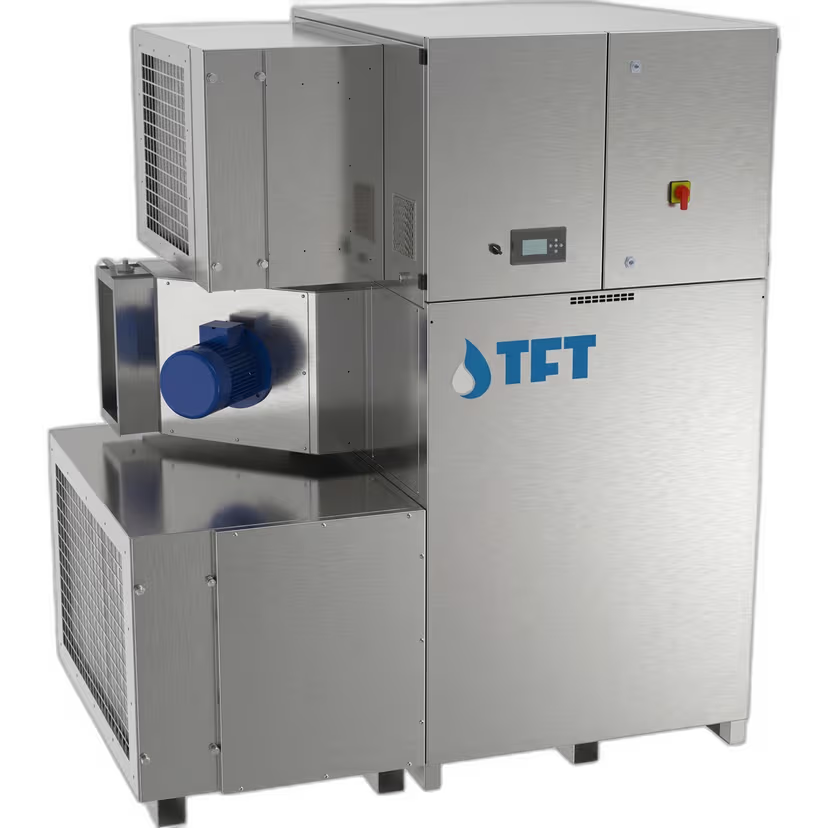
Technology Partnership: TFT: Tecnofrigo Tuscany Srl and NKT Humidity Control Technologies
Developing a humidity control solution for battery production is possible not only through selecting the right equipment, but also by working with a reliable technology partner. One of the prominent names globally in this field is Italy-based TFT (Tecnofrigo Tuscany Srl), a manufacturer that has developed superior technology in the field of industrial dehumidifiers through its engineering unit.
NKT Humidity Control Technologies is TFT's business partner in Turkey and is Turkey's specialist organisation in battery dry room design and humidity control. NKT manages the entire process under one roof, from project consultancy to system design, from manufacturing to commissioning and post-commissioning technical support. All phases, including dry room zoning strategy determination, dehumidifier sizing, energy optimisation, detailed engineering design, equipment selection, field installation, commissioning, performance testing and validation, training, and post-warranty technical support, are carried out by NKT engineers.
References
- ASHRAE Handbook — HVAC Applications, Chapter 24: Desiccant Dehumidification and Pressure-Drying Equipment, 2023.
- IEC 62660: Secondary Lithium-Ion Cells for the Propulsion of Electric Road Vehicles.
- Li, J. et al., “Effect of Moisture Contamination on Manufacturing Quality of Lithium-Ion Battery Electrodes,” Journal of Power Sources, Vol. 417, 2019.
- Eurovent Certification Programme: Liquid Desiccant and Rotary Desiccant Dehumidifiers.
- DIN EN 1507: Ventilation for Buildings — Sheet Metal Air Ducts.
- SMACNA: HVAC Air Duct Leakage Test Manual, 2nd Edition.
- Zhang, S.S., “A Review on Electrolyte Additives for Lithium-Ion Batteries,” Journal of Power Sources, Vol. 162, 2006.
- Xu, K., “Electrolytes and Interphases in Li-Ion Batteries and Beyond,” Chemical Reviews, Vol. 114, 2014.
- ISO 17025: General Requirements for the Competence of Testing and Calibration Laboratories.
- Wood, D.L. et al., “Formation Challenges of Lithium-Ion Battery Manufacturing,” Joule, Vol. 3, 2019.
- Ahmed, S. et al., “Cost of Automotive Lithium-Ion Batteries,” Current Opinion in Chemical Engineering, Vol. 42, 2023.
- NFPA 855: Standard for the Installation of Stationary Energy Storage Systems, 2023.