Cold storage facilities are an essential link in the modern supply chain for ensuring food safety and preserving product quality. In this comprehensive review by NKT Academy, we examine the role, operational advantages, and performance boundaries of dehumidifiers in cold storage rooms operating both above and below 0°C. Studies show that proper use of dehumidifiers in short-, medium-, and long-term cold storage can reduce freeze-related damages by up to 25% and achieve significant savings in energy costs.
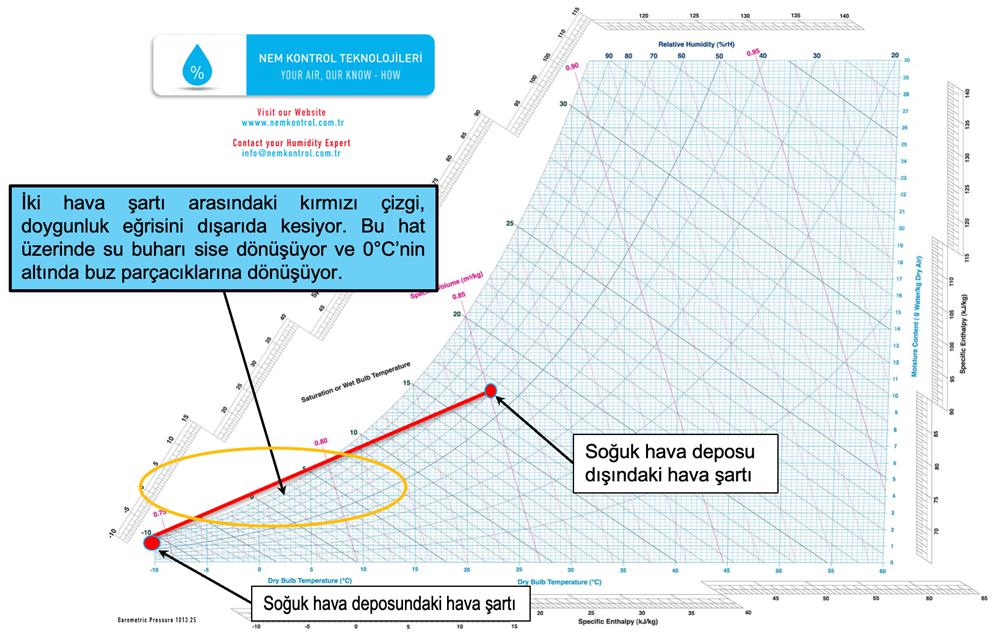
Humidity control in cold storage facilities is based on fundamental thermodynamic principles. Condensation occurs when humid air contacts cold surfaces whose temperature has dropped below the dew point. Particularly during loading and unloading processes, relatively warm and moisture-laden outside air entering the cold storage rapidly approaches the dew point temperature upon sudden contact with the low-temperature interior surfaces. This interaction can be clearly observed on the psychrometric chart, as illustrated in the figure below. The air undergoes sensible and latent heat changes due to the cooling effect and drops to the equilibrium temperature. This rapid cooling sets the stage for phase changes such as condensation and potential frost/snow formation, directly affecting the moisture load, energy consumption, and product quality within the cold storage environment.
When classifying cold storage facilities, it is more appropriate to divide them into two main categories based on operating temperature: cold rooms operating above 0°C and frozen storage rooms operating below 0°C. This distinction directly affects many critical parameters, from the selection of the industrial dehumidifier to energy consumption profiles.
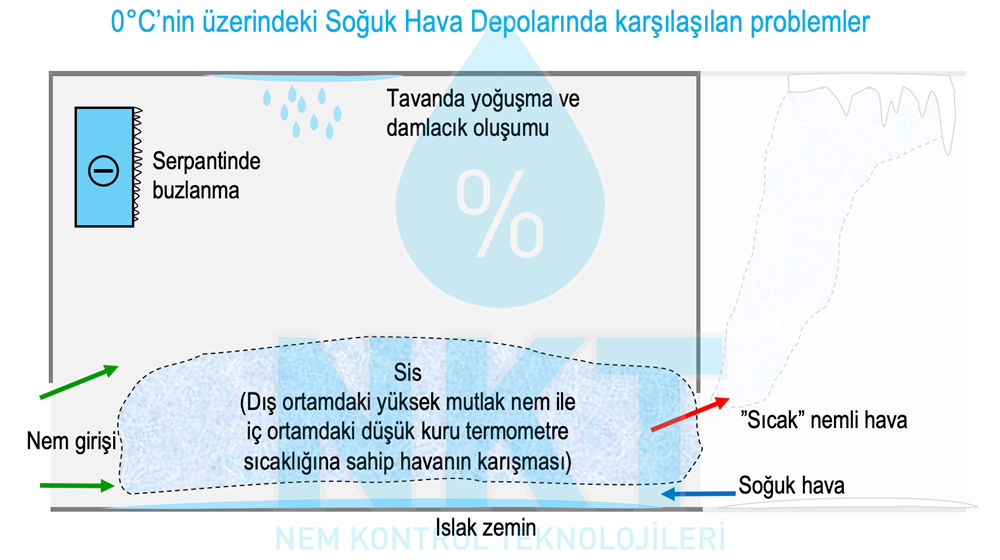
In cold rooms operating above 0°C, when the door opens, warm and humid outside air enters from the top while dense cold air escapes from the bottom. This air exchange not only causes energy loss but also leads to increased relative humidity inside the storage, resulting in heavy condensation on ceiling, wall, and equipment surfaces. As the humid air quickly reaches saturation, fog forms inside the space, reducing visibility and creating serious safety risks for forklifts and personnel.
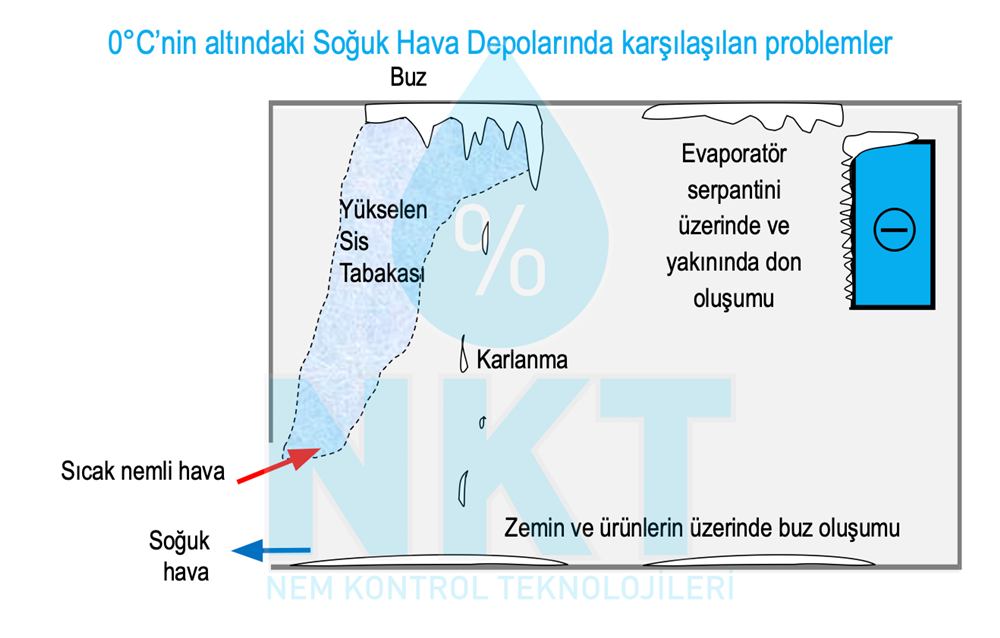
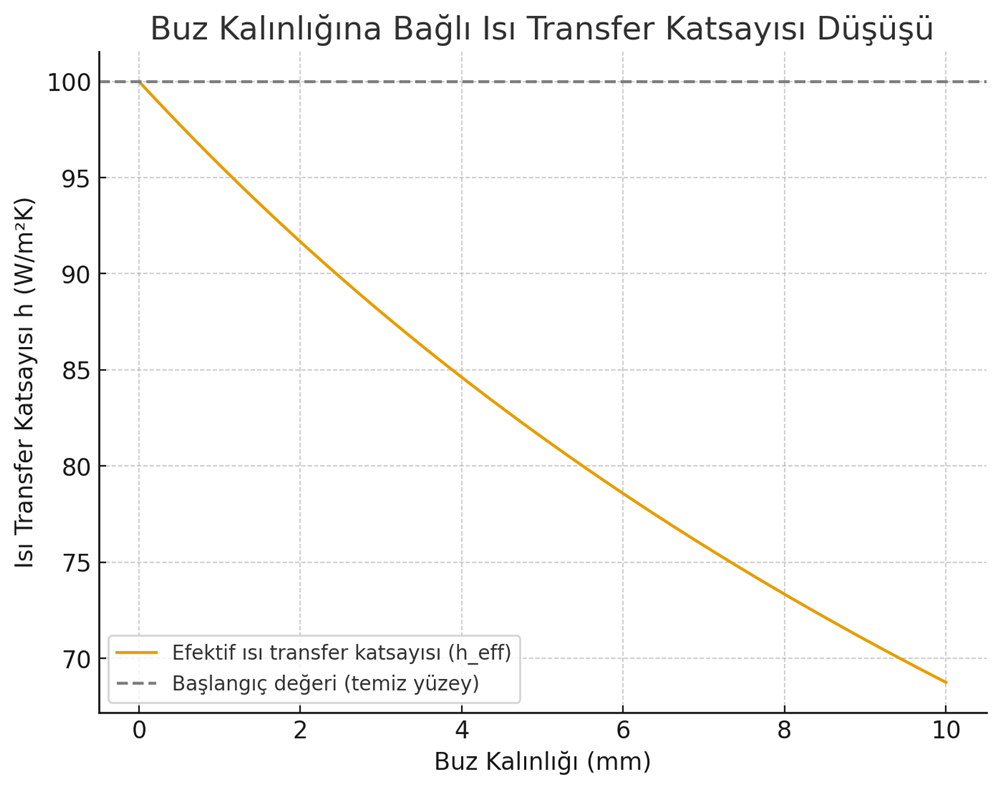
In cold rooms operating below 0°C, the ice layer forms an insulating barrier on the heat transfer surface, reducing the system's coefficient of performance (COP) and requiring more energy to maintain the same cooling load. Additionally, ice layers forming on floors and product surfaces increase the risk of slipping from a workplace safety perspective and can cause product damage.
From an operational standpoint, frost accumulation and snow buildup restrict forklift mobility and cause functional loss during door opening and closing. In logistics processes, the freezing of condensed moisture at low temperatures reduces barcode readability, negatively impacting traceability and operational efficiency. Furthermore, packaging materials, especially cardboard-based ones, undergo deformation due to moisture absorption, losing their structural integrity.
Systematic Analysis of Moisture Sources
The moisture load in cold storage exhibits a multi-dimensional and dynamic character. Primary moisture sources include uncontrolled outside air entering through door openings, the moisture released into the environment through the respiration process of stored products, cleaning and washing activities, and personnel activities. Research findings indicate that even a single door opening event can generate an additional moisture load of 50–100 kg/hour depending on the loading duration. This situation directly affects the capacity of the industrial dehumidifier operating inside the cold room, independent of the cooling system, and creates a determining parameter on operational efficiency.
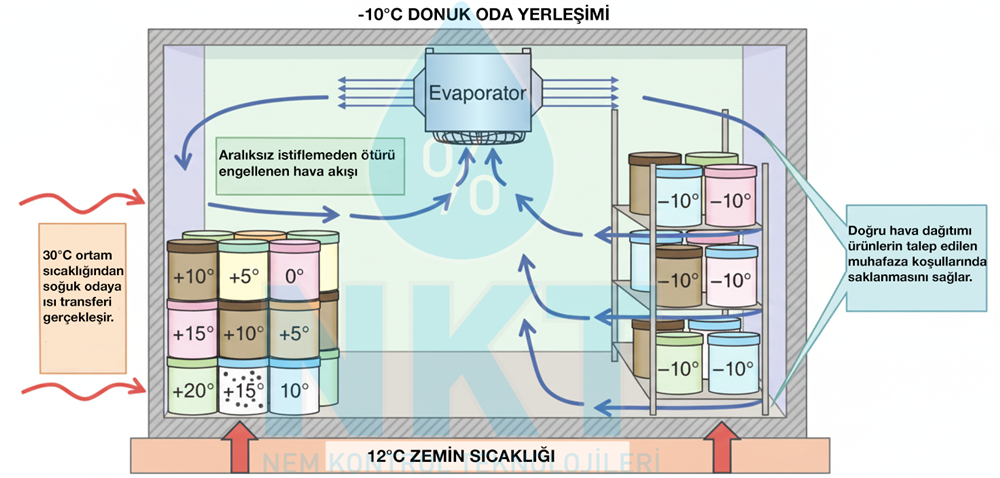
Secondary moisture sources in cold storage facilities are primarily based on structural and equipment-related problems. Insufficient thermal insulation, deformed or damaged door seals, leaks in ventilation systems, and improperly designed drainage and fan loads (in a poorly designed drainage system, fans blow water that should be drained through condensation back into the environment) cause continuous and uncontrolled moisture ingress. Such moisture loads reach critical levels, particularly in facilities with heavy traffic and frequent door openings, negatively affecting system performance and product storage conditions. Furthermore, improper placement of products that prevents adequate air circulation within the storage not only hinders uniform thermal profiles across products but also limits the products' contact with dry air. This results in irregularities in product temperature maps as well as deficiencies in humidity control. The image below illustrates the product temperature distribution resulting from improper stacking.
Technical Comparison of Dehumidifiers
Silica Gel Rotor (Desiccant) Industrial Dehumidifiers
Silica gel rotor industrial dehumidifiers operate by absorbing moisture from the air through rotating rotors coated with hygroscopic materials. The fundamental advantage of this technology is its ability to perform effectively even at very low temperatures. For example, in a cold storage at 4°C, silica gel rotor industrial dehumidifiers can extract moisture from the environment and achieve the targeted relative humidity level.
Particularly in cold rooms operating below 0°C, although absolute humidity values are quite low, the high relative humidity necessitates frequent defrost cycles on evaporator surfaces. Therefore, using air with a low dew point to minimize frost formation on evaporators is critically important. Silica gel rotor industrial dehumidification systems come into play at this point, conditioning the air in areas above 0°C (especially loading docks or airlock zones) and enabling progressively drier air to be transferred into the cold rooms below 0°C. This way, defrost cycle intervals are extended, frost-related heat transfer losses are reduced, and a notable decrease in the energy costs of frozen rooms is targeted.
Condensation-Type Mechanical Dehumidifiers
Mechanical dehumidifiers operate on a principle similar to the refrigeration cycle. Humid air is passed over low-temperature surfaces where moisture is removed through condensation. These systems show high efficiency, particularly in the 15–30°C temperature range. For example, a unit operating at 20°C and 80% relative humidity can be used effectively for the necessary humidity conditioning of a cold room (cool room) with more favorable initial investment and operating costs compared to silica gel rotor industrial dehumidifiers. However, due to the difference between the evaporation temperatures of the refrigerants used in the cycle and the dew point corresponding to the dry bulb temperature and relative humidity required inside the cold room, their efficiency drops sharply below 10°C–15°C. Just as it occurs in cold rooms, frost can form on the evaporator surfaces of condensation-type mechanical dehumidifiers, completely stopping the system. Therefore, devices with this technology should not be used in frozen or cold storage. Their primary application areas are cool rooms above 10°C–15°C or industrial air conditioning environments.
System Design and Installation Criteria
Capacity Calculation Methodology
The capacity determination of dehumidifiers should be carried out not solely based on volumetric size but also according to operating conditions that directly affect heat and mass transfer principles. Factors such as door opening frequency, climatic characteristics of adjacent spaces, storage height, and the resulting stack effect from natural convection significantly increase the moisture load entering the system. Particularly in high-volume storage facilities, vertical air movements caused by temperature and density differences markedly increase the moisture load.
In a typical application scenario, a silica gel rotor industrial dehumidifier with approximately 50 liters/day capacity is considered sufficient to maintain a 450 m³ cold storage at 10°C – 50% RH. However, this value is only a nominal reference, and actual capacity requirements may vary depending on operational dynamics, entry-exit movements, and environmental boundary conditions. When selecting a dehumidifier, the device's capacity at the actual operating temperature and humidity must always be referenced.
Installation Configurations
The mounting geometry of dehumidifiers is a direct determining factor on the thermodynamic performance of the system. Two main configurations are available:
External Installation Configuration (IR - Indirect Remote Installation):
The dehumidifier is positioned outside the cold storage. While this configuration facilitates service and maintenance access, it requires careful insulation of the regeneration and process air ducts against heat transfer. Otherwise, unwanted heat gains negatively affect system efficiency.
Internal Installation Configuration (ICF - Internal Cold Room Fixed Installation):
The dehumidifier is integrated directly inside the storage. In this case, the regeneration air circuit must be separated with thermal insulation, and appropriate insulation dampers must be activated. Additionally, the air intake point inside the storage should be selected at least 4 meters from the door opening to avoid sudden moisture loads from entry-exit traffic. Especially in small storage rooms, serial diffusers can be installed at the storage entrance door in the form of an air shower to blow dry air, positioning a dry air barrier in front of the humid air entering the interior.
In both installation configurations, the sensible and latent heat load transferred to the environment during the dehumidifier's operation must be taken into account. This additional thermal load directly affects the energy balance within the cold storage and partially consumes the existing cooling capacity. Therefore, during the engineering phase, the heat gain introduced by the dehumidifier must be added to the total cooling load, and cooling equipment selection must be made considering this additional load.
In other words, the dehumidifier should be evaluated not only as a humidity control device but also as an element that affects the thermodynamic balance of the system in terms of heat transfer. When integrating industrial silica gel rotor dehumidifiers into cold storage systems, it is recommended to direct the unit's supply air duct toward the evaporator's intake line. In this configuration, the relatively dry and warm air leaving the dehumidifier is cooled by passing over the evaporator and returned to the environment in a dry manner. This achieves both humidity control and more homogeneous air circulation inside the space through the evaporator's high-flow fans.
Furthermore, the evaporator's design operating at low-pressure conditions cools not only the dry bulb temperature of the environment but also the dry air supplied by the dehumidifier, providing additional stabilization in humidity control. In other words, the dehumidifier and evaporator operate in an integrated and complementary manner, mechanically ensuring both relative humidity and temperature control simultaneously. Particularly in cold room applications, designing the electrical control circuit of the dehumidifier for integration with commonly used Dixell and similar advanced control units enables monitoring and management of the system from a single center. This approach not only provides operational convenience but also ensures coordinated and synchronized operation of cooling and humidity control functions, enhancing the overall operational integrity and reliability of the system.
As NKT – Humidity Control Technologies, we do not rely solely on catalog values when selecting industrial dehumidifiers for cold and frozen storage facilities. We analyze operating conditions, cost constraints, and performance requirements with a holistic approach. Together with our expert sales team, each project undergoes technical evaluation of heat and mass transfer balances, stack effect, door opening frequencies, storage volume, and existing cooling infrastructure capacity. Based on the data obtained, solutions are identified that provide optimum energy efficiency and minimum investment cost. In this way, the most cost-effective system configurations are offered to our customers, based on both operational reliability and long-term sustainable performance.