Definition
Water's resistance to pH change; the combined effect of bicarbonate (HCO₃⁻), carbonate (CO₃²⁻) and hydroxide (OH⁻) ions, reported as mg/L CaCO₃.
Detailed Explanation
Alkalinity is the water's capacity to maintain pH when acid is added; it is the total dissolved bicarbonate, carbonate and hydroxide anions. The unit is mg/L CaCO₃. Turkish municipal water typically reads 80–250 mg/L; well water 100–450 mg/L. Measurement is by titration (acid added until pH 4.5).
Why It Matters
Alkalinity has a two-way effect in steam humidifiers: (1) High alkalinity (>300 mg/L) → calcium-carbonate precipitation during evaporation → scale (mostly on electrode cylinders). (2) Low alkalinity (<50 mg/L, RO water typically <10) → pH drops quickly when any acid is added, raising corrosion risk; in resistive systems RO + remineralisation is recommended. Optimum band 80–200 mg/L CaCO₃; outside it, either pre-neutralisation (acid dosing) or remineralisation (calcite filter) is added.
Practical Example
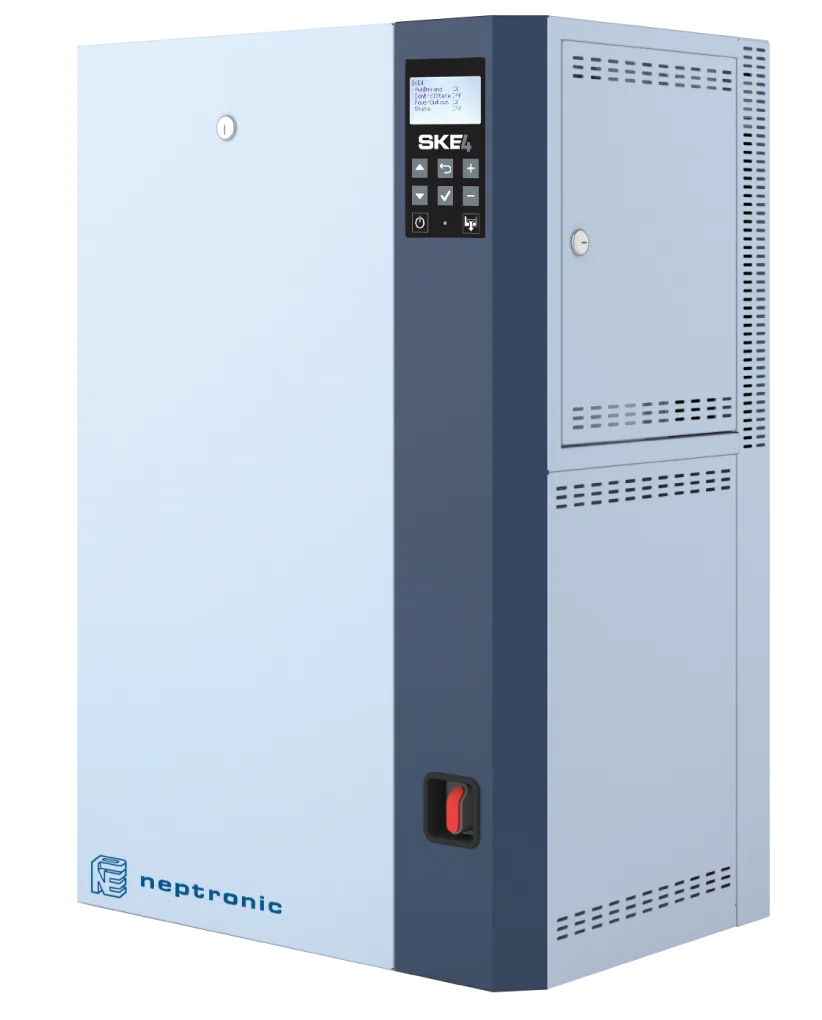
A printing plant in Konya ran a resistive steam humidifier on well water with 380 mg/L CaCO₃ alkalinity; in 6 months heating elements built 4 mm of scale + alkaline deposit and heat transfer dropped 30%. NKT solution: softener + acid dosing (alkalinity target 150 mg/L) + Neptronic SKE4 returned to service after element cleaning. 12 months of clean operation followed at nominal capacity.
Engineering Note
Alkalinity is evaluated together with hardness; if both are high, the Langelier Saturation Index (LSI) becomes positive — scale precipitation tendency. LSI > +1 means aggressive scaling, so drain frequency is raised or pretreatment added. LSI < -1 means aggressive corrosion, so remineralisation is added. Optimum LSI sits between -0.3 and +0.3. The NKT water-analysis report includes the LSI as a standard step.
NKT Application Link
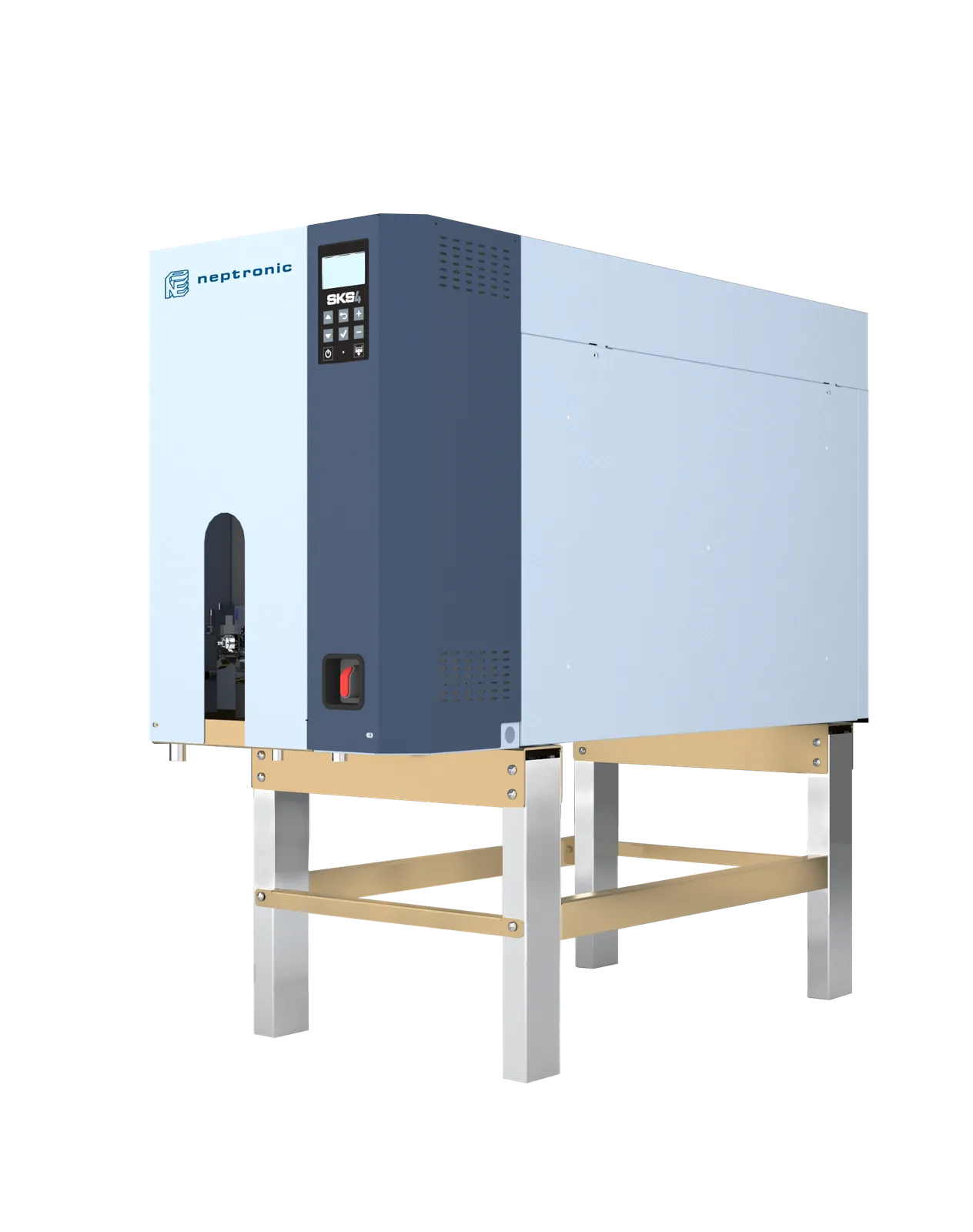
NKT's water-analysis panel includes alkalinity; based on the LSI, softening, acid dosing or remineralisation is recommended. For sensitive facilities (pharma GMP) Neptronic SKS4 (steam-to-steam) is sometimes recommended; the need for in-tank water-quality control is reduced because the steam comes from the facility.
Related Academy Articles
Related Products
NKT products related to this term