Definition
Dissolved silicon dioxide in water (mg/L as SiO₂); during steam generation it forms a hard, glass-like deposit on heating elements that is very difficult to remove.
Detailed Explanation
Silica (SiO₂) enters water by dissolution of rock and soil minerals (quartz, feldspar). It is typical at 30–80 mg/L in Turkish geothermal regions (Denizli, Aydın) and 5–20 mg/L in normal municipal water. Measurement is by spectrophotometer (molybdate method); field kits cover 1–50 mg/L with ±10% accuracy. Above 15 mg/L, silica becomes a design consideration for steam humidifiers.
Why It Matters
Above 100°C, silica crystallises into amorphous SiO₂ and forms a glass-like layer on heating elements, cylinder walls or tank floors. Limescale (CaCO₃) dissolves in acid (citric/HCl); silica only yields to HF (hydrofluoric acid) or mechanical scraping — neither is practical for field maintenance. So high-silica sites need either RO pre-treatment (≈ 85–95% silica retention) or planned heating-element replacement.
Practical Example
A textile plant in Denizli received a resistive steam humidifier fed by geothermal mains water with 65 mg/L silica; in 8 months the heating elements were covered with a hard silica layer, heat transfer dropped and capacity fell 25%. Acid cleaning failed. NKT analysis identified silica; an RO pre-treatment was added (≈ 90% silica retention) and the elements were replaced. 3+ years of clean operation followed.
Engineering Note
Silica is one of the hardest ions to remove via RO; particularly the colloidal form can pass the membrane. Single-pass low-pressure RO achieves 75–85% silica retention; double-pass high-pressure RO or CDI achieves 95%+. In a water analysis, below 15 mg/L is standard, 15–30 is a caution band, and 30+ mandates RO plus annual cleaning. The commissioning report must state the silica value.
NKT Application Link
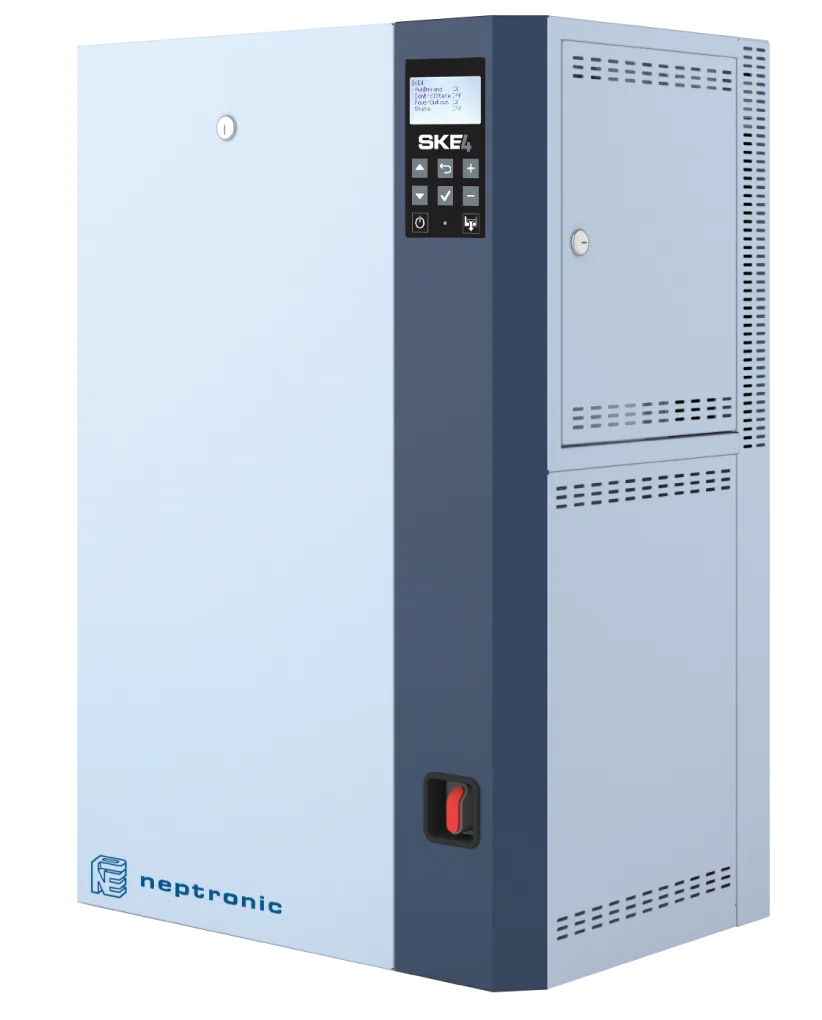
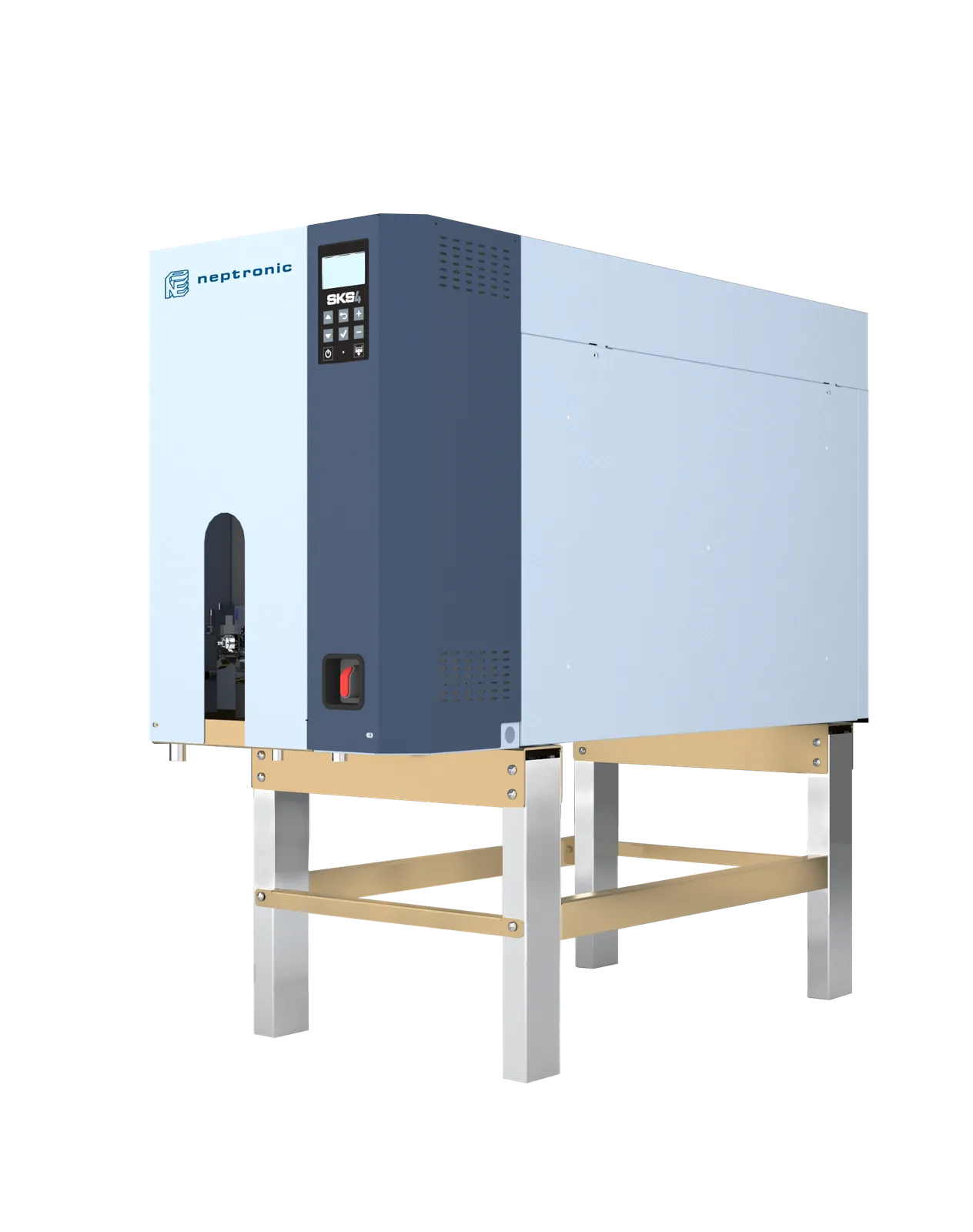
NKT adds silica analysis to the standard water report for geothermal areas and special industrial-water sites. High-silica facilities receive a Neptronic SKE4 + double-pass RO package (95%+ silica retention); in extreme cases with available facility steam, SKS4 (steam comes from outside, silica is not inside the tank) is preferred.
Related Academy Articles
Related Products
NKT products related to this term