Definition
An electronic instrument that measures relative humidity (RH), absolute humidity or dew point in air; the feedback input to a humidifier control loop. The most common types: capacitive RH sensors (industrial humidity sensor, room-type RH/T sensor) and chilled-mirror dew-point hygrometers (reference grade).
Detailed Explanation
Humidity sensors fall into three technology families: (1) CAPACITIVE RH — a polymer-dielectric capacitor whose capacitance shifts with RH; accuracy ±1.5–3% RH, response 10–30 s, drift over 5–7 years, price €200–800; the industry standard (industrial-class RH/T sensor, room-type RH/T sensor). (2) RESISTIVE (DEW-POINT) — hygroscopic salts like lithium chloride; low cost but quick drift. (3) CHILLED-MIRROR HYGROMETER — reference grade, ±0.1°C dp, €8,000–25,000; used only for calibration and very tight processes. 95%+ of field installations use a capacitive RH sensor.
Why It Matters
The humidity sensor is the measurement input of the PID loop — a wrong sensor or wrong placement defeats even a perfect device design. The three most common field mistakes: (1) Wrong position — too close to a steam manifold (inside the absorption distance); the sensor reads un-mixed steam and the system oscillates. (2) Calibration drift — without annual calibration, 5–10% RH error accumulates in 2–3 years. (3) Single-point measurement — controlling average RH in a large hall with one sensor; local variation can reach 5–15%. Correct sensor + correct placement + annual calibration = stable ±1–3% RH control.
Practical Example
A pharma plant in Istanbul reported 5% RH deviation in a cleanroom (setpoint 50%, swing 43–58%). NKT analysis found the sensor at 1.8 m from the steam manifold; the absorption-distance calculation returned 2.5 m. The sensor was moved to 3.2 m and a redundant second sensor was added (median control). Afterwards RH stabilised at 50–52% (within ±2%, inside the Annex 1 limit).
Engineering Note
Sensor-selection criteria: (1) Accuracy requirement — comfort ±5%, industrial ±2%, critical process ±1%; (2) Environment — temperature range, chemical exposure, IP rating; (3) Output signal — 4–20 mA as standard, 0–10 V optional, digital for Modbus/BACnet; (4) Calibration protocol — factory certificate + on-site calibration using saturated salt references (33%, 75%, 97% RH). Multi-sensor architecture: 2-3 sensors + median + calibration log for high precision. Annual calibration is mandatory; pharma and museums on a 6-month cycle.
NKT Application Link
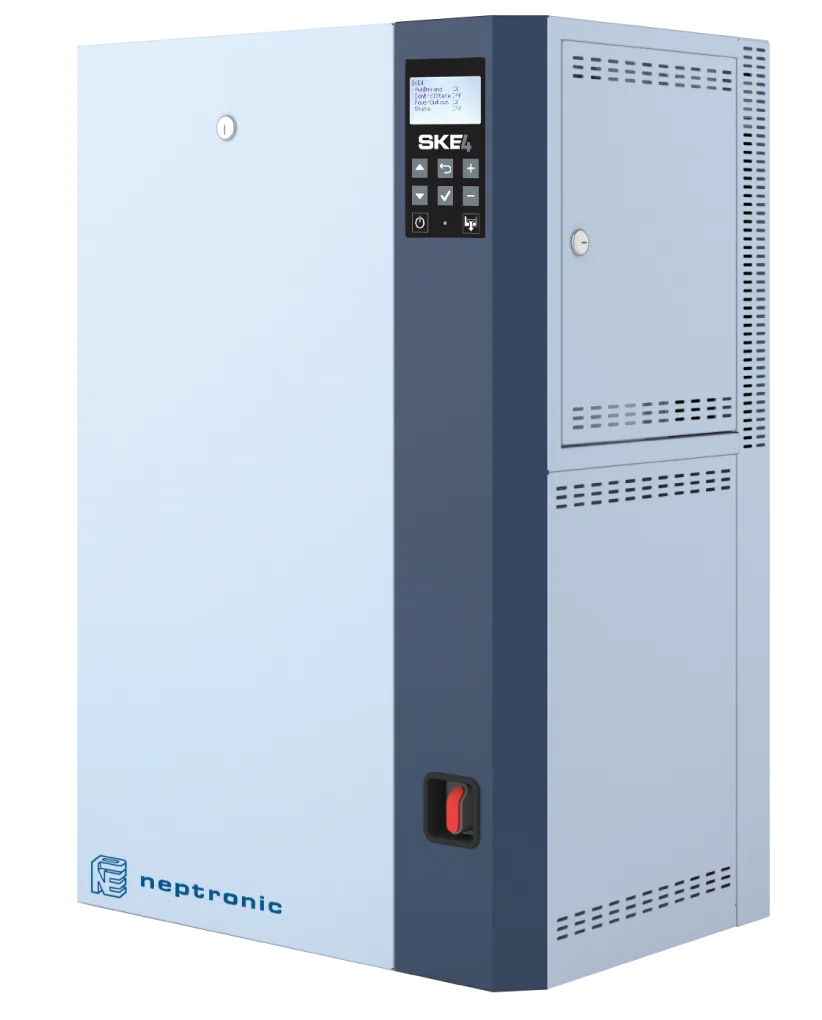
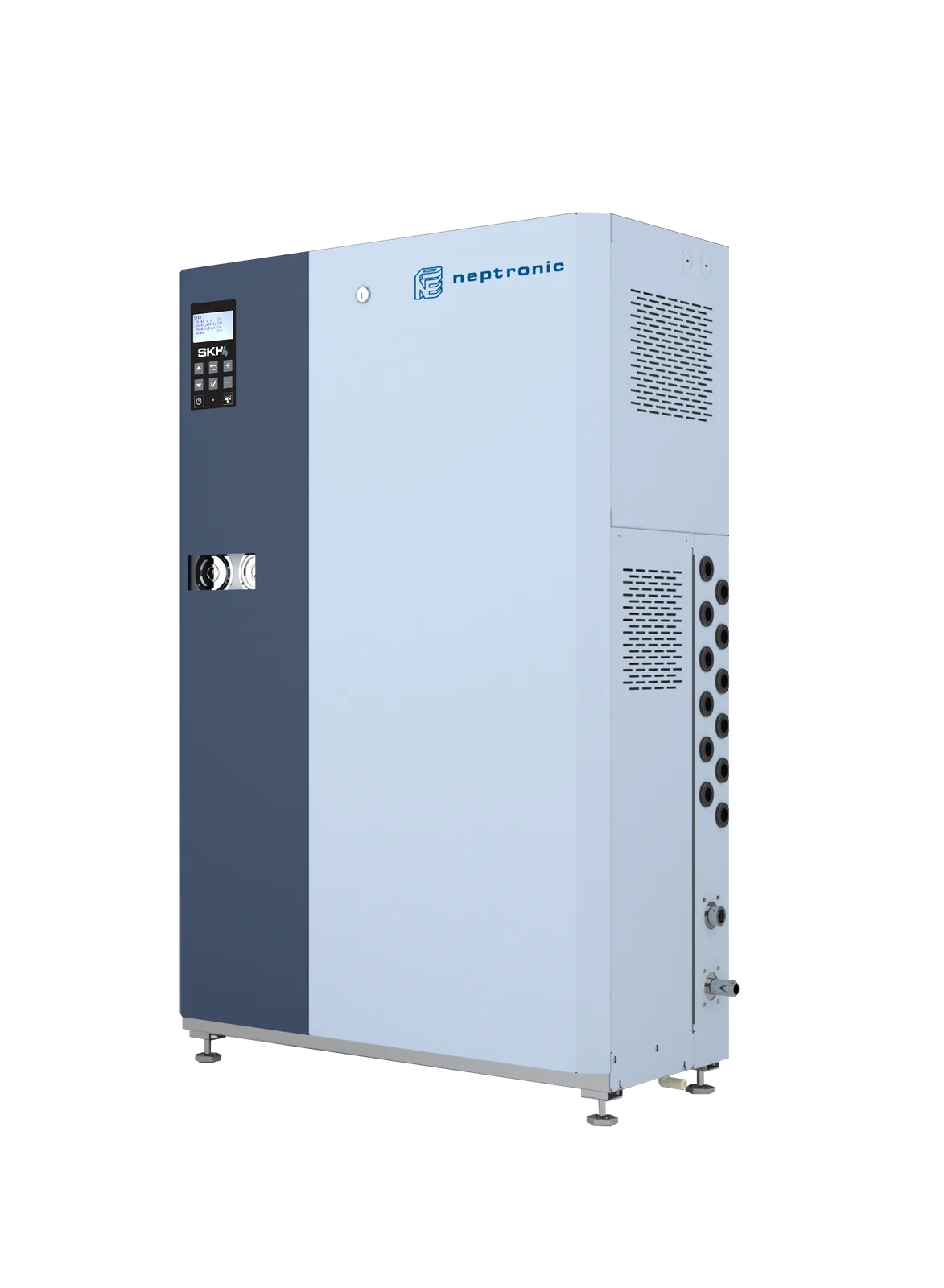
Recommended models: industrial-class RH/T sensor (duct, ±1.5%), room-type RH/T sensor (room, ±0.8%), Neptronic built-in (unit feedback). The NKT - Climate Track platform trends sensor readings continuously; calibration reminders push as automatic service triggers.
Related Academy Articles
Related Products
NKT products related to this term