Definition
A measurement of a water sample's ability to conduct electric current, reported in microsiemens per centimetre (μS/cm). Conductivity is directly proportional to dissolved ion concentration (calcium, magnesium, sodium, chloride, sulphate). It is the decisive parameter for steam humidifier selection: electrode humidifiers require 125–1,250 μS/cm, whereas resistive humidifiers operate across the full range — including RO/DI water — independent of water quality.
Detailed Explanation
Electrical conductivity quantifies the extent to which dissolved ions allow current to pass through water — pure water itself is essentially non-conductive. Pure water has a conductivity of 0.055 μS/cm (at 25°C), typical Turkish municipal water sits at 250–700 μS/cm, hard well water at 800–1,500 μS/cm, and seawater exceeds 50,000 μS/cm.
Conductivity is reported at the 25°C reference with automatic temperature compensation, because ion mobility is strongly temperature-dependent (≈ 2% change per 1°C). Industrial conductivity meters (e.g. WTW Cond 3110, Hach HQ40d) measure the resistance between two stainless-steel electrodes and report the result in μS/cm. In steam humidification applications, conductivity must be measured prior to commissioning, because equipment-type selection depends directly on this value.
Why It Matters
In electrode steam humidifiers, conductivity is the mathematical basis of capacity: the device passes current between two electrodes through the water; per Ohm's law (current = voltage / resistance), as conductivity drops the current drops and steam output falls. Below 125 μS/cm an electrode system cannot operate at all; above 1,250 μS/cm the current runs out of control, leading to rapid scale build-up and a short cylinder life (3–6 months). For this reason electrode humidifiers are unsuitable for facilities outside this "conductivity window."
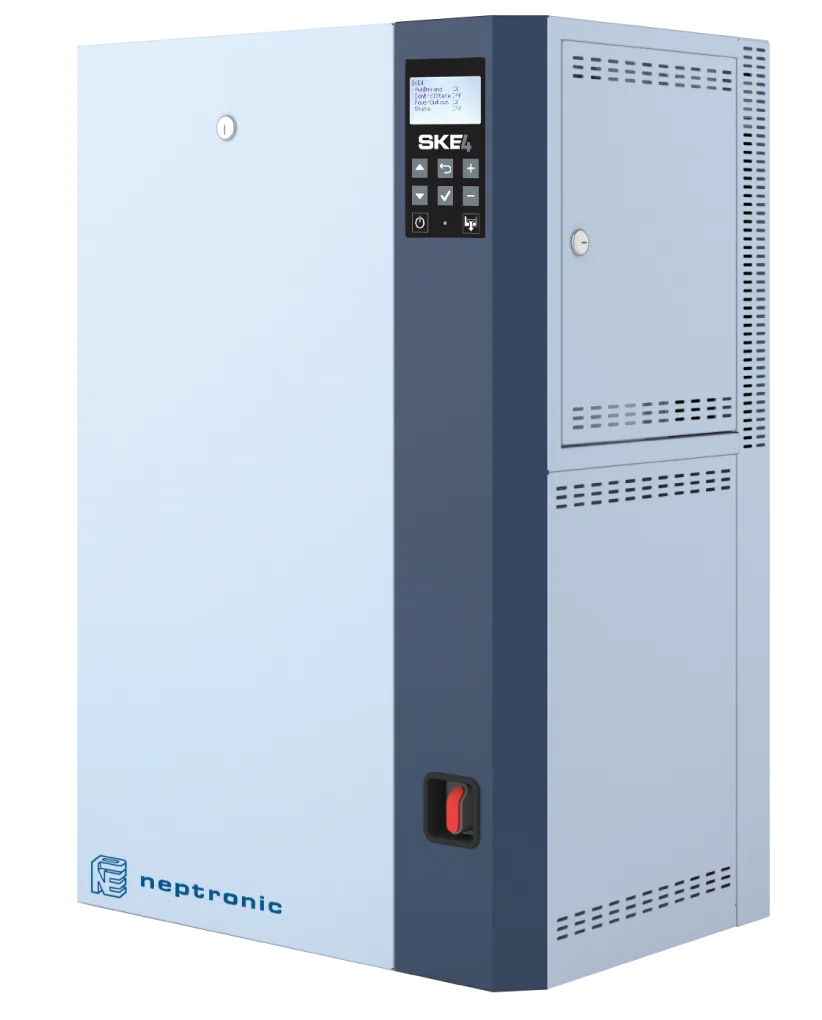
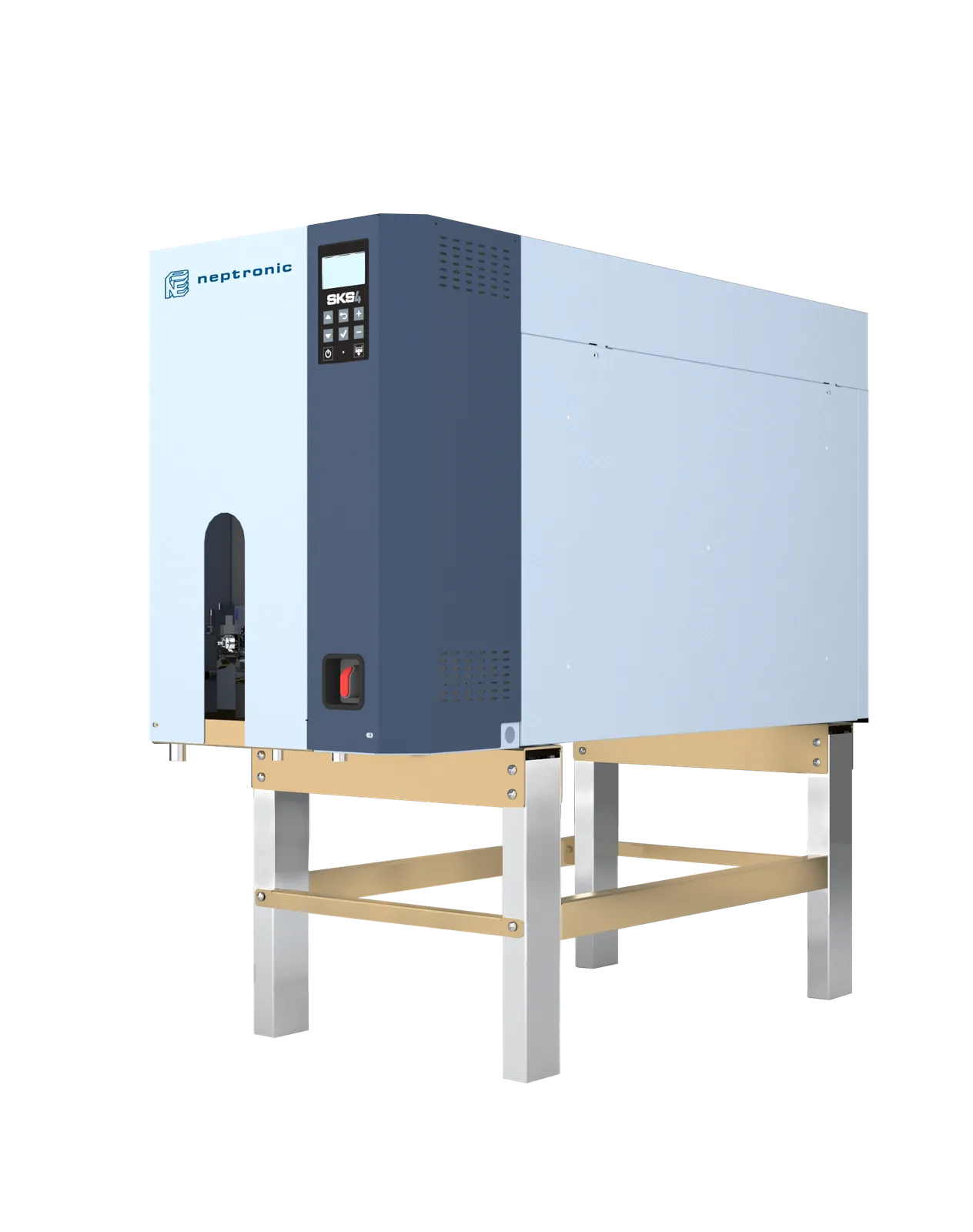
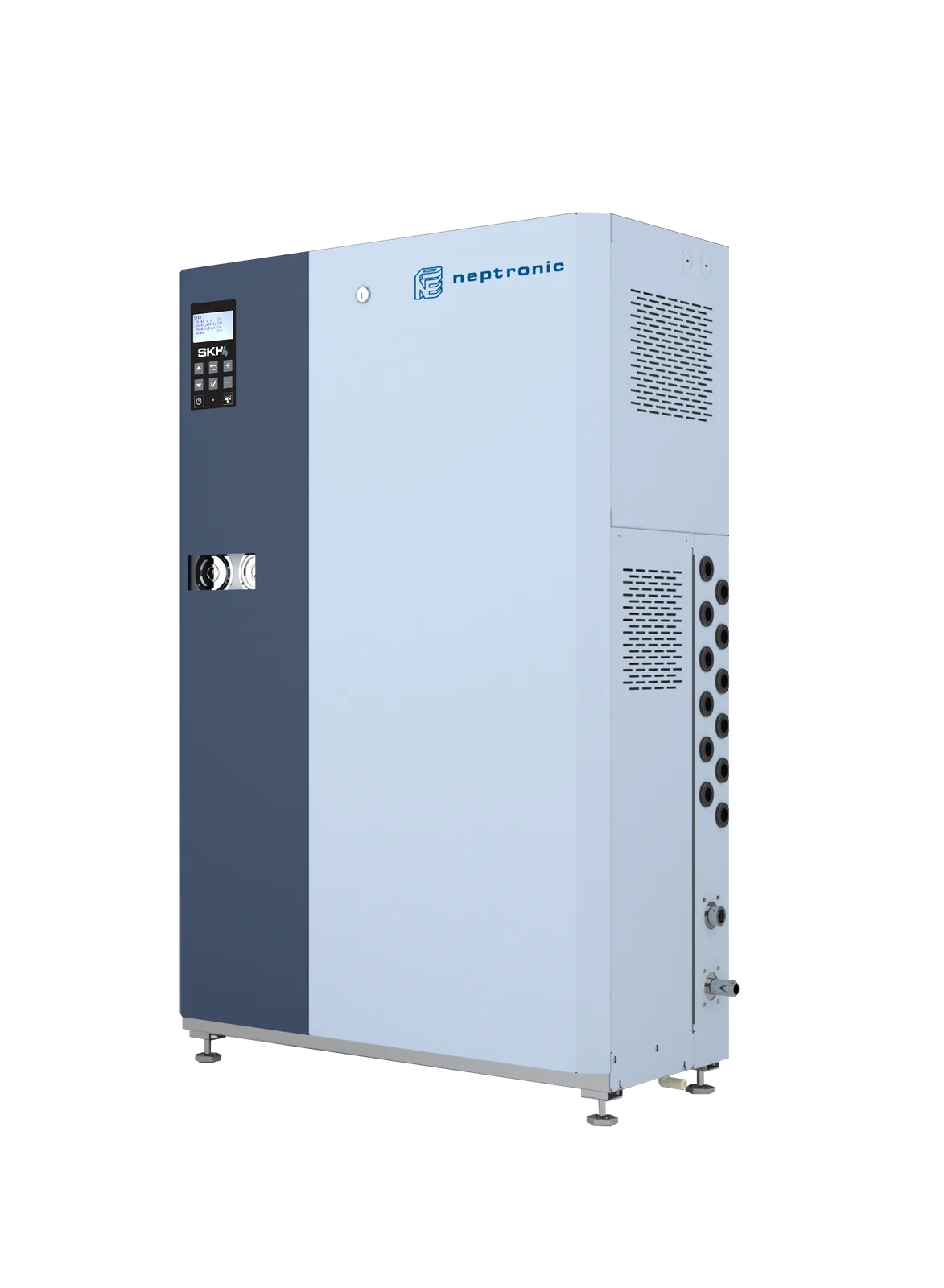
In resistive steam humidifiers, heat is delivered to the water by a stainless-steel heating element — water is passive, conductivity is not an input. This distinction makes resistive selection effectively mandatory for RO/DI-fed pharma facilities, sensitive print rooms, hospital operating theatres, and museum/archive spaces. NKT projects make pre-commissioning conductivity measurement a standard step; depending on the result, Neptronic SKE4 resistive, SKS4 steam-to-steam, or SKH atomisation is recommended.
Practical Example
In a Marmara region hospital operating-theatre HVAC project, pre-commissioning measurement showed mains conductivity of 920 μS/cm; the room required mineral-free, sterile steam and a ±2% RH band. While an electrode system would technically fit the conductivity window, mineral-laden steam would clog the HEPA filter and breach the hygiene class. Solution: a Neptronic SKE4 resistive humidifier fed from the facility's RO system (post-RO conductivity 8 μS/cm). The configuration satisfied cGMP/ASHRAE 170 and reduced annual cylinder maintenance cost to zero.
A counter-example: an office building with pre-commissioning mains conductivity of 60 μS/cm (district served by a soft-water network). The electrode humidifier could not run; capacity collapsed to 15% of nameplate. After replacement with a Neptronic SKE4 resistive unit, the system reached nominal capacity and the water-quality issue dropped from the project agenda.
Engineering Note
A common rough conversion between conductivity and TDS (Total Dissolved Solids, mg/L): TDS ≈ Conductivity × 0.55–0.75 (NaCl reference). Inverse: 500 ppm TDS ≈ 700–900 μS/cm. This conversion is composition-dependent — accurate quantification requires a dedicated lab analysis.
Post-RO conductivity drops to 5–25 μS/cm; post-DI (deionised) reaches 0.5–5 μS/cm. Both qualities disqualify electrode humidifiers but are ideal feedwater for resistive units — scale build-up is effectively zero and chamber cleaning falls to annual intervals. The NKT engineering deliverable always reports conductivity + TDS + hardness together; equipment selection is anchored to this triplet.
NKT Application Link
NKT engineering proposals include a pre-commissioning water quality analysis (conductivity, hardness, TDS, chloride, silica) as standard. Based on the result, Neptronic SKE4 resistive (any water type), SKS4 steam-to-steam (with existing facility steam), or SKH atomisation (RO feed plus adiabatic cooling benefit) is recommended. Where the facility lacks an RO system, NKT factors RO integration into the proposal alongside the capacity sizing.
Related Academy Articles
Related Products
NKT products related to this term