Definition
Water that sits without circulation in a tank, pipe or channel for extended periods; at 25–55°C it creates an ideal environment for bacteria (especially Legionella), biofilm and microorganism growth.
Detailed Explanation
Stagnant water is the most common source of hygiene breach in humidification systems. Typical locations: (1) Dead legs — branch lines unused for long periods; (2) Dead volume — 5–10 cm of undrained water at tank bottoms; (3) Low flow — laminar flow in pipes lets biofilm grow on the wall; (4) System downtime — weekends, holidays, off-season. Once water has been still for 6+ hours, bacterial growth becomes exponential; 1,000× multiplication in 24 hours is common.
Why It Matters
Four engineering remedies address stagnant water: (1) HYGIENIC PIPING — no dead legs, continuous loop design, minimum branch length (pipe diameter × 6); (2) CONTINUOUS RECIRCULATION — 24/7 pump operation at minimum flow (Reynolds > 4,000 for turbulent flow); (3) AUTO DRAIN/PURGE — automatic discharge when the system is idle (triggered after 8 h); (4) PERIODIC FLUSHING — weekly or biweekly automatic chemical clean, or high-temperature (70°C+) recirculation. Together they practically eliminate stagnation.
Practical Example
A hotel restaurant in Antalya shuts off its kitchen adiabatic humidifier outside the 5-month summer season. The original passive system had no auto-drain. After 6 months, the first restart produced foul odour + brown water from the nozzles; the system was out of service for 4 weeks. NKT retrofit: an auto-purge cycle (8-hour recirculation check, drain + refresh if needed) + a full off-season drain protocol. Over the next 3 season openings, restart was trouble-free.
Engineering Note
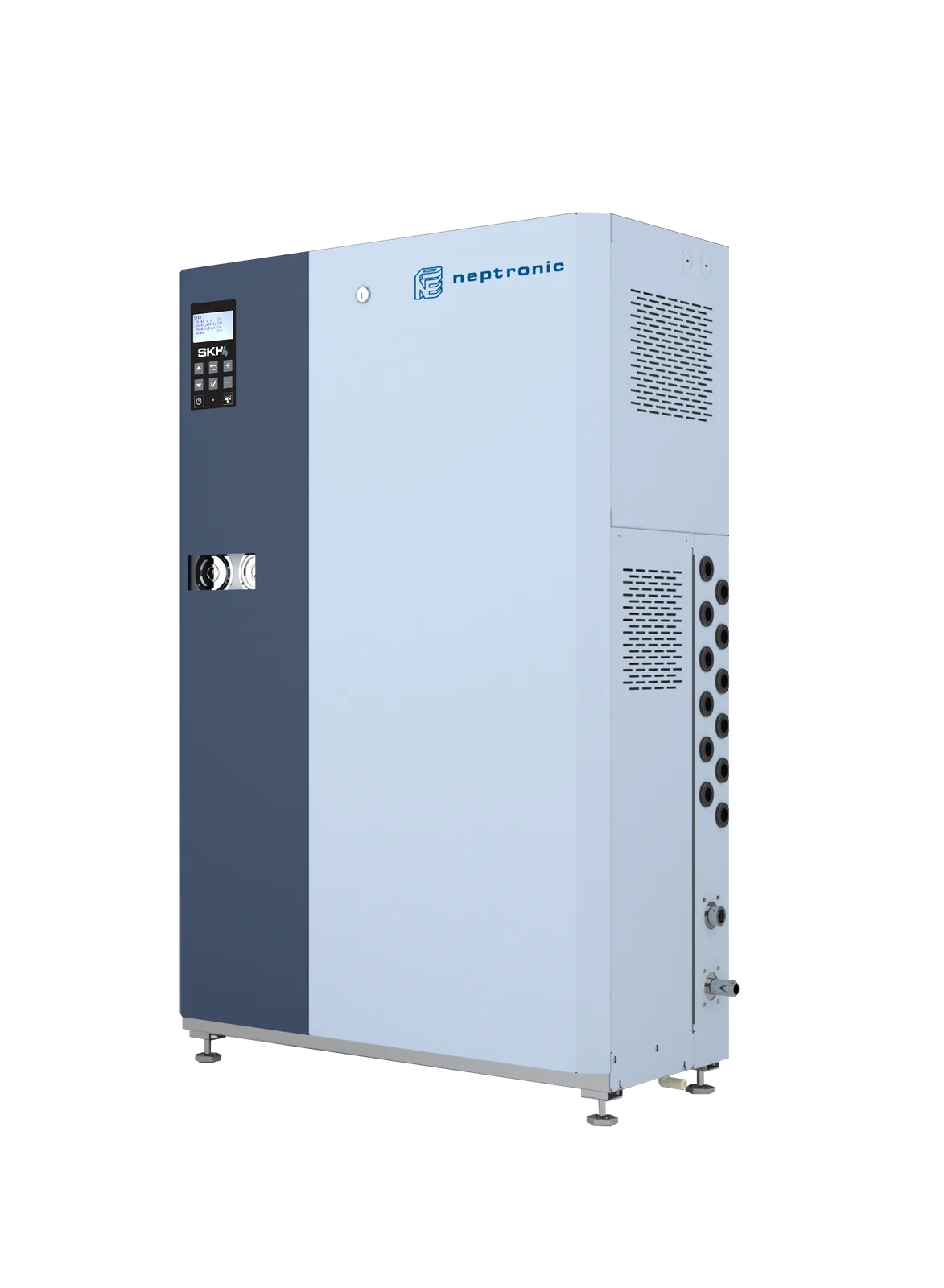
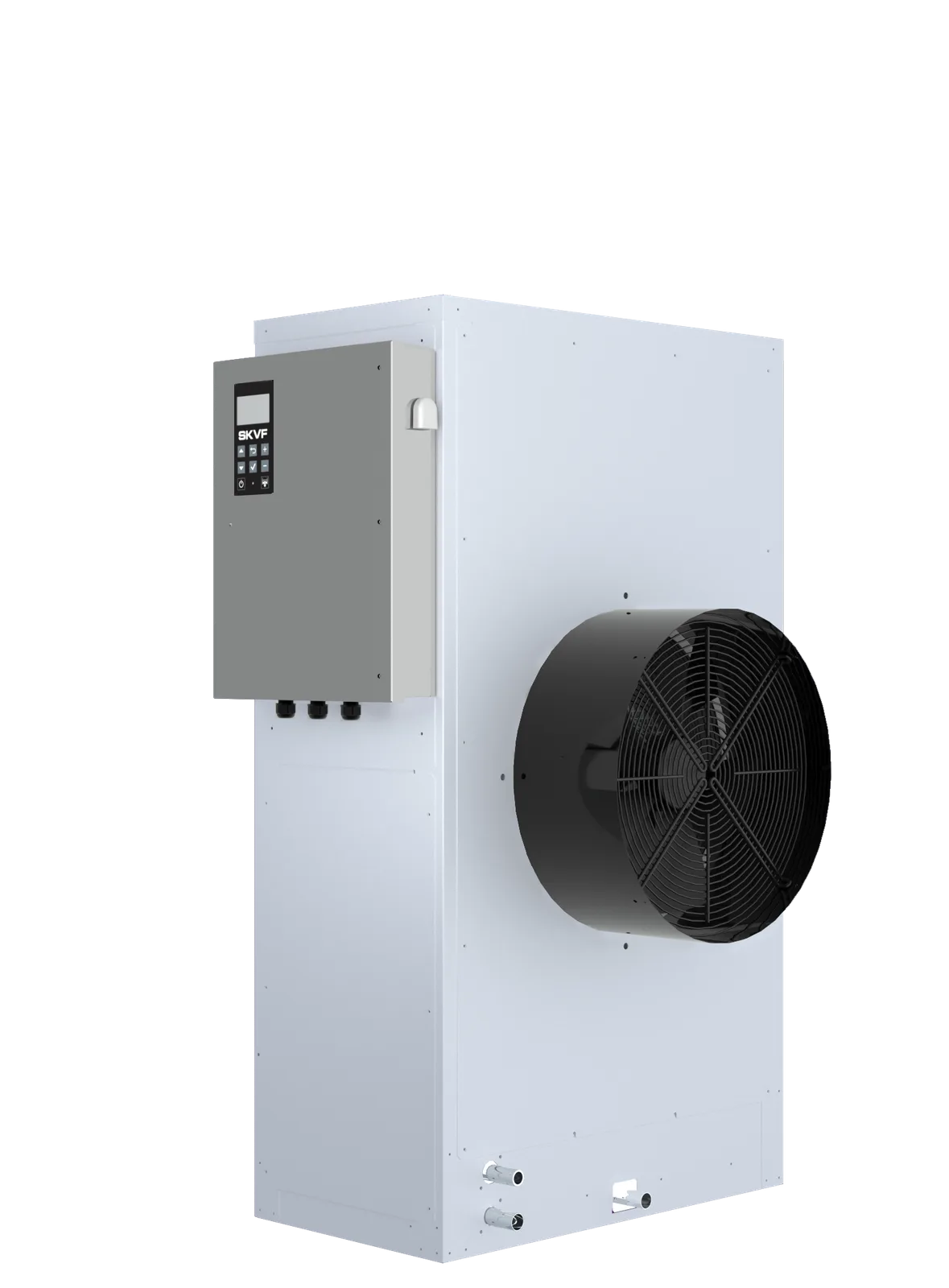
Hygienic piping design rules: (1) Dead leg length < 6× pipe diameter (e.g. < 150 mm for DN25); (2) Branch take-off angle ≥ 45° (90° tees accumulate); (3) Drains at the lowest pocket; (4) Slope ≥ 1%; (5) Idle equipment is isolated + drained, not bypassed. PLC programming: drain-trigger criteria use water temperature + idle time + conductivity change. Modern Neptronic SKH/SKVF systems ship with these algorithms as standard.
NKT Application Link
For facilities with seasonal or intermittent usage, NKT offers a Neptronic SKH/SKVF + auto-purge + off-season drainage protocol package. The NKT - Climate Track platform continuously monitors recirculation flow + idle time + last drain date, and reports a daily stagnant-water risk index.