Definition
Periodic discharge of concentrated water from a steam humidifier's tank/cylinder; it controls mineral concentration and prevents foaming and scale build-up.
Detailed Explanation
Drain (or blowdown) is the periodic discharge of concentrated water from a steam humidifier's tank/cylinder. During steam generation water evaporates but minerals remain; as concentration rises, TDS, conductivity and scaling rate all increase. The drain caps this concentration. Typical discharge ratio is 10–25% of tank volume; frequency is typically every 50–200 hours depending on water quality.
Why It Matters
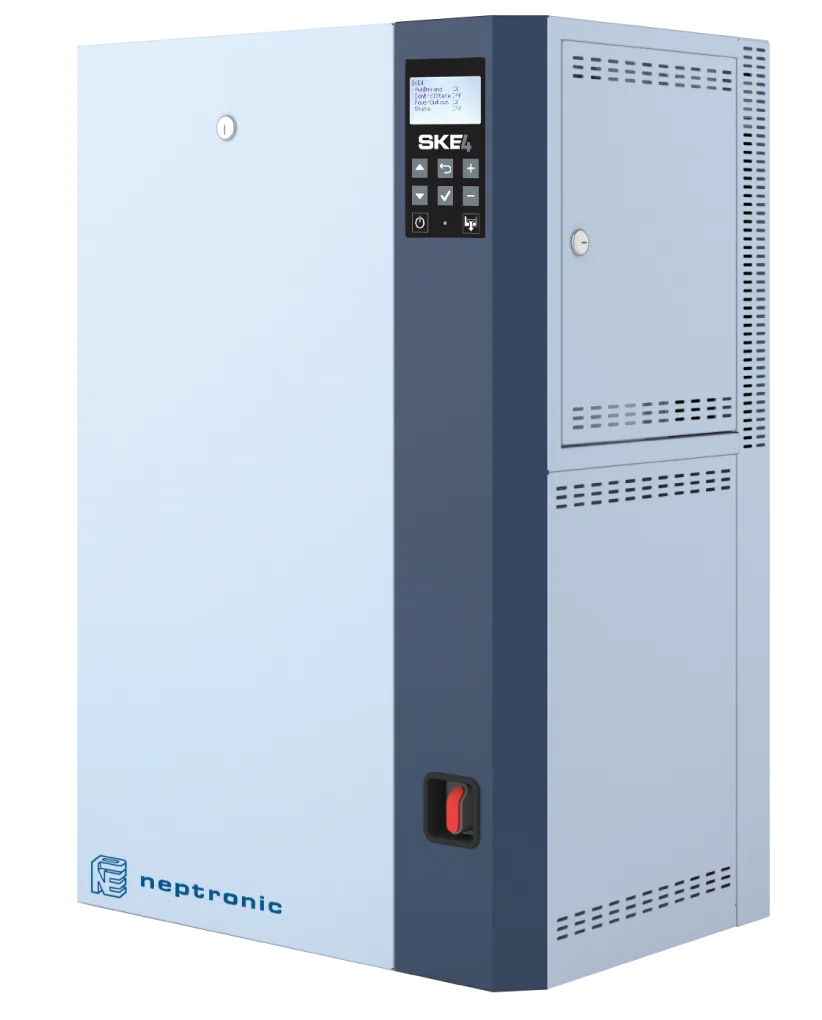
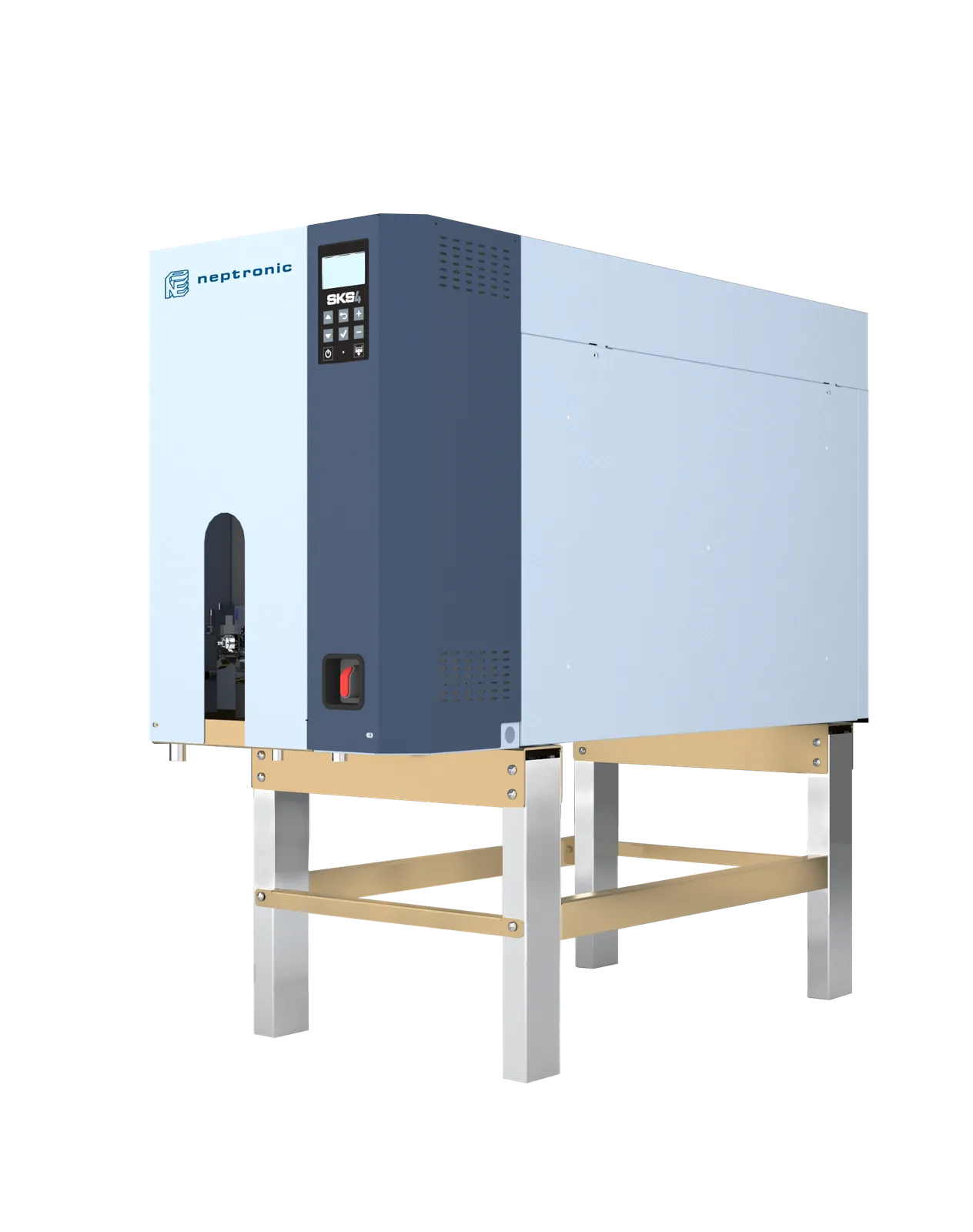
A correct drain strategy delivers three goals: (1) caps mineral concentration → less scale, longer cylinder/element life. (2) Prevents foaming → stable level control and high steam quality. (3) Hygiene — water sitting in the tank for long periods supports microbial growth; the drain refreshes it. Insufficient drain → rapid scale + foaming; excessive drain → water waste (thousands of m³/year) + energy loss (drain water is hot). At the optimum point, modern units use automatic drain algorithms (Neptronic SKE4 AFEC, humidifier controller).
Practical Example
Drain optimisation for a Bursa textile plant running an SKE4 resistive (50 kg/h) for 2,500 h/year: the previous setting was 25% drain every 50 h → 312 m³ of water discharge and 18 MWh of energy loss (hot water) per year. NKT's maintenance team adjusted the drain to 15% every 120 h based on a water analysis (TDS 320 mg/L, hardness 8 Fr°) → 78 m³ water + 4.5 MWh energy per year. A 75% water saving, scaling rate up 20%, but cylinder maintenance still once per year.
Engineering Note
Drain-interval formula: drain_interval (h) = (tank_volume × drain_ratio) / (capacity × tds_factor); in practice the unit PLC decides dynamically from a TDS sensor. On RO-fed sites TDS stays low → drain interval lengthens (e.g. every 500 h at 10%). On hard-water sites TDS rises fast → drain interval shortens. Drain water is 60–80°C; before connection to the building drain a tempering valve (cold-water mix) may be needed — local plumbing code typically demands drain <40°C.
NKT Application Link
Drain-algorithm tuning is a standard step in NKT's periodic-maintenance contract; it is optimised against the water analysis and the unit log. The Neptronic SKE4 AFEC patent dynamically controls drain together with foaming, reducing manual intervention. The NKT - Climate Track platform trends drain count/volume; an abnormal increase (rising water consumption) is an early-warning signal to the operator.
Related Academy Articles
Related Products
NKT products related to this term