Definition
The temperature drop caused by latent heat being drawn from air as water evaporates within it; typically 2–10°C, depending on air temperature and RH. Either a side benefit or a primary goal of adiabatic humidification.
Detailed Explanation
Evaporative cooling requires 540 kcal/kg of latent heat for water to vaporise; this heat is drawn from the surrounding air, cooling it. Thermodynamic equation: ΔT = (m_water × Δh_vap) / (m_air × c_p_air); practical approximation: every 1 g/kg of added moisture ≈ 2.5°C of cooling. Maximum cooling is bounded by wet-bulb temperature (Twb) — an adiabatic system can drop Tdb to Twb at most. Summer outdoor air in Turkish inland cities has Twb ≈ 19–24°C; for an office-comfort target of 24°C, adiabatic alone may suffice.
Why It Matters
Evaporative cooling matters in two contexts: (1) ENERGY SAVING — replacing mechanical cooling (chillers, DX) with evaporative cuts electricity by 75–90%; the dominant choice for textile, greenhouses, data-centre free-cooling pre-cooling, and warehouse cooling. (2) UNWANTED EFFECT — facilities with tight temperature targets see unintended temperature drops; in winter it adds heating load. In strict bands like pharma cleanrooms (22°C ± 1°C) or hospital ORs (21°C ± 2°C), the adiabatic system must be balanced with a reheat coil.
Practical Example
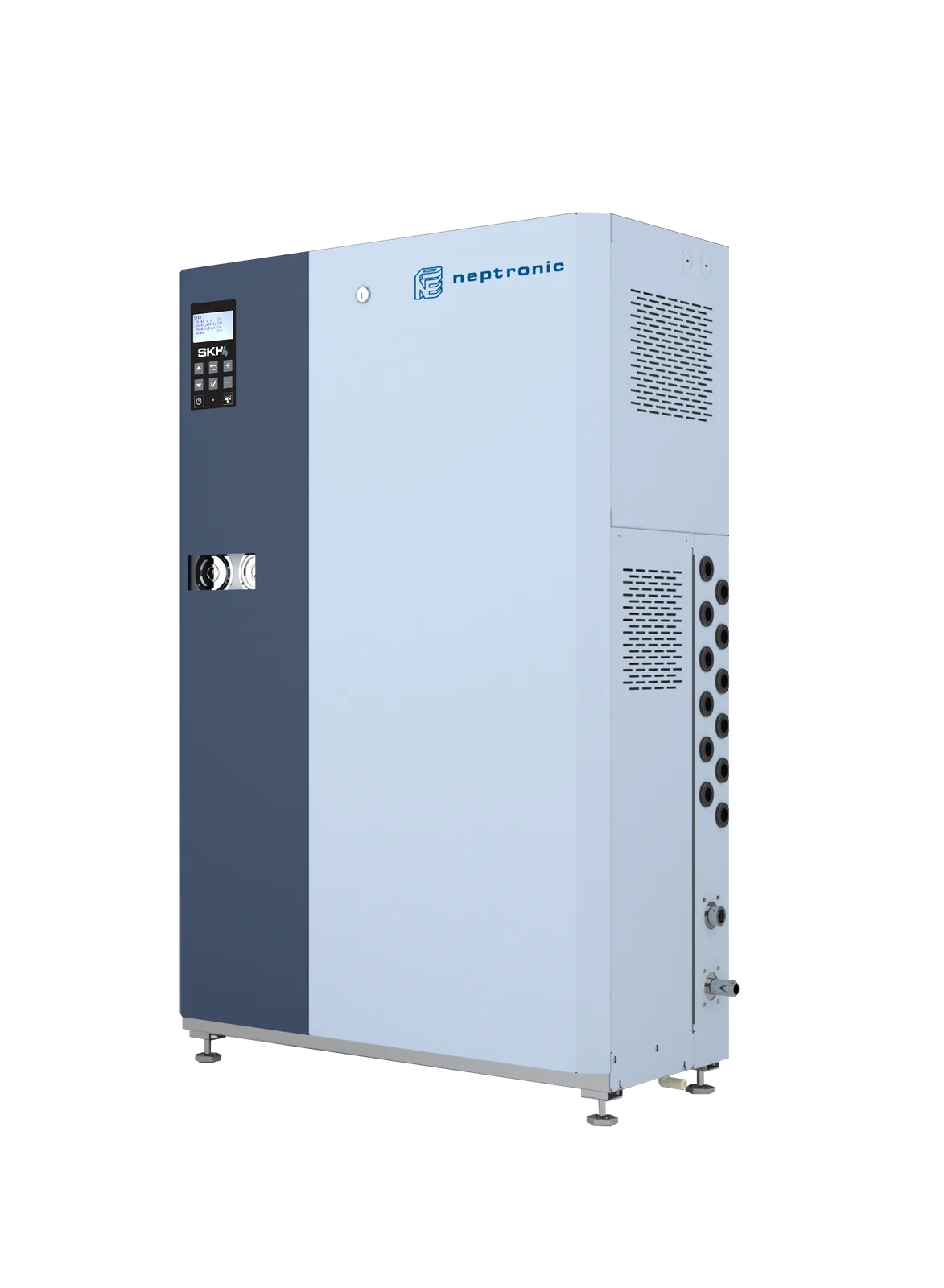
A data centre in Istanbul-Tuzla uses evaporative cooling in its free-cooling pre-cool stage: summer outdoor 33°C/45% RH, Twb ≈ 23°C. A Neptronic SKH adiabatic mist system (capacity 800 kg/h) cools the outdoor air to 25°C (8°C of adiabatic cooling) + raises RH to 75%; a downstream sensible cooling coil brings the air to the 22°C/65% RH setpoint. Across summer, chiller load dropped 42% and 480 MWh of annual electricity ≈ €72,000 saved.
Engineering Note
Design limit: ΔT_max = Tdb − Twb. This "dry-bulb wet-bulb depression" is small (e.g. Black Sea summer 27°C/85% RH → Twb 25°C, ΔT_max = 2°C) where adiabatic cooling is weak and not recommended. It is large (e.g. Konya summer 35°C/25% RH → Twb 19°C, ΔT_max = 16°C) where adiabatic is very effective. The site-specific limit should always be checked on the psychrometric chart.
NKT Application Link
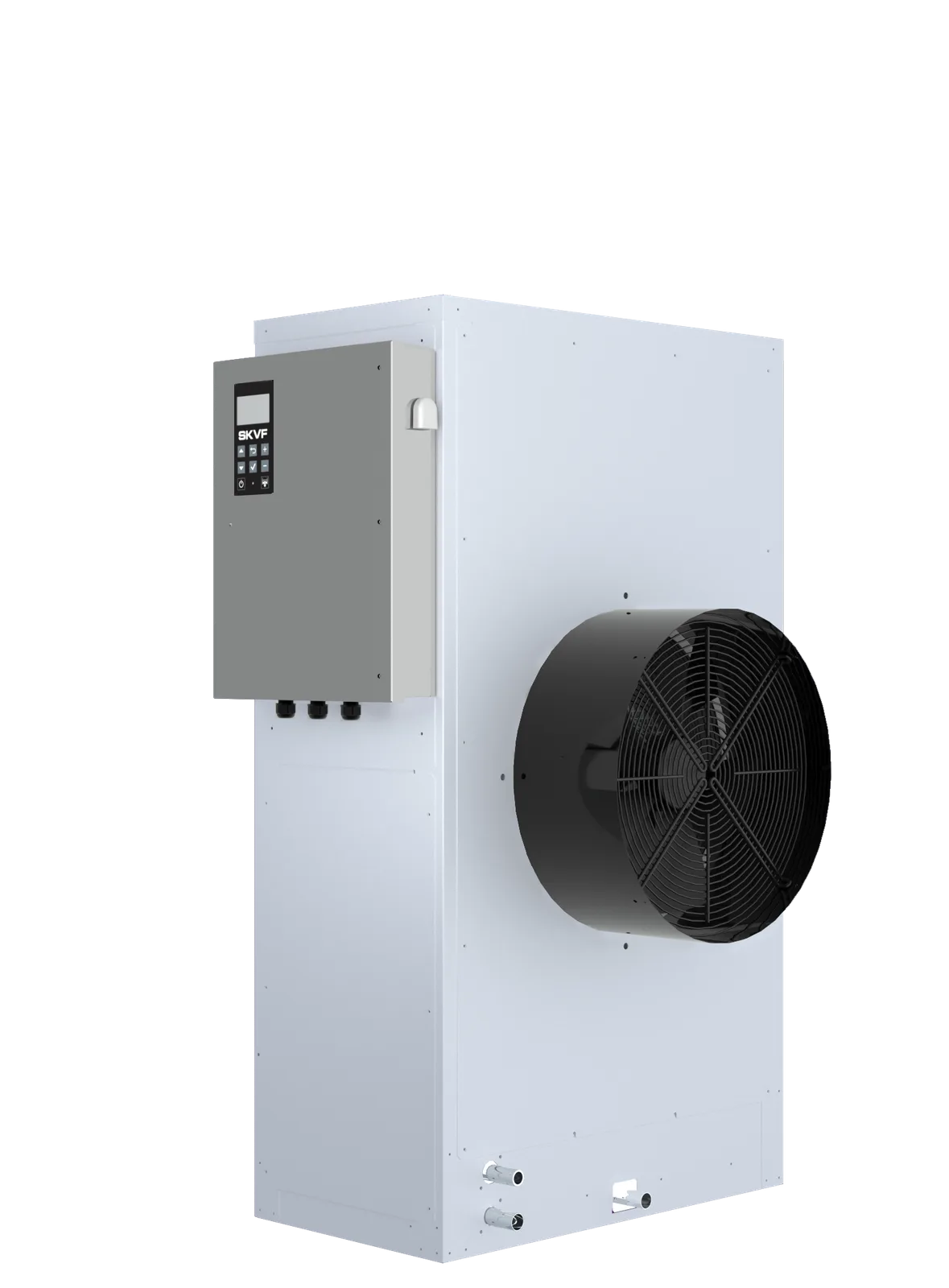
NKT proposals evaluate the site's geographic location (ASHRAE climate class) + indoor Tdb/RH target + cooling infrastructure together; the ΔT achievable from adiabatic cooling is computed on the psychrometric chart. The Neptronic SKVF (in-AHU adiabatic cooler), SKH (misting + cooling) and SKV (evaporative humidifier with cooling side benefit) families lead in these applications.