Definition
The separation of particles from water or air through a porous medium; in humidification systems it is the mandatory pre-treatment layer to prevent nozzle clogging, biofilm growth and UV shadowing (typical 5–25 μm particle filter + 1 μm carbon polishing).
Detailed Explanation
Water filtration removes mechanical contaminants, sand, rust and clay particles from the water entering a humidifier. The standard 3-stage train: (1) Sediment filter — 25 μm cellulose or polypropylene, coarse particles; (2) Multimedia depth filter — 5 μm, fine particles; (3) Carbon filter — 1 μm activated carbon, chlorine + organics. Total pressure drop is 0.5–1.5 bar; replacement every 3–6 months. Filtration is mandatory upstream of RO (protects the membrane); for cleanrooms an additional 0.2 μm membrane filter is added after RO.
Why It Matters
Without filtration, an adiabatic humidifier faces three problems: (1) NOZZLE CLOGGING — nozzles with 0.15 mm orifices clog on particles above 25 μm; monthly nozzle replacement gets expensive. (2) BIOFILM — particle contaminants offer bacterial attachment surfaces, biofilm builds, Legionella risk rises. (3) UV SHADOWING — turbid water absorbs UV, dropping disinfection efficacy (99.9% → 50%). On a 200 kg/h system running 5,000 h/year, filtration capex is €800–1,500 + €600/year maintenance; in return, nozzle + UV-maintenance savings are €5,000–8,000/year.
Practical Example
A textile plant near Izmir port had high-sediment mains water (averaging 35 μm particles). With a single-stage 25 μm filter, 20% of nozzles clogged in 2 months. NKT proposed a 3-stage train (25 + 5 + 1 μm) + biannual multimedia regeneration. Over the next 18 months, zero clogs, RO membrane life extended 40%, and UV CFU results stayed at "0 CFU/L".
Engineering Note
Filter sizing rule: nozzle orifice / 2 = max particle size. Example: 0.30 mm nozzle → 150 μm max. For RO membranes the cap is 5 μm. When filter pressure drop ΔP rises above 1.0 bar, it is replacement time; PLC-monitored systems use a differential-pressure transmitter as standard. Carbon is especially critical for chlorine (Cl₂) — city-water chlorine oxidises RO membranes. Standard order: sediment → multimedia → carbon → RO → UV → tank → pump → nozzles.
NKT Application Link
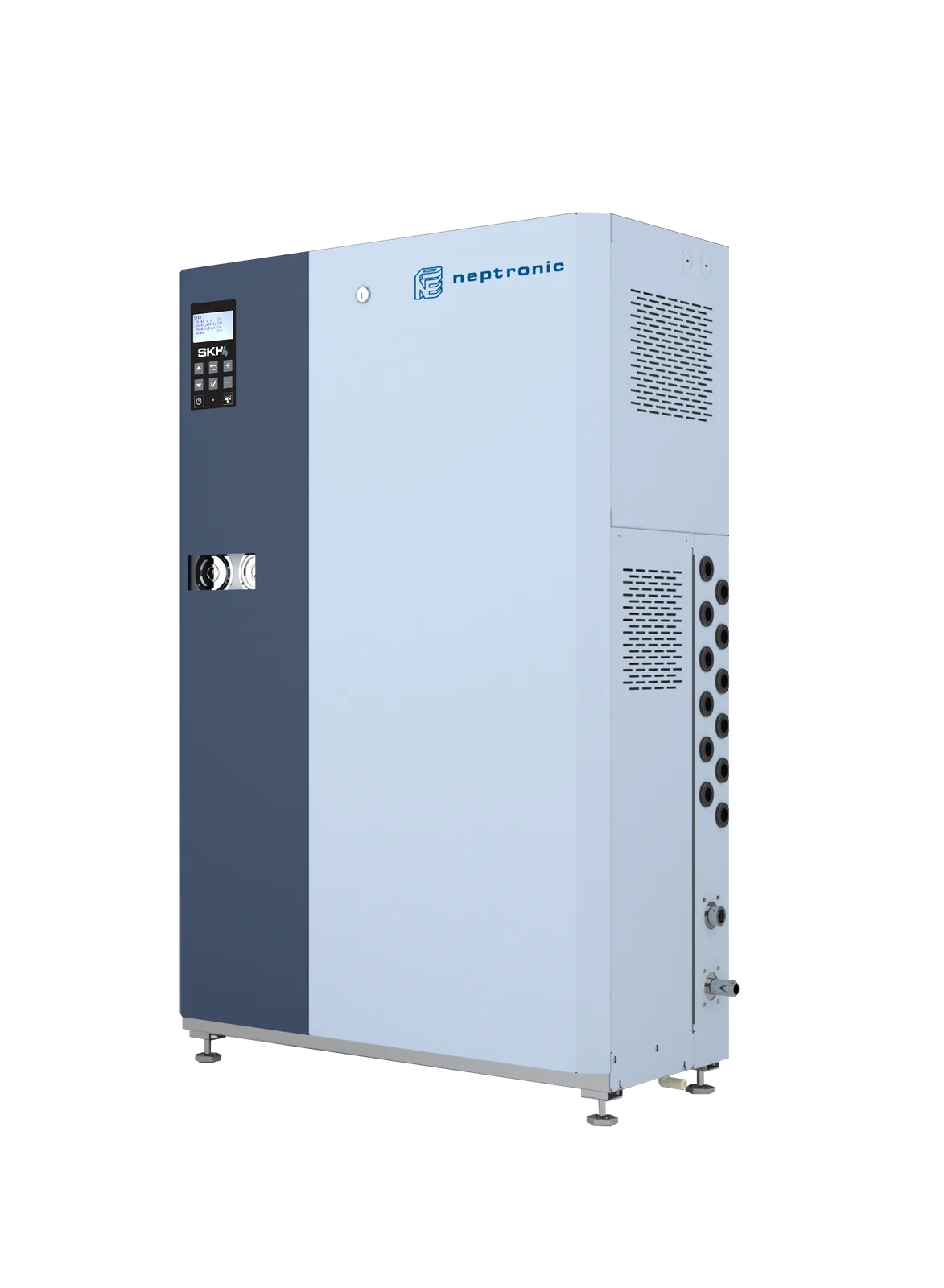
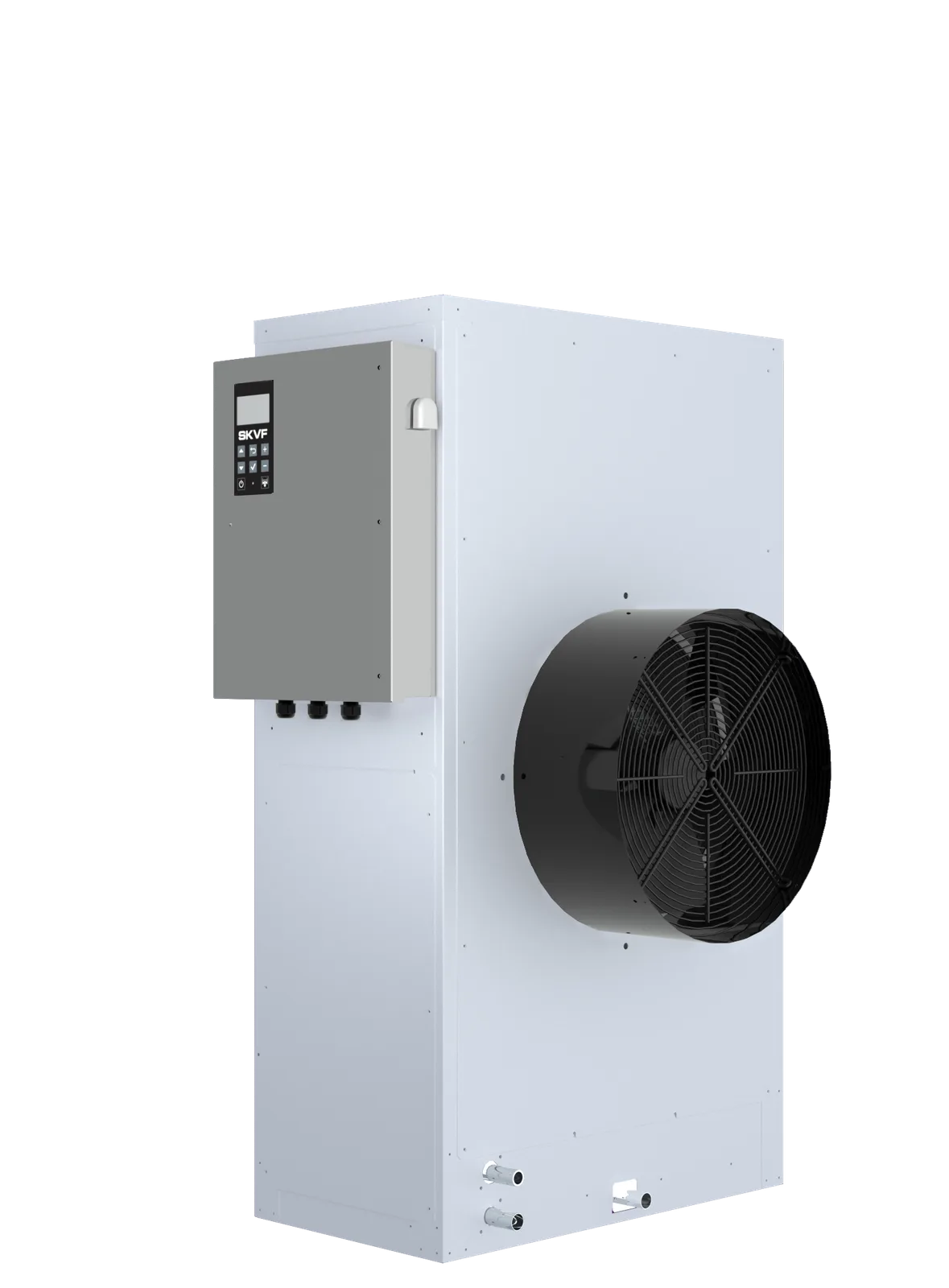
NKT supplies a water-treatment station as standard with Neptronic adiabatic packages: a 3-stage filter train + RO unit + UV-C steriliser + 100–500 L stainless tank + recirculation pump. Filter sizing is matched to the Turkish water-quality map; coastal + high-sediment regions receive an additional multimedia stage.