Definition
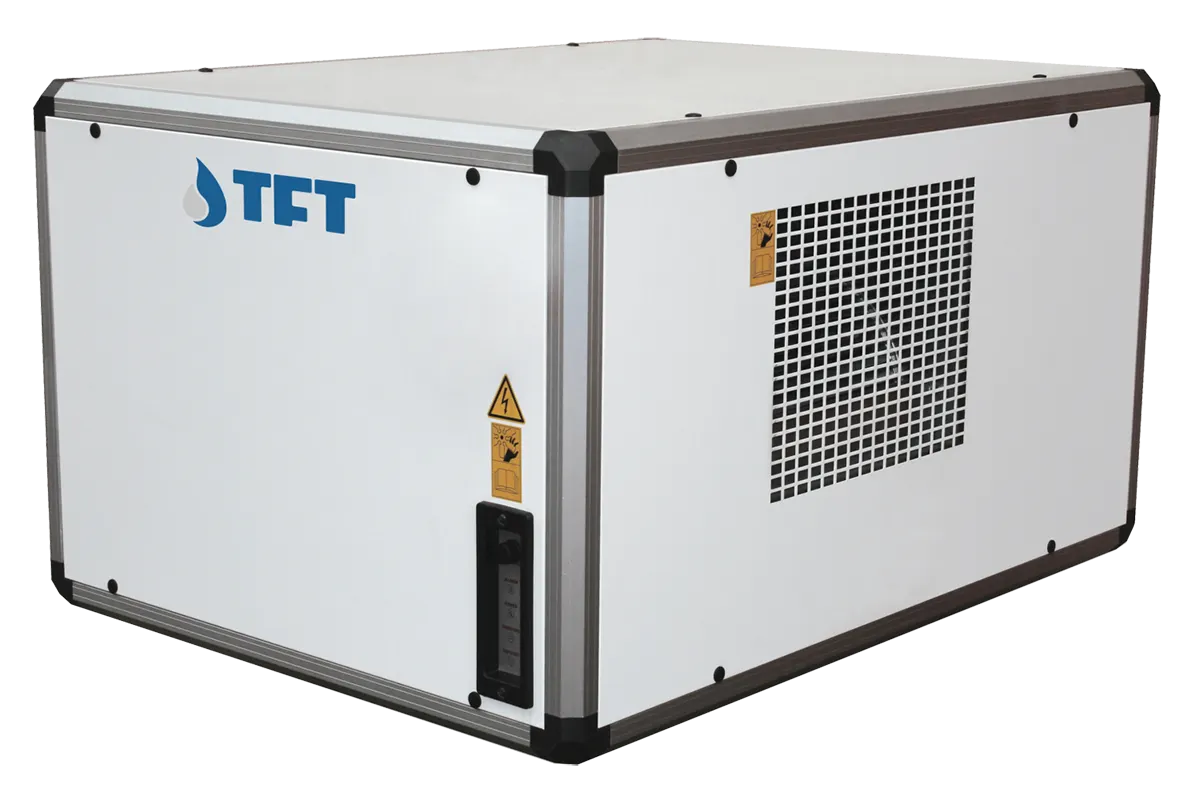
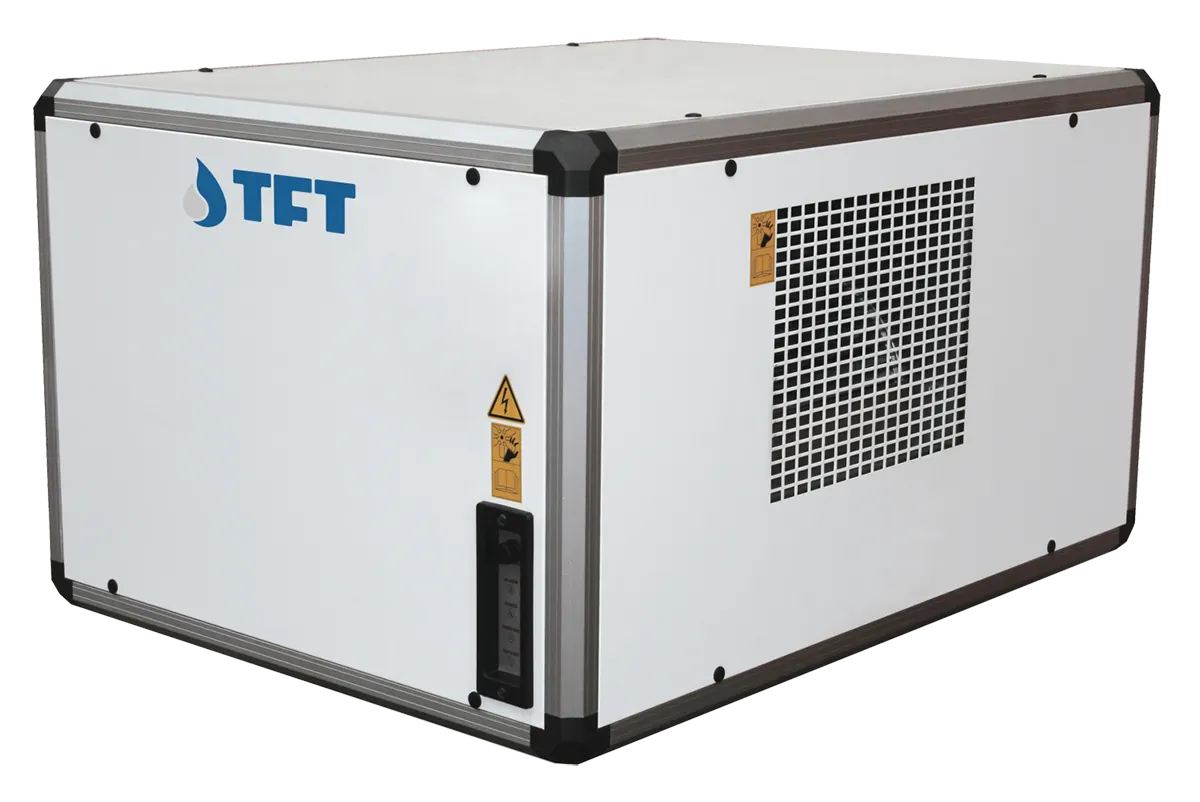
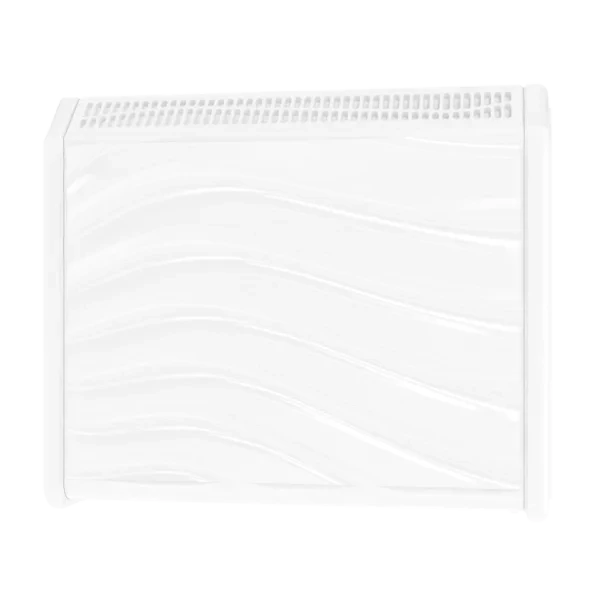
A mechanical dehumidification method that achieves moisture condensation by cooling air below its dew point. Moisture on air cooled at the evaporator coil condenses and is drained. Preferred for swimming pools, comfort air conditioning, and high-temperature applications. Efficient for dew point targets above +5°C.
Detailed Explanation
Condensation dehumidification is a method in which air is passed through a cooling coil, cooled below its dew point, and water removed through condensation. The system is essentially a DX (direct expansion) refrigerator: compressor, condenser, expansion valve, and evaporator. The innovation is using condenser heat to reheat the air leaving the evaporator back to setpoint temperature.
Operating principle: 1. Humid process air enters the evaporator. 2. The evaporator coil cools the air below its dew point as the refrigerant evaporates. 3. Moisture on the air condenses and drains into the bottom collector. 4. The cooled and dried air passes through the condenser coil where it is reheated (with compressor waste heat). 5. The outlet air is returned to the room — drier and typically at the same temperature.
The practical dew point limit of this method is +3 to +5°Cdp; lower dew point targets require cooling the evaporator below 0°C, which causes freezing and efficiency loss. Advantages: high COP (3.5–5.0), low capital cost, simple maintenance. Disadvantages: dew point limit, refrigerant use (F-gas regulations).
System Performance
COP (Coefficient of Performance): COP = Qremoved / Welectric
Based on latent heat of vaporization: COP = (mu × hfg + Qsen) / Wcomp
mu: moisture removed (kg/s) hfg: 2,501 kJ/kg (latent heat of water vaporization) Qsen: sensible portion of cooling the air (kW) Wcomp: compressor electric input (kW)
For NKT condensation-type units (CD/CDP/CDW series), typical values: At +15°C, 80% RH inlet, COP ≈ 4.2 At +30°C, 70% RH inlet, COP ≈ 5.0 At +5°C, 85% RH inlet, COP ≈ 2.5 (defrost load impact)
Capacity is strongly dependent on inlet temperature: a unit nominally rated at 100 L/24h at 30°C produces 60 L/24h at 15°C and 25 L/24h at 5°C.
Practical Example
Consider a swimming pool facility in Antalya. Pool area 250 m², water temperature 28°C, target ambient 30°C, 60% RH. Peak summer load analysis:
Pool surface evaporation (Smith equation): ≈ 12 kg/h moisture generation Total room moisture load (deck, outdoor infiltration included): ≈ 18 kg/h
Selection: NKT CDP series, model CDP280 (approximately 28 L/h capacity)
Inputs: • Nominal capacity (30°C, 70% RH): 28 L/h = 28 kg/h ✓ • Air flow rate: 4,500 m³/h • Electrical consumption: 6.8 kW • Reheat outlet: returns air to the room at 30°C — user comfort preserved • Summer COP ≈ 4.5 → 28 kg/h × 0.7 kWh/kg = 19.6 kWh/h actual dehumidification + 6.8 kW electric = COP 2.9 (cycle losses included)
In winter the pool still evaporates, but because room heating demand is high, the unit's waste heat contributes to building heating — this is the economic rationale for swimming pool applications. NKT pool-type units (Microwell Dry Wave, Dry Metal Alu) provide this dual benefit through integrated condenser heat recovery.
Engineering Note
Considerations in condensation dehumidifier selection:
• Performance loss at low temperatures — in environments below 5°C, the evaporator freezes, and defrost cycles reduce capacity by 30–50%. Hot gas defrost systems should be preferred. • Refrigerant selection — F-gas Regulation 2024+: high-GWP refrigerants (R410A, R134a) should be replaced by R32, R454B, R290 (propane, A3 class — handle with care). NKT next-generation units are certified with low-GWP refrigerants. • Drainage design — at least 1/100 gradient piping is required to remove condensed water from the room; clogging alarm systems should be standard. • Airflow configuration — ducted systems provide high air circulation with minimal room intervention; free-standing units are suitable for small spaces and backup solutions. • Bacteriological risk — continuously wet surfaces (drain pan, evaporator fins) create Legionella risk. UV-C lamps or antibacterial coatings are mandatory in pharmaceutical and hospital applications.
NKT condensation-type units (CDW16-CDK44-100, CDNP33-96, CD160-980, CD1200-3000) are manufactured following these engineering principles and meet the criteria for energy performance, F-gas compliance, drain safety, and hygienic design.