Definition
Foam build-up in a steam humidifier's tank/cylinder due to high mineral concentration or surface-active residues; it disrupts level control and degrades steam quality.
Detailed Explanation
Foaming in a steam humidifier's water chamber is bubble formation caused by reduced surface tension. Main causes: (1) High TDS — high mineral concentration lowers surface tension. (2) Surfactant contamination — detergent or oil residues in the water lines. (3) High alkalinity + fatty-acid combinations. (4) Sudden temperature change — triggers bubble-nucleation. Foam can reach 5–30 cm in height.
Why It Matters
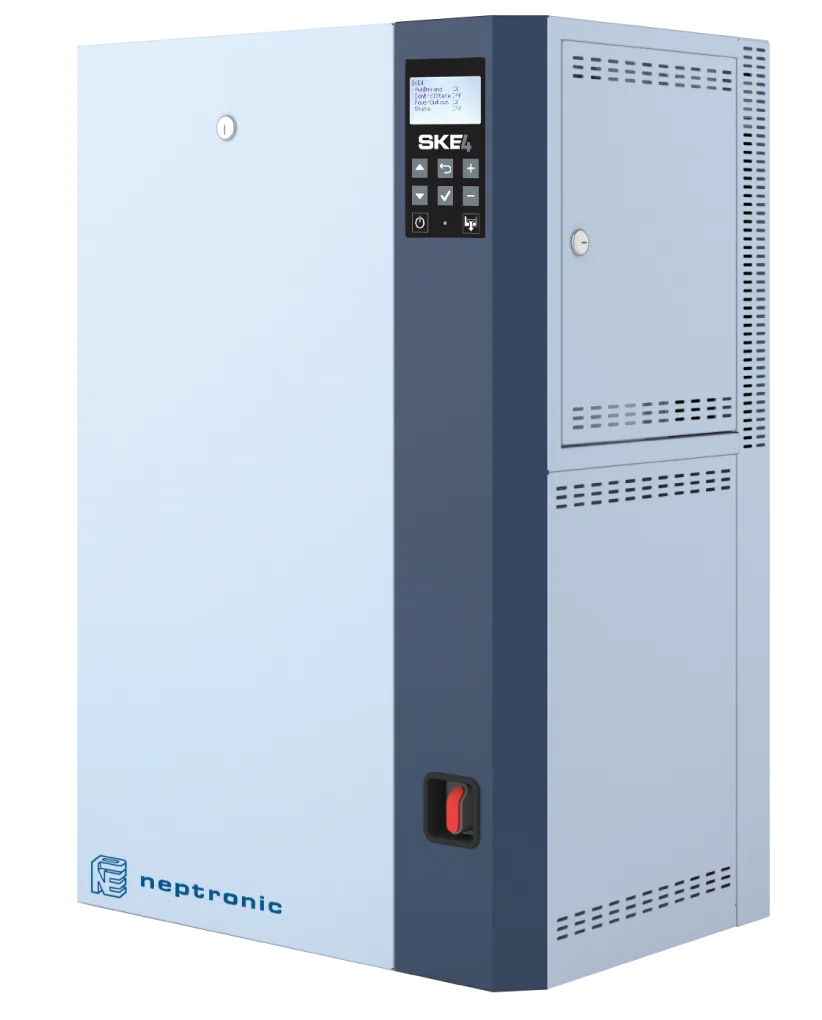
Foaming causes four main problems: (1) LEVEL CONTROL FAILS — the liquid-level sensor reads foam as "water"; the actual level drops, heating elements/electrodes can dry out and risk damage. (2) STEAM QUALITY — foam carries water droplets and mineral aerosol with the steam, fouling downstream HEPA filters and breaching hygiene class. (3) FALSE DRAINS — foam triggers drains, wasting water and energy. (4) FREQUENT ALARMS — modern units detect foam and alarm, leading to operator fatigue. Solution: TDS control + proper draining + anti-foam technology (Neptronic SKE4 patented AFEC system).
Practical Example
A hospital in Istanbul commissioned an electrode humidifier on a water line previously cleaned with detergent (residual surfactant); for the first 2 weeks the system foamed constantly and drained 5× normal. NKT analysis: surfactant contamination. Solution: the line was flushed with 10% citric acid and thoroughly rinsed; the unit was replaced with a Neptronic SKE4 (AFEC anti-foam system). 18+ months of foam-free operation followed.
Engineering Note
Foam-prevention strategies: (1) Keep TDS below 800 mg/L; above it, raise drain frequency. (2) Flush the water line before commissioning — particularly in new builds, check residual flux/PTFE-tape contamination. (3) Anti-foam unit technology — the Neptronic SKE4 AFEC (Anti-Foaming Energy Conservation) system monitors foam level and optimises the drain algorithm. (4) Periodic test: a 200 ml sample from the tank, shaken; foam height <2 cm is acceptable.
NKT Application Link
A water-line flush is a mandatory commissioning step in NKT procedures; in older facilities a water sample undergoes a foaming test. The Neptronic SKE4 stands out as a unit where foaming is solved up-front via the patented AFEC technology; it is preferred for hospitals, hygienic food and pharma facilities. The NKT - Climate Track platform trends foam alarms so deviations are caught early.
Related Academy Articles
Related Products
NKT products related to this term