Definition
The property of materials that absorb or adsorb water vapor from the surrounding air. Tablet active ingredients (paracetamol, ibuprofen), salt, sugar, lithium, silica gel, paper, wood, tobacco, and many organic materials are hygroscopic. These materials require strict humidity control during processing, storage, and packaging; otherwise physical/chemical change, loss of function, or spoilage occurs.
Detailed Explanation
The term "hygroscopic" derives from the Greek word for "wet." Hygroscopic materials fall into three classes based on moisture interaction:
1. Capacitive hygroscopic — absorbs moisture without chemical change (silica gel, wood) 2. Deliquescent — dissolves and liquefies as it absorbs moisture (lithium chloride, calcium chloride) 3. Reactive hygroscopic — reacts chemically with moisture (lithium metal, sodium, magnesium)
Industrial application examples:
• Pharmaceuticals — paracetamol, aspirin, ibuprofen must be processed below 35% RH; clumps + degrades above • Lithium battery manufacturing — lithium metal anode must be processed below 1% RH (–40°C dp); reaction with H₂O = fire • Sugar refinery — sugar clumps + non-flowing above 50% RH • Grain/flour storage — flour faces microbial risk above 14% moisture • Tobacco — 65–70% RH (the rationing sweet spot) • Chocolate — sugar bloom + fat bloom risk above 50% RH • Plastic pellets (nylon, PET) — must be dried below 0.02% moisture before processing • Paper — dimensional instability + static electricity above 50% RH
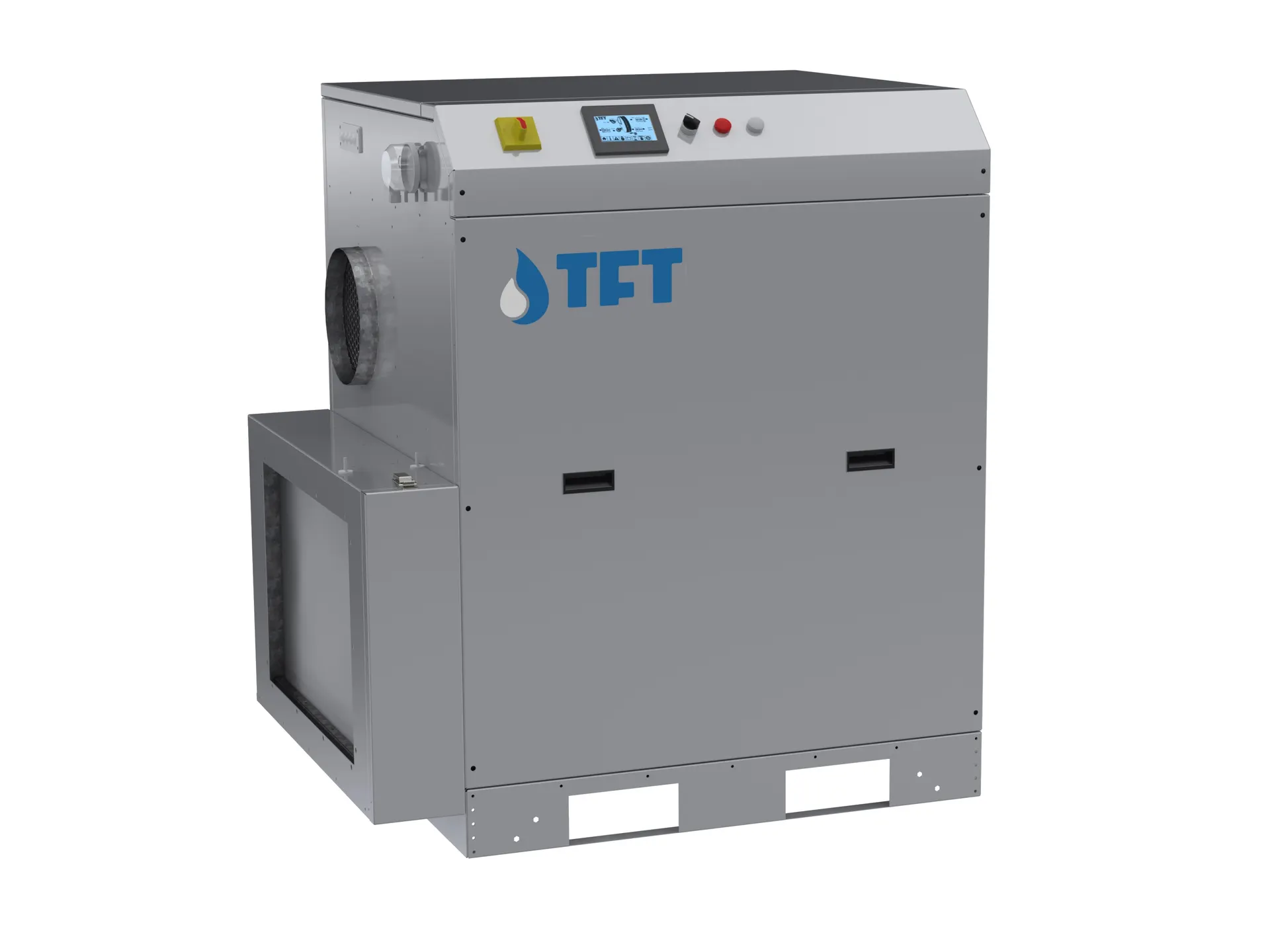
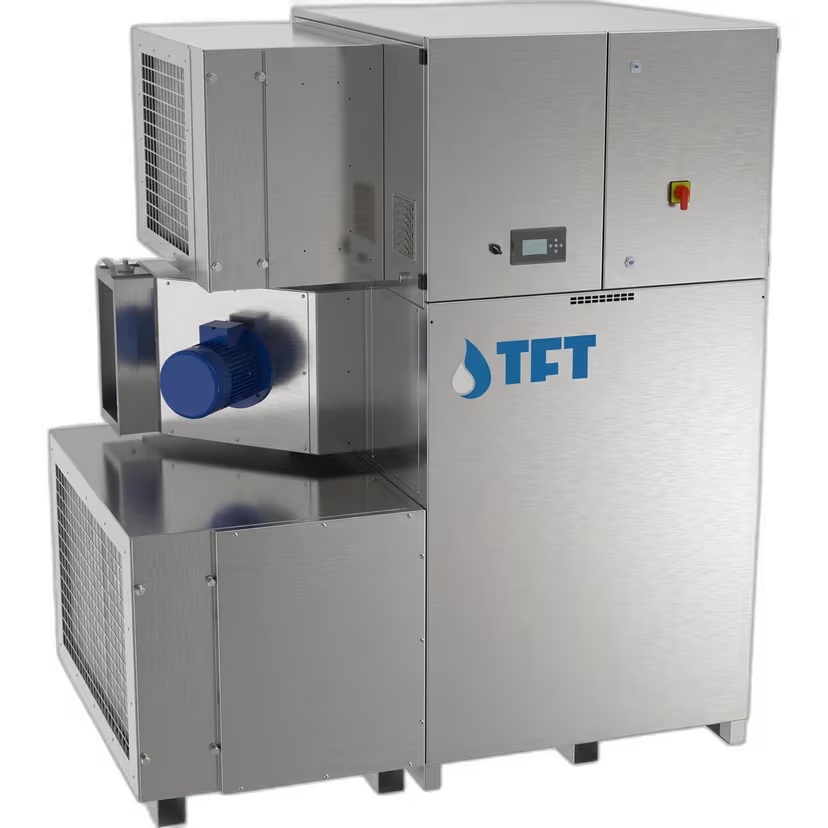
In all these applications humidity control is a precondition for product quality; a dehumidifier (condensation or silica gel rotor) is mandatory.
Engineering Note
Four important decisions in hygroscopic material processing design:
1. Sorption isotherm — every hygroscopic material has an "equilibrium moisture content" curve; this curve gives the saturated moisture content for a constant RH. Design target RH must be chosen from the curve.
2. Technology selection — silica gel rotor is mandatory if low dp is required (below –10°C dp); condensation system falls short. Pharmaceutical granulation, lithium battery, and freeze-dryer storage are typical silica gel rotor applications.
3. Backup protection — backup unit is essential in case of main unit failure; hygroscopic material exposure clocks can be very short (lithium reacts within 1 minute).
4. Operational discipline — operator + process procedures are critical; door-open time limits, hot-zone vs cold-zone separation, vacuum lock entry, and similar controls.
At NKT we offer integrated design service for hygroscopic material applications: TFT silica gel rotor + redundancy + sensor monitoring + airlock.