Definition
A method of inactivating bacteria, viruses and fungi by exposing water to ultraviolet-C (UV-C, 254 nm) light; the primary disinfection layer for Legionella control in adiabatic humidification systems.
Detailed Explanation
UV disinfection works by forming dimers in DNA thymine bases, halting cellular replication. UV-C at 254 nm is the peak biocidal wavelength; low-pressure mercury or high-pressure amalgam lamps emit it. Dosage is mJ/cm² (millijoules/cm²): 10 mJ/cm² gives 99% kill for Legionella, 30 mJ/cm² 99.99% (FDA + EPA guidance). A standard UV reactor uses an AISI 316L stainless shell with quartz lamp sleeve, 1–5 s contact time, capacity 100–5,000 L/h. Lamp life 9,000–12,000 h (≈ 12 months of continuous operation).
Why It Matters
UV is the most effective layer in adiabatic humidification hygiene architecture: no chemicals, no waste, instant action (seconds), bacteria eliminated below 0.1 mJ/cm². But it is not sufficient alone — biofilm shadows the light, turbid water absorbs UV (below 85% transmission, efficacy drops 50%), and non-circulating water nurtures bacteria far from the lamp. So UV is always combined with filtration + RO + continuous circulation. Capex €1,500–8,000 (by capacity); annual lamp €200–800. ROI: the most economical technology that zeros a single Legionella incident risk.
Practical Example
A hotel SPA in Bursa runs evaporative humidification + a recirculating water bath. The original design lacked UV; after 6 months a microbiological test found 850 CFU/L of Legionella (control limit 10 CFU/L). The system was shut down and NKT added a UV-C reactor (8 mJ/cm² in 10 s) + tank recirculation. The next test came back zero, and every 6-month re-test for 4 years has stayed at zero. Lamp life 11 months, annual maintenance €350.
Engineering Note
UV sizing: dose (mJ/cm²) = lamp output (W) × exposure time (s) ÷ flow (L/h). For critical applications, target ≥ 40 mJ/cm² (EPA Long Term 1 enhanced). A bypass alarm is mandatory — when the lamp fails, water must divert or the system stops. Maintenance: lamp swap every 12 months or when the UV-intensity sensor reports a 70% drop, quartz sleeve cleaning every 3 months (acid wash), full overhaul annually. Typical labour 30 min/year.
NKT Application Link
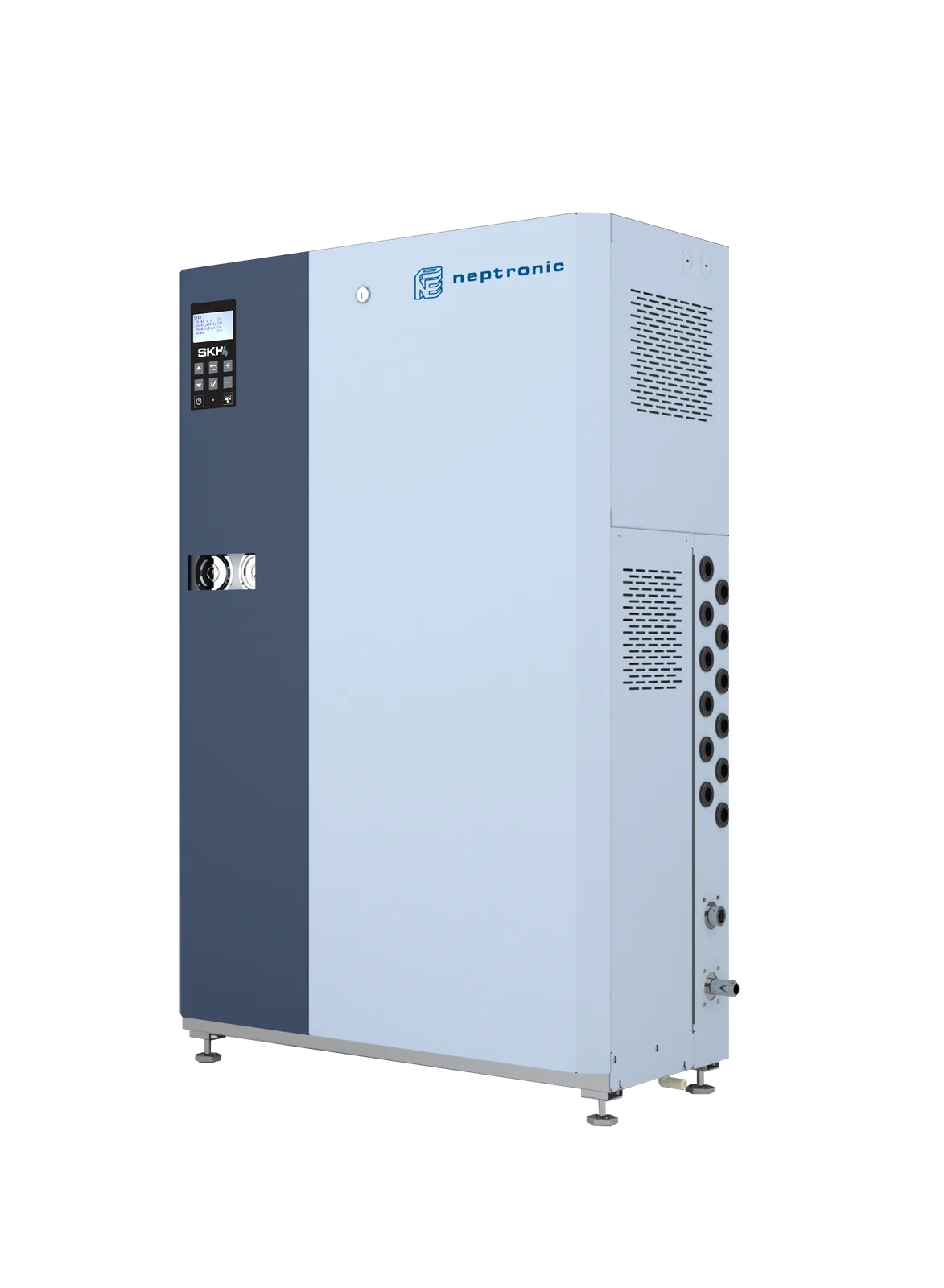
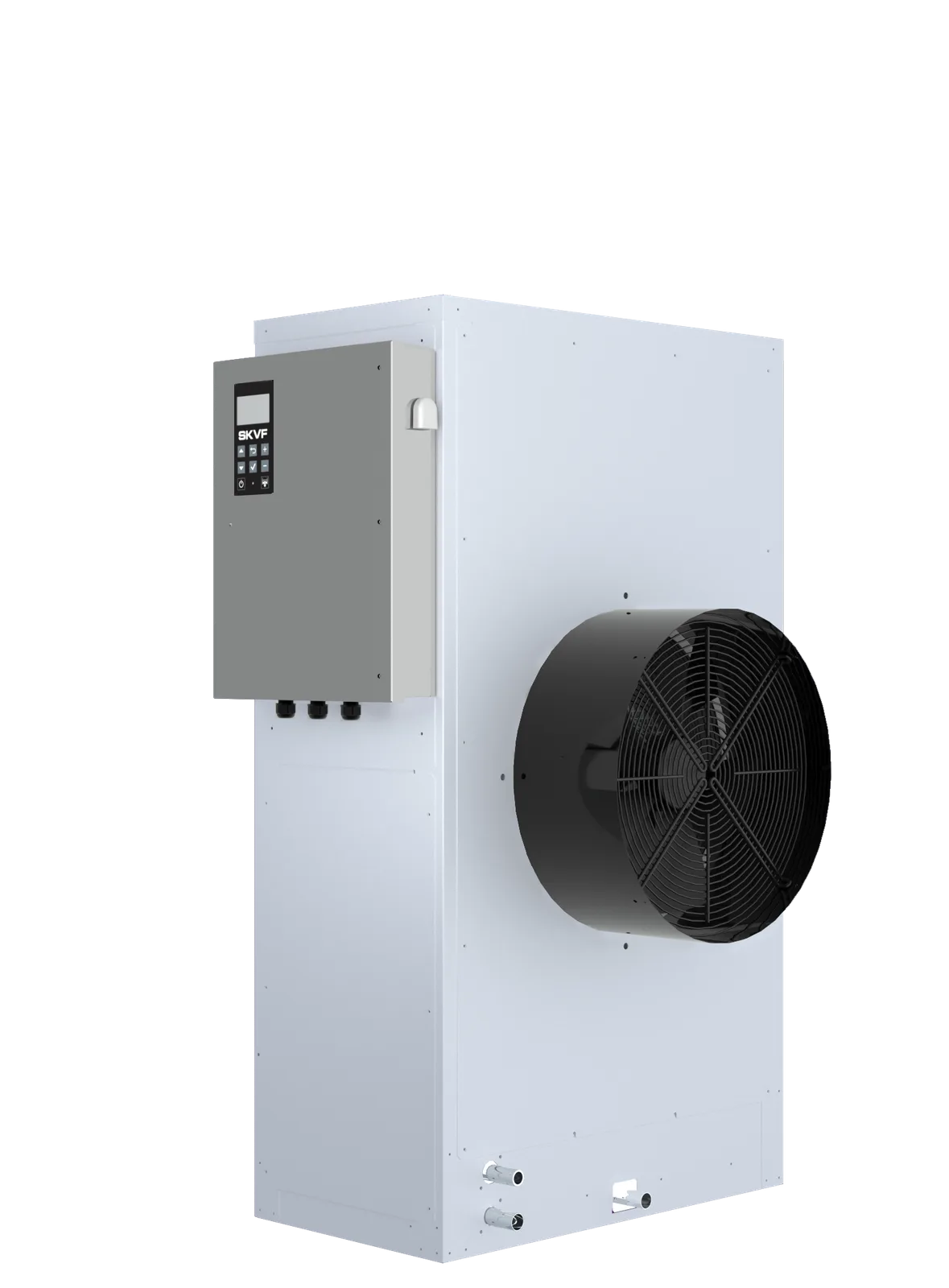
NKT supplies the UV-C reactor as a standard component in hygienic adiabatic humidification packages (Neptronic SKH and SKVF); capacity is chosen per site within 100–2,000 L/h. The NKT - Climate Track platform tracks lamp-life counter, intensity trend and bypass-alarm status; lamp-replacement reminders are pushed as automatic service triggers to the operator.