Definition
A humidification approach where the heat needed for water evaporation is drawn from the surrounding air. High-pressure atomization, ultrasonic humidification, and evaporative coolers are adiabatic technologies; air humidity rises while temperature drops (~6°C). Consumes 85–95% less energy than steam systems; the cooling side effect reduces summer AC loads. Water quality (RO) and application compatibility (not in pharmaceutical GMP) are constraints.
Detailed Explanation
Adiabatic (constant-enthalpy) humidification draws the water vaporization heat from ambient air. Total enthalpy remains constant, but distribution changes: air temperature drops (sensible heat decreases), humidity rises (latent heat increases). On the psychrometric chart, the process runs along a constant wet-bulb line.
Three main adiabatic technologies:
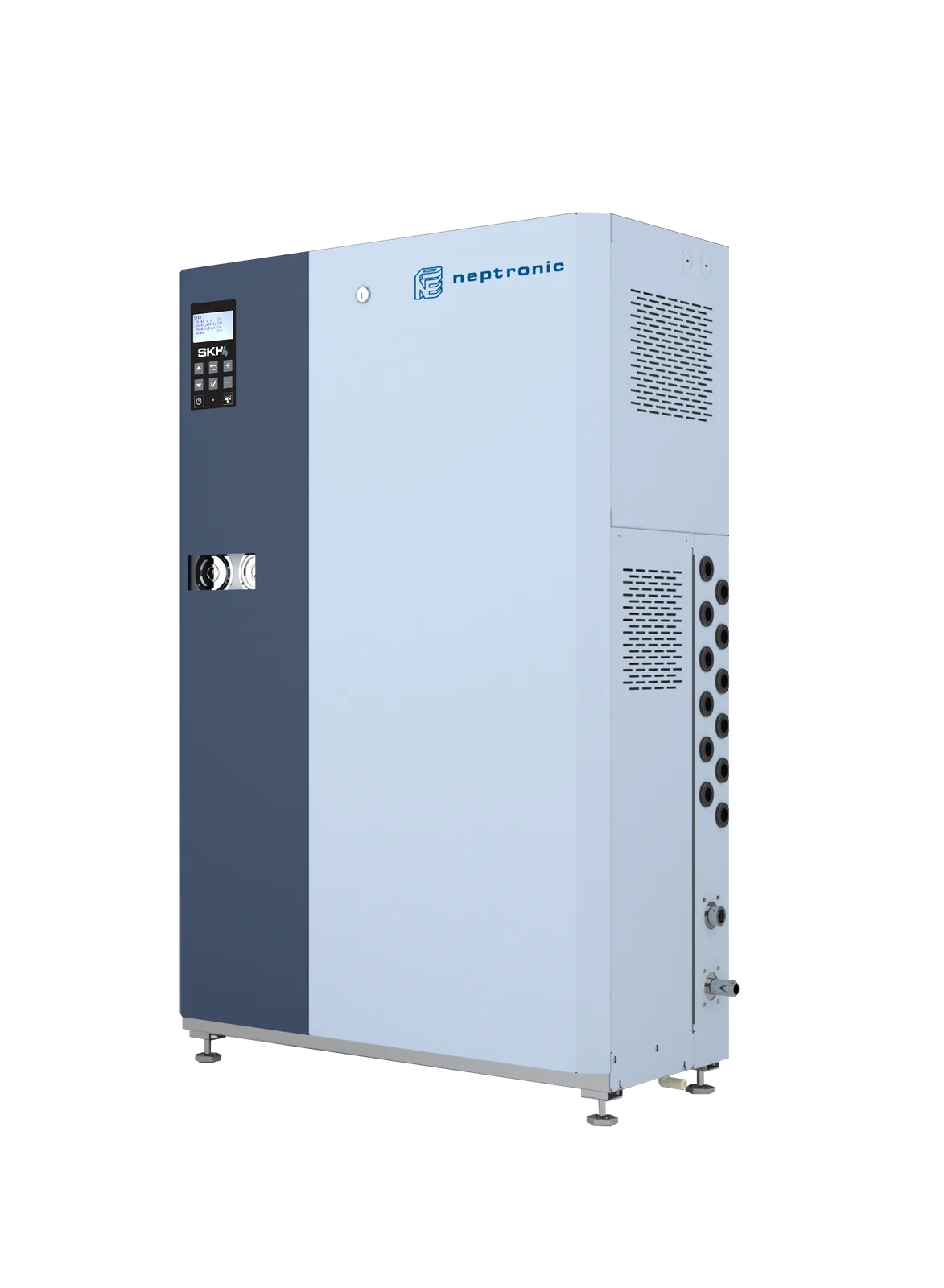
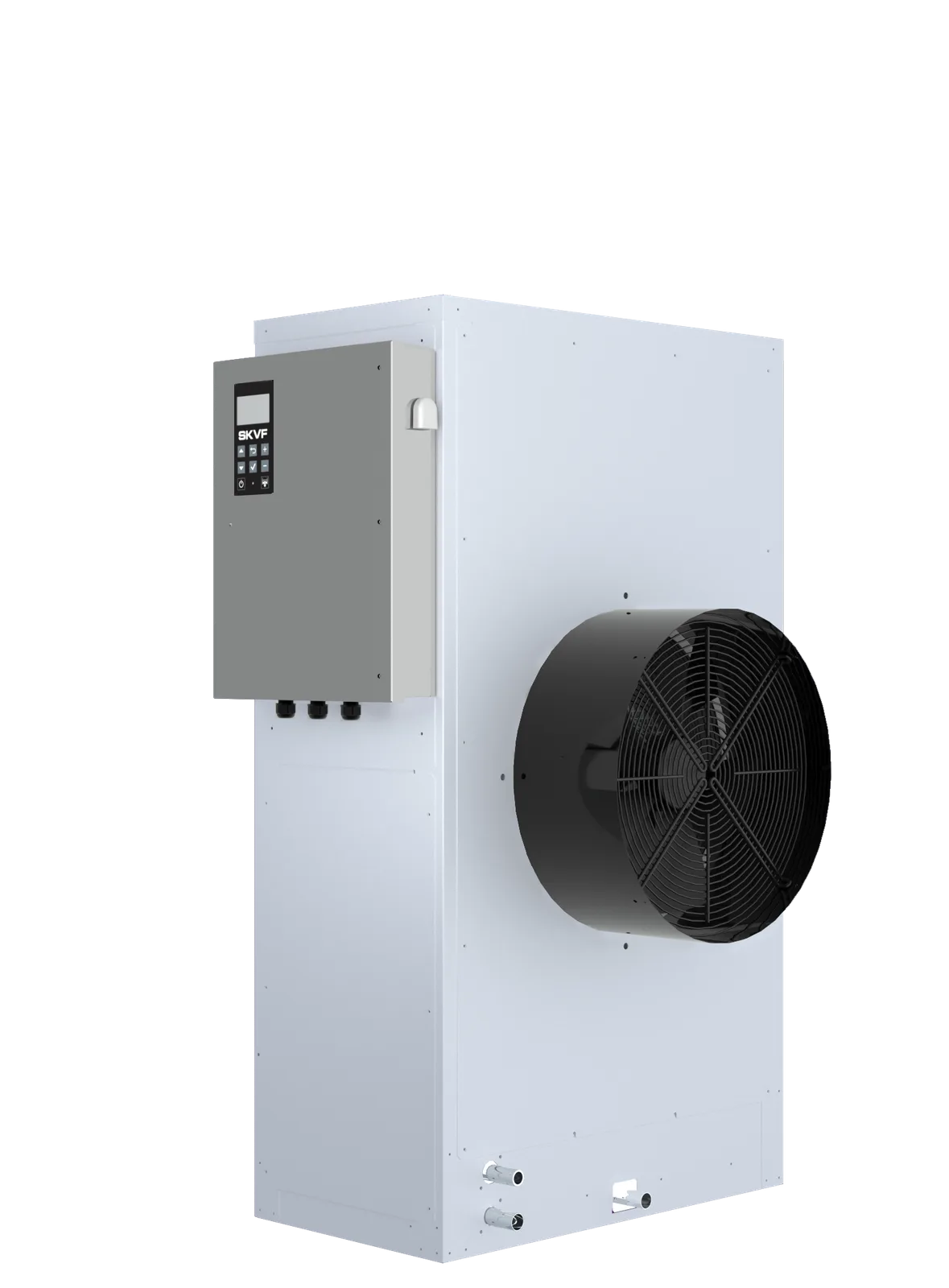
1. High-pressure atomization (70–100 bar) — 5–10 µm droplets, 85–95% evaporation efficiency, in-duct or direct space 2. Ultrasonic humidification — piezoelectric vibration, 1–3 µm droplets, for small capacities (< 50 kg/h) 3. Evaporative cooler (Neptronic SKVF) — water circulated over a high-surface-area pad; air picks up moisture + cools as it passes through
Typical adiabatic energy balance: • 2,500 kJ heat is drawn from ambient air per 1 kg evaporation → ~0.7 kWh "free cooling" • Pump energy: 0.05–0.15 kWh/kg (water pressurization only) • Steam system: 0.75 kWh/kg + extra energy for cooling • Net savings: ~90% energy + free cooling
Application advantage: humidification and reduced AC load benefit together in summer; ideal for large-volume + humidity + cooling applications such as textile, printing, storage, and greenhouses.
Practical Example
An 8,000 m² warehouse adiabatic humidification + free-cooling project:
Condition: storage target 50% RH ± 10, summer outdoor 35°C Baseline: 250 kW peak summer AC, no humidity control → product damage
Solution: Neptronic SKVF evaporative cooler + humidifier (300 kg/h capacity, 4 free-standing units)
Operating results (summer): • Humidity: 35% → 50% (target met) • Temperature: 35°C → 28°C (7°C drop, free cooling) • AC load: 250 kW → 130 kW (–48%) • Adiabatic energy: 4 × 0.5 kW = 2 kW (pump only) • AC savings: 120 kW × €0.12 × 6 h/day × 90 days = €7,776/summer • Adiabatic energy: 2 kW × €0.12 × 6 × 90 = €130/summer • Net savings: €7,646/summer
SKVF is not used in winter (summer operation only); a separate steam humidifier (Neptronic SKE4-50) is integrated for winter.
10-year TCO: • Extra CAPEX (SKVF + RO + duct): €45,000 • Annual energy savings: €7,500 • AC equipment selected one size smaller: €25,000 CAPEX savings • Payback: 2.7 years; net positive over 10 years: €30,000+
Engineering Note
Six important decisions in adiabatic humidification design:
1. Application suitability — DO NOT USE in pharma GMP, hospital, semiconductor cleanrooms (mineral/microbiological contamination risk). Ideal for textile, printing, storage, greenhouses, animal husbandry. 2. Water quality — RO + UV sterilization mandatory; hardness < 5 ppm. Hard water = nozzle clogging within weeks. 3. Ceiling height — minimum 4 m for atomization, 2.5 m for ultrasonic, no limit for evaporative pad (in-duct). 4. Free-cooling benefit — valuable in summer, can be a disadvantage in winter; seasonal control is essential. 5. Maintenance — RO membrane every 24–36 months, nozzle inspection every 6 months, pad replacement (SKVF) annually. A maintenance contract is essential — otherwise Legionella risk. 6. Acoustics + slip safety — high-pressure pumps reach 75–85 dB; isolation cabinet required. Low ceiling + insufficient evaporation = wet floor → operator safety risk.
At NKT we provide design + installation + RO integration + maintenance services for Neptronic SKH (atomization), SKVF (evaporative), and ultrasonic options.