Definition
Water with cations (Ca²⁺, Mg²⁺, Na⁺) and anions (Cl⁻, SO₄²⁻, HCO₃⁻) almost entirely removed by ion-exchange resins or electrodeionisation (EDI); conductivity <1 μS/cm, purer than RO water.
Detailed Explanation
Deionised water (DI, demineralised, demin) is produced by ion-exchange resins (mixed-bed cation + anion) or electrodeionisation (EDI) modules that strip nearly all dissolved ions. Result: conductivity 0.055–1 μS/cm (RO output is typically 5–25 μS/cm). Typical uses: pharma AP/WFI, laboratory, semiconductor, battery electrolyte, boiler feed.
Why It Matters
For steam humidifiers, DI water requires a two-sided assessment: (1) FULLY INCOMPATIBLE WITH ELECTRODE UNITS — conductivity window 125–1,250 μS/cm; DI is around 1 μS/cm → no current → no operation. (2) IDEAL FOR RESISTIVE UNITS — steam generation does not depend on water conductivity; heat transfers from the heating element. Fully pure water → zero minerals → no scale. However, DI water sits at pH 5.5–6.5 (CO₂ absorption) so corrosion risk rises; remineralisation (calcite filter, adding 1–2 ppm Ca) is recommended.
Practical Example
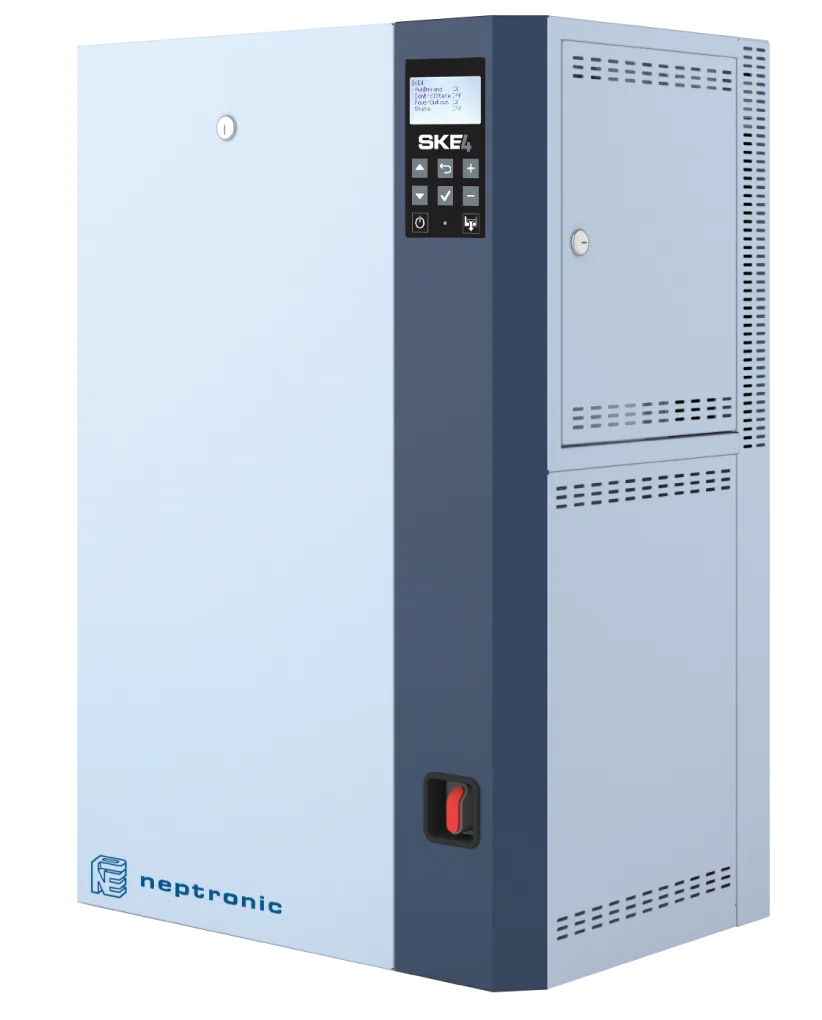
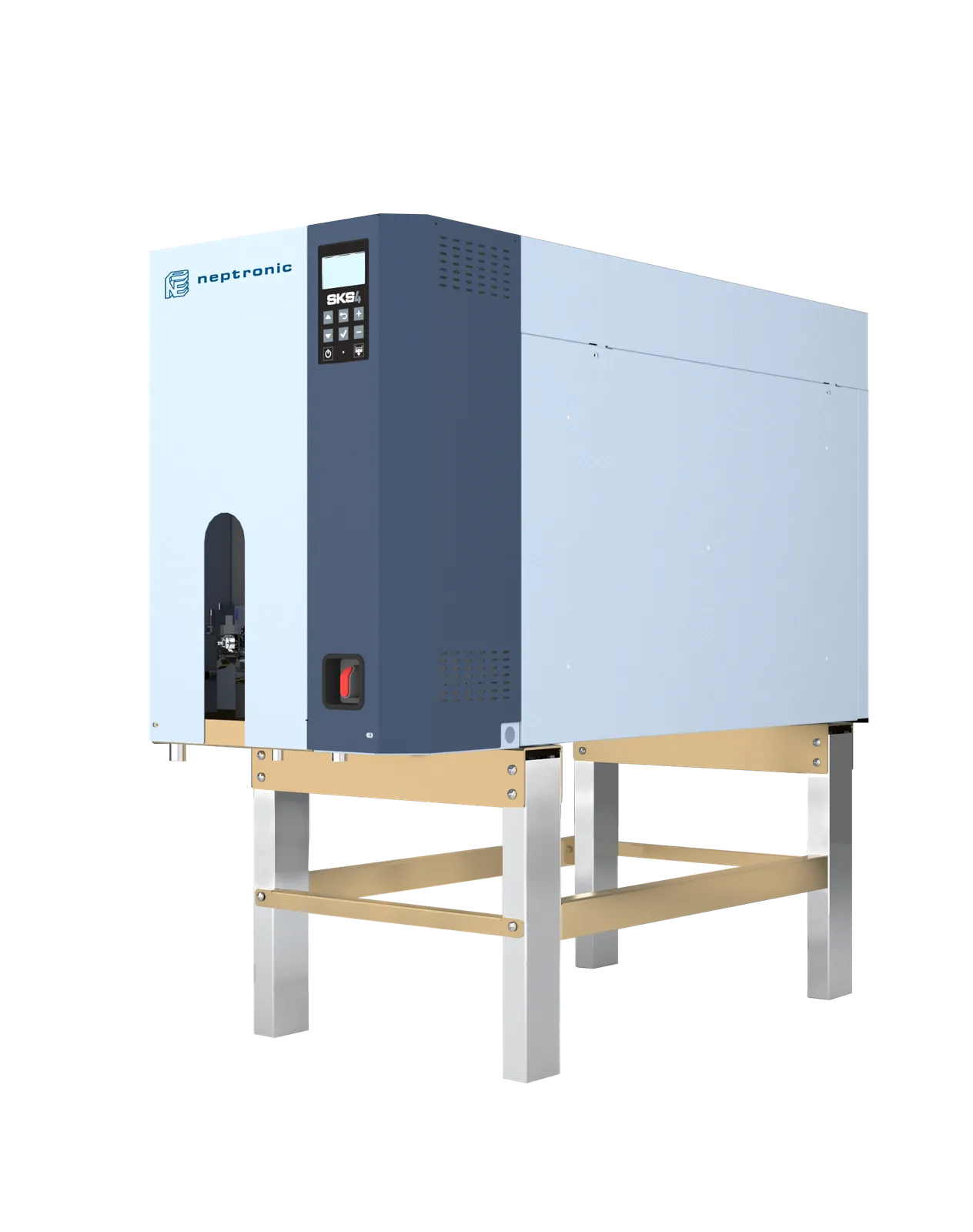
A pharmaceutical plant in Ankara already had DI water (for the lab and analytical instruments) and wanted a steam humidifier for a 22 °C / 45% RH cleanroom. An electrode option would not work (DI conductivity <1 μS/cm). NKT designed a resistive Neptronic SKE4 with an AISI 316L chamber (304L was not preferred despite low chloride, but remineralisation pulled pH to 6.8). After commissioning, 5+ years of zero scale and a ±1% RH band; pharma GMP validation passed first time.
Engineering Note
DI water systems have high OPEX: ion-exchange resins regenerate every 6–12 months (HCl/NaOH); EDI modules are replaced every 3–5 years. Typical production cost is €0.8–2.5/m³ for DI (RO €0.3–0.8/m³, mains €0.1–0.3/m³). So DI is used only when mandatory; for simple humidification, RO is usually enough. On DI-fed sites stainless-steel selection is critical: AISI 304L has pitting risk below pH 6.5; AISI 316L is safer. Piping must be plastic (PVDF, PP) or 316L; copper/galvanised are FORBIDDEN.
NKT Application Link
In NKT projects the existing DI infrastructure is checked first; if present, a resistive Neptronic SKE4 (AISI 316L option) + optional remineralisation is proposed. If a new DI system must be installed, RO + EDI is priced together; for most humidification applications RO alone suffices and DI is not recommended. The NKT - Climate Track platform trends DI feed-water conductivity, providing early detection of resin depletion or leakage.
Related Academy Articles
Related Products
NKT products related to this term