Definition
A steam humidifier type that boils water by passing alternating current between two stainless-steel electrodes inside a disposable plastic cylinder. The water itself is part of the electrical circuit; current is carried by dissolved ions. Operation requires a 125–1,250 μS/cm conductivity window; it does not work with RO/DI water. When the cylinder fills with scale it is discarded and replaced (typical 6–18 month cycle). Low initial investment, simple control logic and limited water-quality flexibility make it common in moderate-precision applications.
Detailed Explanation
Operating principle of an electrode steam humidifier: two stainless-steel electrodes are immersed in a disposable plastic cylinder; 200–400 V alternating current is applied between them. Dissolved ions (Ca²⁺, Mg²⁺, Na⁺, HCO₃⁻, Cl⁻) carry the current; the water boils through Joule heating against its own resistance.
Capacity control is indirect: the device modulates the water level inside the cylinder, increasing the conductive cross-section so current and steam output rise. For low output the level is reduced. This control mechanism is conductivity-dependent — too soft and no current flows, too hard and current runs out of control. Typical steam output: 5–80 kg/h per cylinder; capacity is scaled by paralleling multiple cylinders.
Why It Matters
Electrode systems have been widespread in commercial buildings since the 1970s; the appeal is low initial investment and a broad supplier base. But against modern selection criteria — water-quality flexibility, tight RH control, plastic-waste management, sustainability — the structural constraints of electrode become evident:
(a) Water conductivity window: outside 125–1,250 μS/cm, the unit either fails to run or burns through cylinders. (b) Cannot use RO/DI water: unsuitable for hygienic facilities. (c) Disposable plastic cylinder: replaced every 6–18 months, generates waste, raises OPEX. (d) Control precision: typically ±5% RH band — insufficient for ≤±2% applications. These limits restrict electrode selection beyond comfort applications (offices, warehouses, commercial buildings).
Practical Example
A typical office-building HVAC humidification application: 1,500 m² floor area, 30 kg/h nominal load, fed from city water (hardness 12 Fr°, conductivity 580 μS/cm). This profile is the "sweet spot" for an electrode system — within the conductivity window, moderate hardness, tolerable control precision. Two cylinder changes per unit per year, annual cylinder spend ≈ €1,800. In this context electrode is a rational selection.
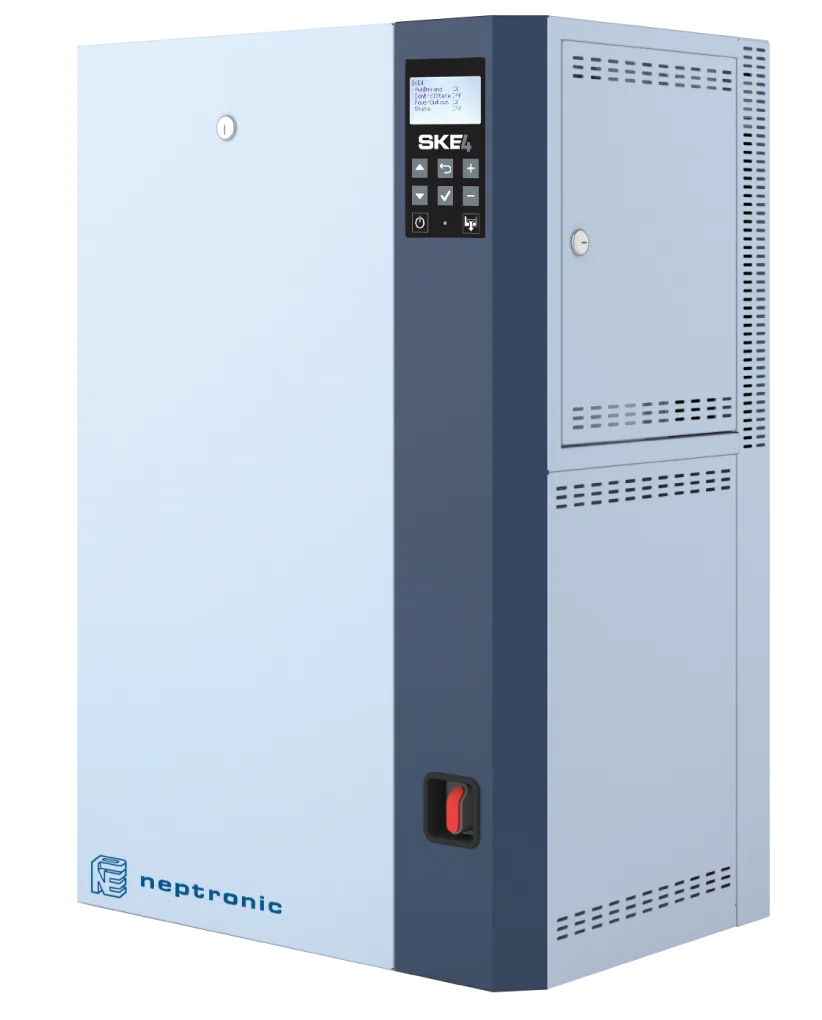
A counter-scenario: during a renovation a "green building (LEED)" target is added; the disposable plastic cylinder waste hurts the credit balance, and a resistive migration (Neptronic SKE4) enters the agenda. Another scenario: facility-level RO integration disqualifies the electrode unit and replacement becomes mandatory. NKT provides a decision template that maps each trigger to a clear migration path.
Engineering Note
Manufacturer-offered options like "anti-foaming," "auto blowdown" and "long-life cylinder" extend the maintenance interval somewhat but do not resolve the core constraints (conductivity window, RO incompatibility, control band). NKT proposes electrode only when all of the following hold: (1) conductivity 200–800 μS/cm, (2) hardness < 20 Fr°, (3) ≤±5% RH band acceptable, (4) no planned RO integration, (5) plastic waste acceptable to the stakeholder.
If any condition fails, resistive (SKE4) is the default. In borderline cases a 10-year TCO triggers; the result usually favours resistive (cylinder + waste + labour savings dominate).
NKT Application Link
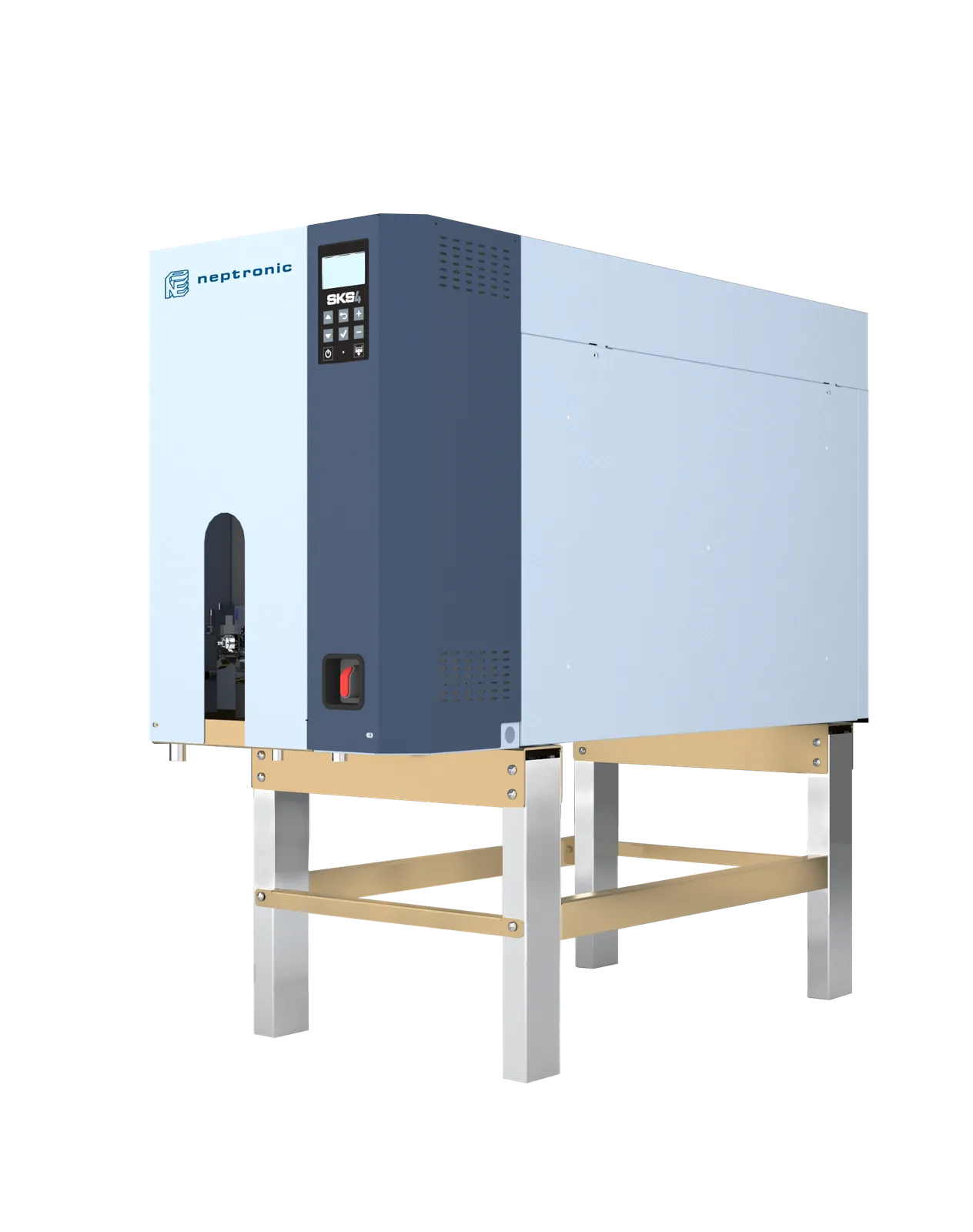
The NKT catalogue does not carry electrode humidifiers as a standalone product line; however, where a customer specification mandates it, suitable Neptronic ecosystem products (e.g. SKS4 steam-to-steam) are proposed as a hybrid mineral-free solution. Our primary recommendation is the water-quality-agnostic, high-precision, long-life Neptronic SKE4 resistive range. Pre-commissioning water analysis determines the suitable type; the decision is shared transparently with the customer.
Related Academy Articles
Related Products
NKT products related to this term