Definition
A systematic preventive risk-management approach for food safety. Biological, chemical, and physical hazards are identified at every stage from production to consumption; Critical Control Points (CCP) are defined and continuously monitored. Temperature and relative humidity are among the most common CCPs in food processing; HACCP compliance cannot be achieved without humidity control.
Detailed Explanation
HACCP, per Codex Alimentarius standard, is built on 7 principles:
1. Hazard analysis (biological / chemical / physical) 2. Critical Control Point (CCP) determination 3. Critical limit definition (RH ≤ 65%, temperature 0–4°C, etc.) 4. CCP monitoring procedures 5. Corrective action on deviation 6. Verification procedures 7. Documentation + record-keeping
In food processing facilities, humidity control is critical for many CCPs: • Cold storage — RH > 85% = mold risk; monitored as CCP • Meat, cheese, fish ripening — RH 75–85% controlled • Dry food storage (flour, spices, tea) — RH < 60% mandatory • Sausage drying room — RH 70–80% gradient control • Chocolate storage — RH < 50%, temperature 16–18°C
HACCP audits require, for humidity control: calibrated RH/T sensors, continuous data logging, alarm system, deviation report, corrective action records. Manual readings are no longer sufficient; BMS integration is standard.
Practical Example
HACCP humidity control for a cheese-ripening room:
Requirement: kaşar cheese ripening at 10°C, 85% RH ± 5, 60–90 days
CCP: relative humidity (critical limit 80–90%) Monitoring: 3× industrial-class humidity sensors (room north/south/center), data every 30 s Recording: BMS-based CSV log + Modbus → site SCADA
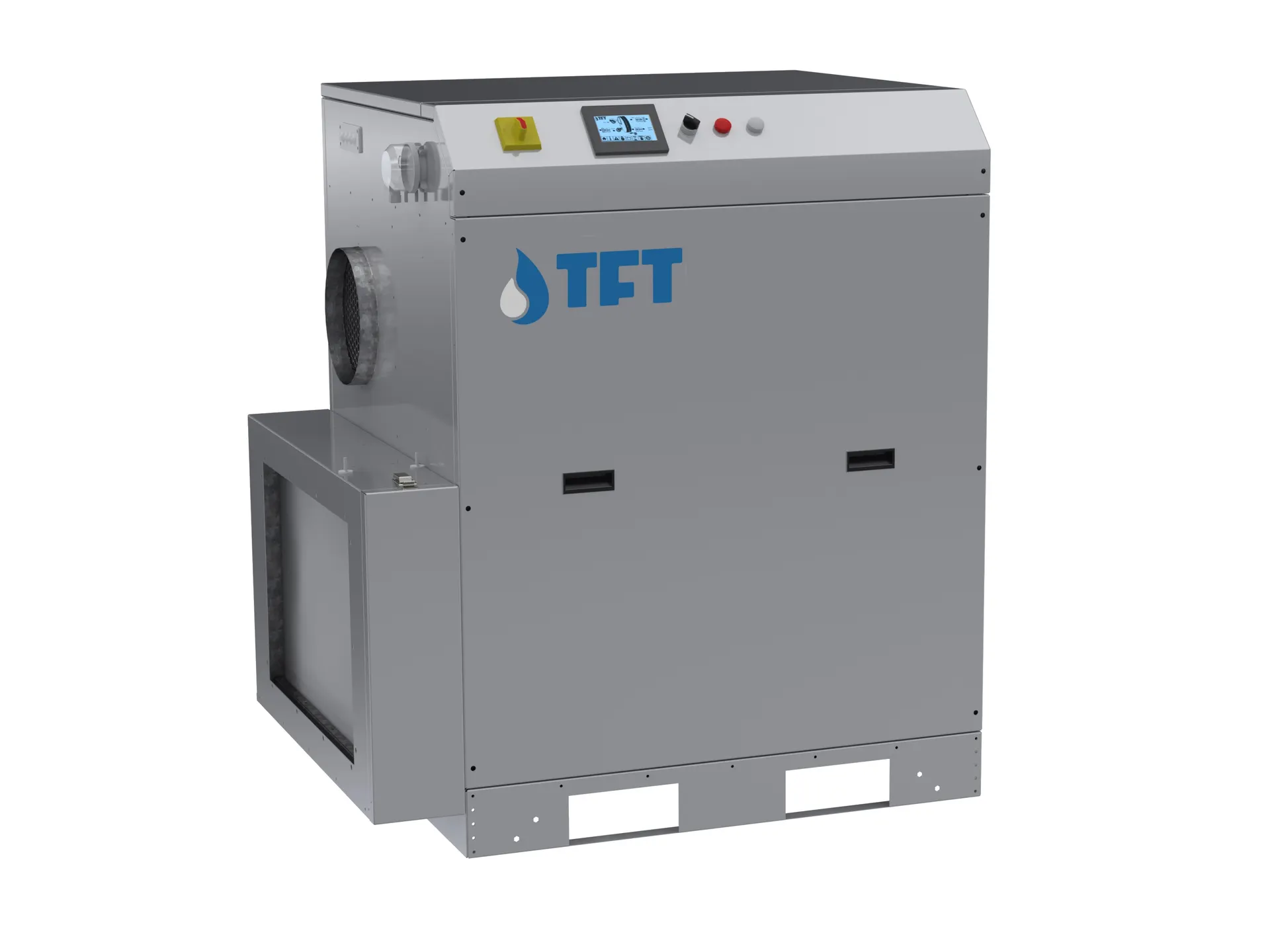
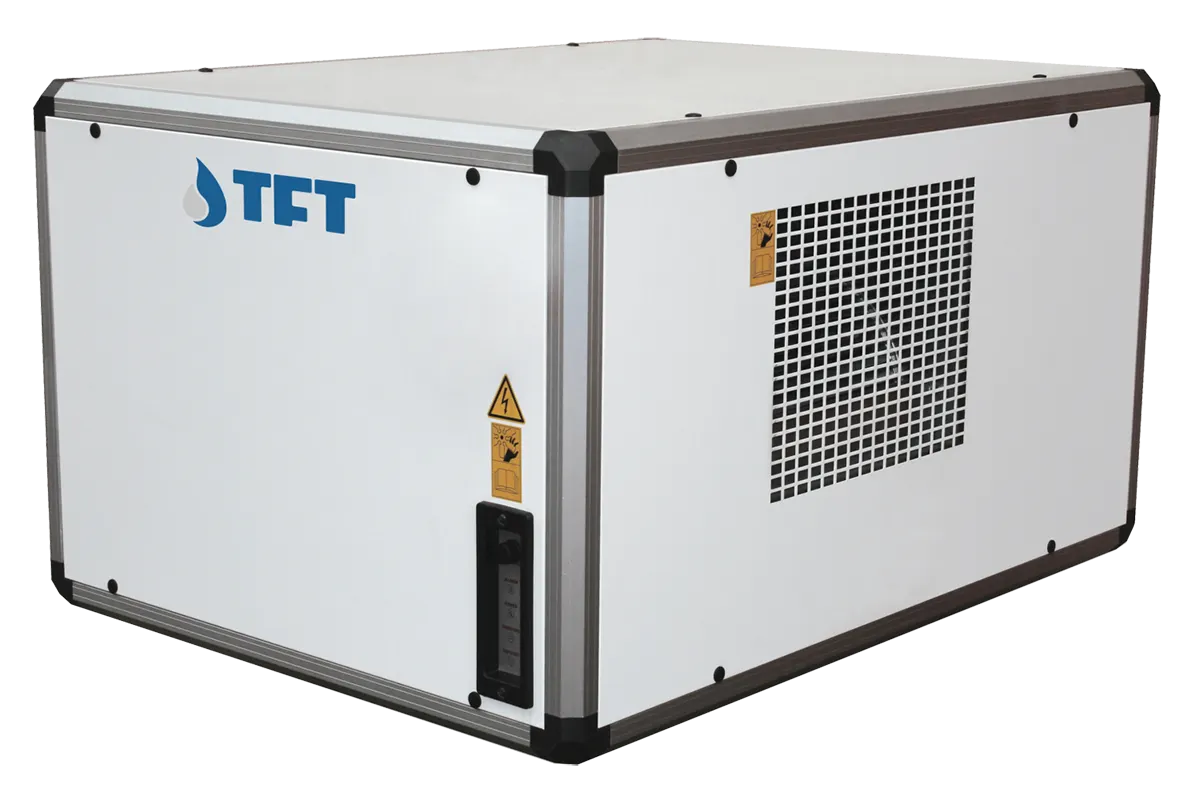
Installation: TFT CD80 condensation dehumidifier (80 kg/24h) + Neptronic SKE4-15 steam humidifier (15 kg/h, for replenishment when RH drops)
Operation: • Summer: cheese evaporation pushes RH to 95% during ripening → dehumidifier engages (alarm + unit on at RH > 88%) • Winter: cold outside + heating drops RH to 75% → humidifier engages (alarm + unit on at RH < 82%) • All setpoint deviations trigger automatic corrective action + record
HACCP audit result: 0 deviations, consistent cheese quality, waste at 1.5% (previously 4.8%). Product sale value standardized, premium price tier maintained. Equipment + maintenance cost difference: €350/month — 0.3% of a single batch value.
Engineering Note
Five important principles for HACCP humidity control:
1. Realistic CCP definition — not every parameter is a CCP; risk analysis identifies the truly critical ones. Excess CCPs = excess workload + audit difficulty.
2. Continuous monitoring required — manual readings are no longer accepted; minimum 1-minute sampling, automatic recording, alarm.
3. Sensor calibration — mandatory annually, with certification (NIST-traceable). Recommended every 6 months for low-temperature environments such as cold storage.
4. Deviation protocol — what happens when RH critical limit is exceeded? Automatic corrective action (unit on) + manual intervention + product quarantine + root-cause analysis + CAPA record.
5. Documentation + audit trail — every event (alarm, manual intervention, maintenance, calibration) timestamp-recorded; 21 CFR Part 11 or ISO 22000-compliant system.
At NKT we offer TFT condensation + Neptronic steam + industrial humidity sensors + BMS integration packages for food HACCP projects.