Definition
A biochemical process in which casein proteins (αs1, αs2, β, and κ-casein) are gradually broken down into peptides and amino acids by milk enzymes (plasmin), starter culture proteases, and rennet enzymes (chymosin, pepsin) during maturation. It is the most critical transformation defining cheese texture elasticity, flavour depth, and aromatic compound profile. Its rate is highly sensitive to temperature, pH, water activity, and salt content.
Detailed Explanation
Proteolysis is the "heart" of cheese maturation. Through enzymatic breakdown of milk casein proteins, cheese develops its characteristic taste, aroma, and texture. The process is driven by three enzyme groups:
1. Primary proteolysis (large peptide formation) • Rennet enzymes (chymosin, pepsin) — added during coagulation, target κ-casein; during maturation also break down αs1-casein (αs1-CN f1-23) • Plasmin (milk enzyme) — targets β-casein; produces γ-casein and PP (proteose-peptone)
2. Secondary proteolysis (small peptide + amino acid) • Starter LAB proteases (Lactobacillus, Lactococcus) — break large peptides into smaller ones • Non-starter LAB (NSLAB) — especially active during long maturation (Cheddar, Parmesan)
3. Aromatic compound formation (amino acid → volatile compound) • Amino acid decarboxylation, transamination, deamination • Sulphur-containing compounds (methionine → methanethiol, dimethyl sulphide) — kaşar/Cheddar-type taste • Branched-chain aldehydes (leucine, valine → isovaleraldehyde) — fruity/buttery taste
Proteolysis rate is sensitive to four key parameters: • Temperature: Q10 ≈ 2 (a 10°C rise doubles the rate) • pH: optimum chymosin pH 5.5–6.5; plasmin pH 7.5 • Water activity (aw): aw 0.90+ optimum; halts below aw 0.85 • NaCl: above 4% plasmin is inhibited, chymosin remains stable
Example maturation kinetics (Eski Kaşar, 13°C): • 30 days: αs1-casein 20% hydrolysed, ABA peptide minimal • 60 days: αs1-casein 45% hydrolysed, ABA peptide at typical level • 90 days: αs1-casein 70% hydrolysed, high taste complexity • 180 days: αs1-casein 85%+ hydrolysed, considered "fully matured"
Why It Matters
Proteolysis directly determines seven critical indicators of cheese quality:
1. Flavour profile — incomplete proteolysis yields "bland/tasteless"; excessive proteolysis yields "bitter/pungent" off-flavours (especially from short bitter peptides) 2. Texture and elasticity — proteolysis loosens the casein network; texture shifts from hard to soft, elastic to crumbly; target differs by product 3. Meltability — αs1-casein hydrolysis is critical for pizza cheese (mozzarella); full hydrolysis ensures good melt 4. Aromatic compound generation — amino acids convert to aromatics; each cheese type has a specific aromatic profile target 5. Regulatory compliance — geographically protected cheeses (Parmigiano Reggiano, Comté, Eski Kaşar) require specific proteolysis levels 6. Bitter peptide formation — poorly controlled proteolysis accumulates bitter peptides; product rejection 7. Shelf life — uncontrolled proteolysis continues and over-matures the cheese, reducing commercial value
Ambient impact: • Temperature 10 → 14°C → proteolysis 1.5× faster → maturation 90 → 60 days • Very low RH → aw drops, proteolysis slows → long duration, high weight loss • Very high RH → aw stays high, proteolysis fast, but rind mould risk • Temperature drift → enzymatic rate fluctuates, batch-to-batch inconsistency
Professional maturation rooms hold aw constant via dew-point-based control; this makes proteolysis rate plannable and quality repeatable. NKT condensation-type units provide this stability.
Practical Example
A Turkish kaşar plant struggles with inconsistent flavour profile. Proteolysis tracking during maturation:
Baseline: • Maturation room: 13°C / 78% RH (summer 15°C / 70% RH) • Average maturation period: 90 days (target) • Proteolysis index variation: TCA-soluble N (water-soluble nitrogen) 18–32% (target 25% ± 3) • Taste panel scores: 6.2/10 (target 8/10) • Consumer complaint rate: 4.5%
Root-cause analysis: • Summer ambient temperature rose 2°C → proteolysis 30% faster → some batches over-matured (bitter), others dried fast and proteolysis halted • RH dropped from 78% to 70% → aw 0.93 → 0.89 → enzymatic activity declined • Result: flavour inconsistency, low customer satisfaction
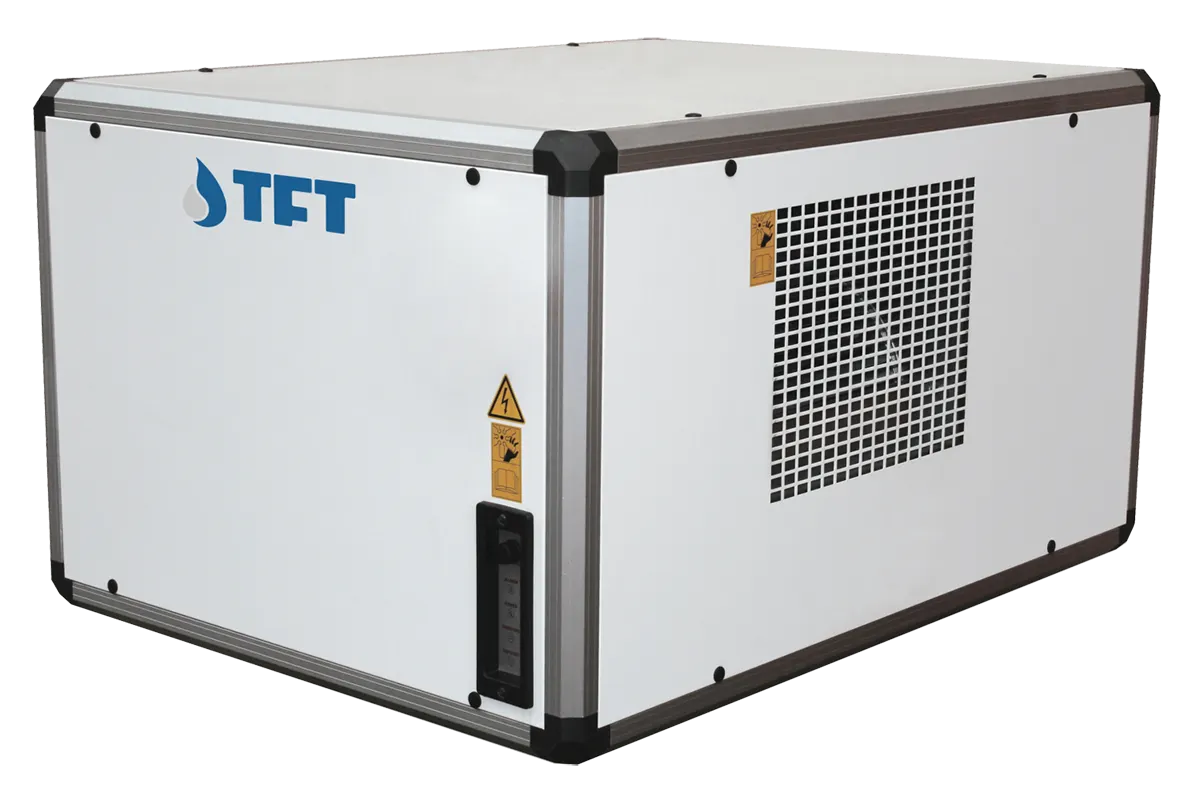
NKT Solution: • CD1200-3000 condensation-type dehumidifier, CD2000 model • Target ambient: 13°C / 88% RH (dew point 11°C); year-round stable • Temperature variation: ±0.5°C (previously ±2°C) • PID dew-point control stabilises RH • Air velocity: 0.3 m/s at surface • NKT - Climate Track monitoring with hourly dew point, temperature, RH log
Six-month post-commissioning tracking: • Proteolysis index: TCA-soluble N 25% ± 1.8 (on target) • Taste panel scores: 6.2 → 8.4/10 • Consumer complaints: 4.5% → 0.8% • Market value: sold at 15% premium over standard kaşar • Annual additional revenue: 600 t × 15% premium × 18,000 USD/t = 1.62 M USD • Energy consumption: comparable to previous system thanks to heat recovery
Engineering Note
Seven engineering criteria for maturation room design supporting proteolysis control:
• Temperature stability — ±0.5°C max variation; otherwise Q10 effect changes proteolysis rate 10–20%, batch inconsistency • Dew-point control — use dew-point setpoint to stabilise aw, not RH. Typical kaşar at 11°Cdp dew point, sucuk at 9°Cdp • Air velocity — 0.2–0.4 m/s at surface; low velocity → high surface aw → fast proteolysis; high velocity → surface drying → case hardening • Stepped profile — some products (Cheddar, sucuk) require time-varying temperature/RH profile; PLC recipe system • Salt distribution — homogenisation time after salting (1–4 weeks) is critical; uniform salt distribution makes proteolysis homogeneous • pH monitoring — cheese pH should be 5.2–5.5; deviation → proteolysis rate changes • Microbial control — starter LAB count must be tracked (10⁷–10⁹ CFU/g); otherwise proteolysis is insufficient
Quality measurements: TCA-soluble N (proteolysis index), pH 12 nitrogen (advanced proteolysis), free amino acid (FAA) concentration, RP-HPLC peptide profile. Panel test + rheometric analysis 2–4 times per year.
NKT Application Link
NKT provides proteolysis-focused maturation room climate solutions for premium cheese producers. Highlights:
1. Condensation-type dehumidifier (CD160-980 or CD1200-3000 series) — efficient in high-RH bands (82–92% RH) 2. High-precision PID dew-point control — ±0.3°Cdp stability, critical for aw constancy 3. Temperature homogeneity — destratification fans + multi-zone air distribution, ±0.5°C 4. Condenser heat recovery — integrated to room heating demand, 15–25% energy savings 5. NKT - Climate Track monitoring — hourly dew point, temperature, RH; monthly trend analysis; record-keeping for HACCP 6. Recipe-based setpoint — stepped maturation profile (fresh → early maturation → advanced maturation) 7. Hygienic design — stainless steel inner casing, antimicrobial coating; HACCP-compliant
NKT applies this architecture in premium cheese plants: kaşar (Eski Kaşar, Thrace kaşar), tulum cheese, white cheese, fermented sausage. Customer references include transformations that lifted taste panel scores from 6.2/10 to 8.4/10 and entered the premium price segment. NKT - Climate Track reports correlate product proteolysis index (TCA-soluble N) with ambient dew point monthly, providing production planning input for your team.