Definition
The difference between the saturated vapor pressure and the actual vapor pressure of air (kPa). Directly affects plant transpiration rate. In vertical farming and greenhouse applications, VPD is the key parameter used for co-optimization of temperature and humidity. The optimal range is generally 0.8–1.2 kPa.
Detailed Explanation
VPD (Vapor Pressure Deficit) is the difference between the maximum water vapor pressure air can hold at the same temperature (Psat) and the actual water vapor pressure (Pv). Its unit is kPa or Pa. Unlike RH, which is a percentage, VPD is an absolute pressure difference; it therefore accurately reflects the true thermodynamic driving force of plant physiology.
Plants release water vapor through their stomata (leaf pores) — a process called transpiration. This process is directly proportional to VPD: high VPD = rapid vapor transfer from leaves to air = excessive water loss, closed stomata, and loss of photosynthesis. Low VPD = insufficient transpiration = poor nutrient uptake, increased risk of mold and disease.
Controlled agriculture (greenhouses, vertical farms, vegetative rooms, drying cabinets) uses VPD as the control parameter instead of temperature and humidity separately. Optimum VPD varies by plant species and growth stage: germination 0.4–0.8 kPa, vegetative 0.8–1.2 kPa, flowering 1.0–1.5 kPa, final week of fruit/flower maturation 1.2–1.6 kPa.
Calculation
VPD = Psat × (1 − RH/100)
Saturated vapor pressure (Tetens equation): Psat = 0.6108 × exp[17.27 × T / (T + 237.3)]
VPD: vapor pressure deficit (kPa) Psat: saturated vapor pressure (kPa) T: air temperature (°C) RH: relative humidity (%)
Leaf surface VPD (LVPD) — more accurate: LVPD = Psat(Tleaf) − Pv(Tair)
Tleaf: leaf surface temperature (typically 1 to 3°C below Tair due to transpiration cooling) Pv: actual water vapor partial pressure in air
Practical Example
Compare two vertical farming rooms. Same plant, same LED, different climate:
Room A: 24°C, 65% RH Psat = 2.98 kPa → VPD = 2.98 × (1 − 0.65) = 1.04 kPa ✓ vegetative optimum
Room B: 28°C, 75% RH Psat = 3.78 kPa → VPD = 3.78 × (1 − 0.75) = 0.95 kPa ✓ vegetative optimum
The two rooms have different temperatures and RH values, yet the same VPD — physiologically similar environments for the plant. This shows why VPD is so valuable as a single control parameter.
Real-world error scenario: If the same operator designed a 30°C environment with a 65% RH setpoint: Psat(30) = 4.24 kPa → VPD = 1.49 kPa (flowering band, not vegetative!) During the vegetative stage, the plant would over-transpire, leaves curl, and growth slows. When temperature and RH are controlled separately, this error goes unnoticed; with VPD, it is visible at a glance.
Engineering Note
Considerations in VPD-based climate control design:
• HVAC controller selection — modern climate computers (Priva, Hortimax, NKT integrations) operate directly with a VPD setpoint; temperature and humidity become auxiliary parameters. • Leaf temperature vs air temperature — LVPD, measured with IR thermometers or leaf temperature sensors, differs from air VPD. Under high light, leaves can be 2–4°C above air temperature. • Local microclimate — a single sensor does not represent the entire growing area; the upper zone near LEDs can have different VPD from the shaded lower zone. Multi-point monitoring and circulation fans are critical. • CO₂ interaction — at high CO₂ levels, stomata partially close and transpiration decreases; for this reason, VPD can be raised slightly in CO₂-enriched facilities.
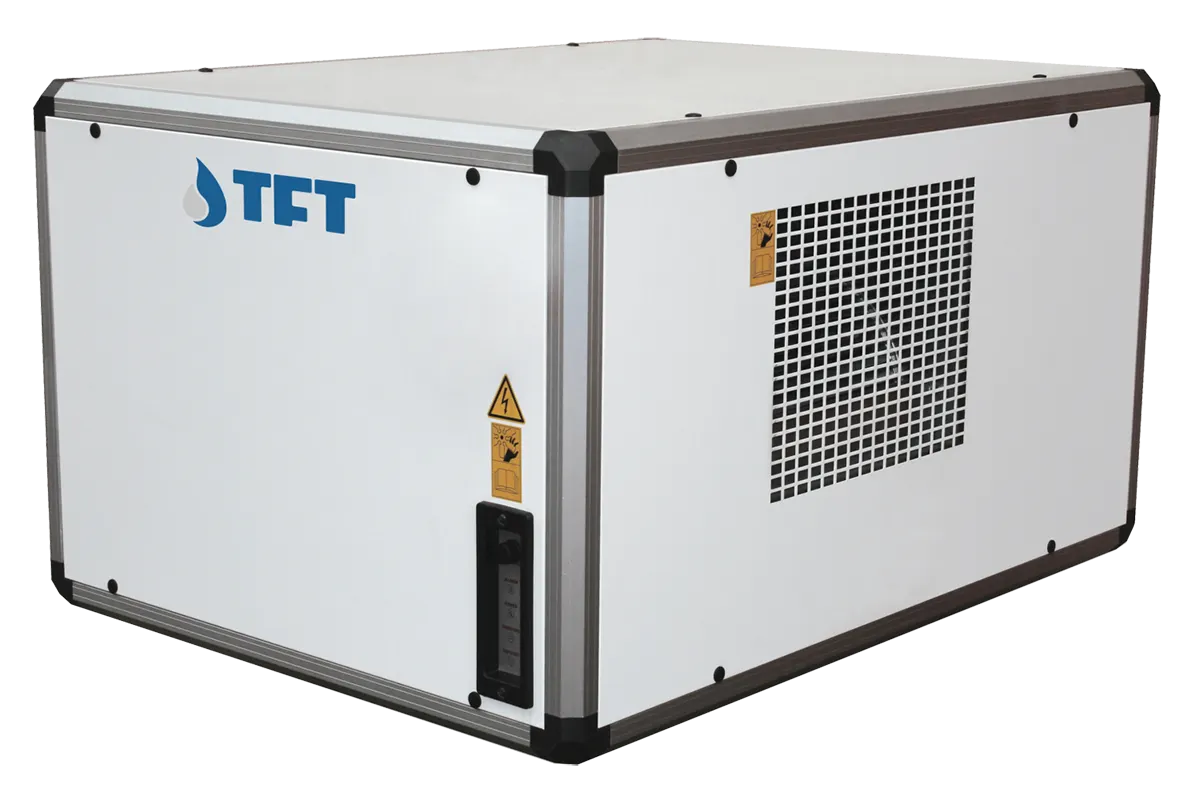
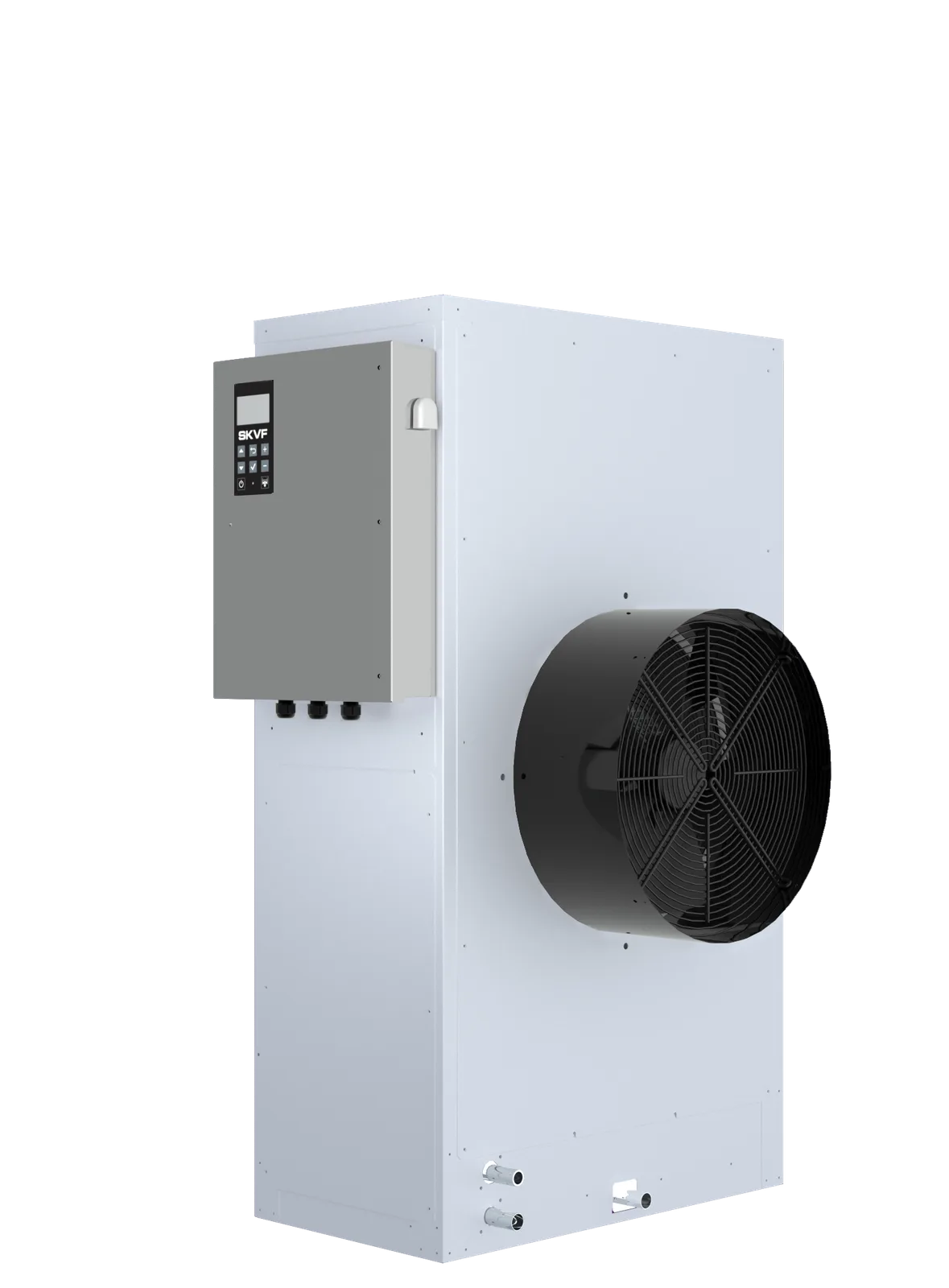
NKT condensation-type dehumidifiers for vertical farming and greenhouse applications can be controlled directly via VPD setpoint over BMS; the hourly VPD profile is reported in energy simulation.
Related Academy Articles
Related Products
NKT products related to this term