Definition
A one-time investment in the purchase, installation, and commissioning of equipment or a system. In industrial dehumidifier or humidifier projects, CAPEX typically covers unit price + shipping + installation + duct integration + control panel + commissioning. The CAPEX decision must be evaluated together with OPEX (annual operating cost) and TCO (total cost of ownership).
Detailed Explanation
CAPEX, from a balance-sheet perspective, is an investment item depreciated as a fixed asset. Typical CAPEX components in an industrial dehumidifier project:
• Main unit price — depends on capacity and technology (silica gel rotor is usually 2–4× the CAPEX of condensation type) • Auxiliary equipment — ductwork, dampers, fans, supplementary heating/cooling coils • Control panel — PLC, touch HMI, BMS gateway • Sensors — RH/T, pressure, flow sensors (GMP-certified for critical processes) • Installation labor — mechanical + electrical + controls + commissioning • Logistics — shipping, crane placement, customs (for imported products) • Engineering — project design + documentation (typically +5–10%)
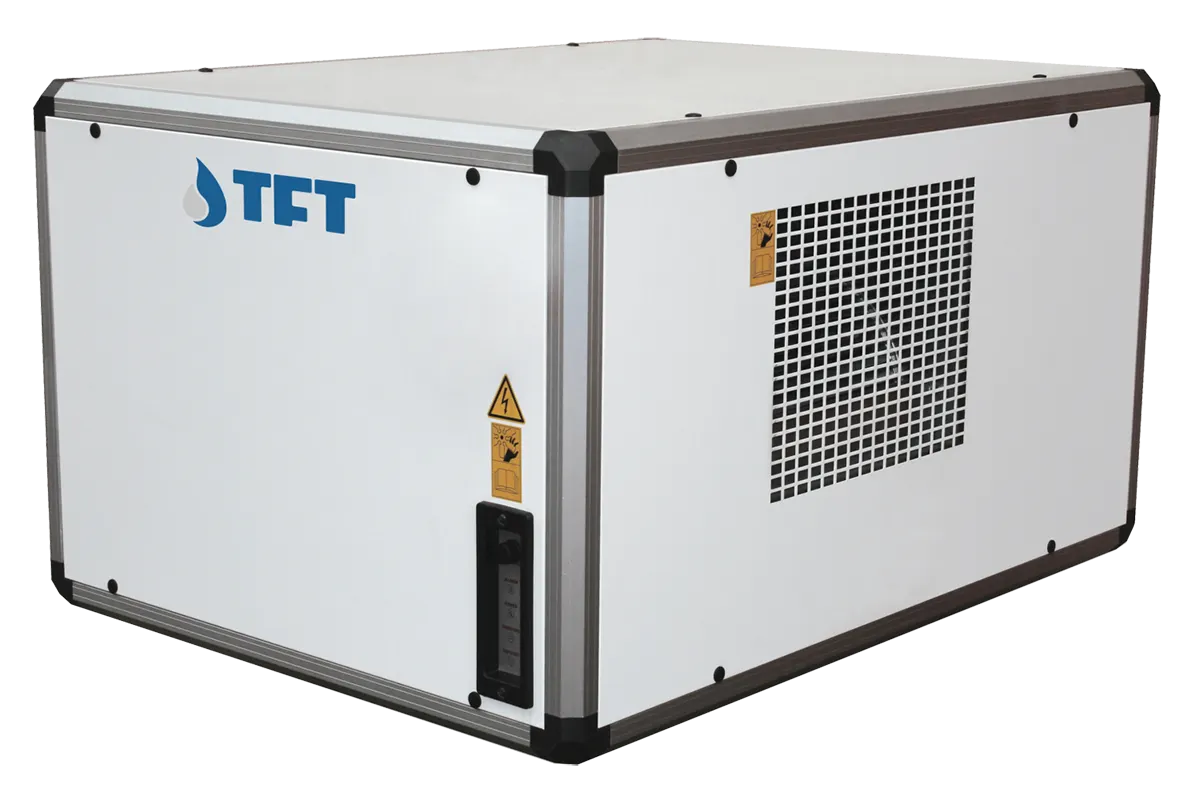
Quick CAPEX rule of thumb for a mechanical-cooling condensation industrial unit: ~€8,000–€80,000 per unit (capacity-dependent). For a silica gel rotor of the same capacity range: €25,000–€200,000+. These figures exclude auxiliary equipment and installation; on complex projects total investment reaches 1.5–2× unit price.
Practical Example
CAPEX breakdown for a 2,000 m² lithium battery dry room project:
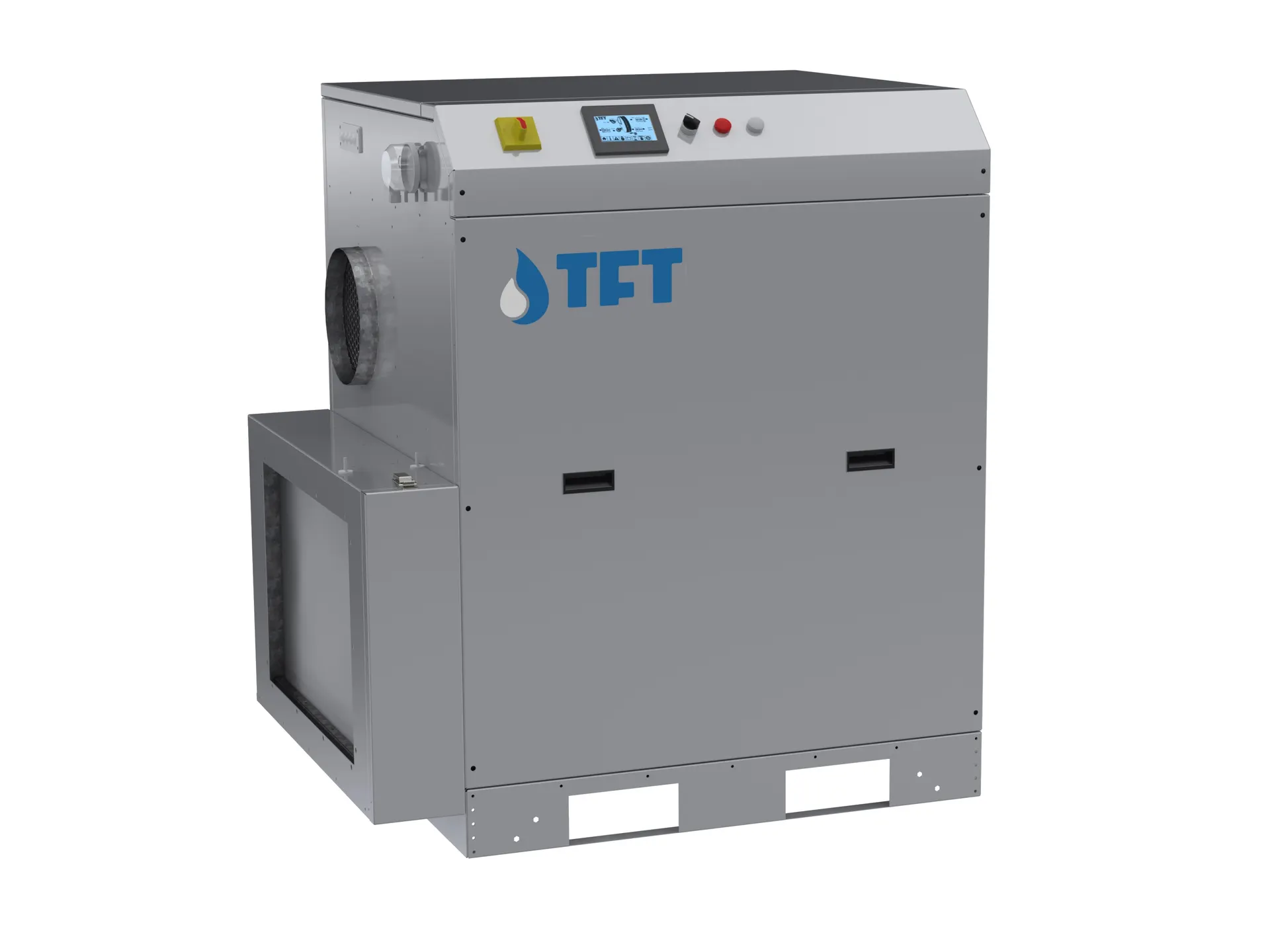
• Main units: 2× TFT ADP6500 silica gel rotors (6,500 m³/h each, –50°C dp) → €280,000 • Auxiliary equipment (duct, dampers, silencers): €45,000 • Chilled water plant (post-rotor): €38,000 • Steam reactivation heat exchanger (plant steam connection): €18,000 • Control panel + BMS integration: €32,000 • Sensors (RH/T, dp measurement, particle counting): €22,000 • Installation labor (mechanical + electrical + controls): €68,000 • Commissioning + validation: €15,000 • Engineering + documentation: €28,000 • Logistics + customs: €12,000
Total CAPEX: €558,000
Comparison: condensation type is impossible for the same application (–50°C dp unreachable). For smaller dry rooms (e.g., 200 m²), silica gel rotor CAPEX is in the €80,000–€120,000 range. The CAPEX decision is evaluated together with annual OPEX (~€45,000/year reactivation energy + maintenance) and the battery quality gain enabled by the dry room (~€1,200 value uplift per cell).
Engineering Note
Five common mistakes in CAPEX optimization:
1. Looking only at unit price — auxiliary equipment + installation + commissioning add 50–80% of unit price. Total CAPEX must be budgeted. 2. Assuming low CAPEX = low TCO — cheap units typically yield higher OPEX (energy, maintenance, scrap). 5-year TCO comparison is essential. 3. No budget for redundancy — N+1 unit capacity is non-negotiable on critical processes; raises CAPEX by 30–50% but the cost of process downtime is much higher. 4. Adding controls/automation later — a separate controls project costs 2× when bolted on after the fact. Should be included in the design phase. 5. Wrong technology choice — picking silica gel rotor instead of condensation (when not needed) inflates CAPEX 3–4×; the reverse is also true — installing condensation in a low-dew-point application simply does not work and the price is wasted.
At NKT we provide detailed CAPEX/OPEX/TCO analysis before each project; through correct technology selection + correct capacity sizing + correct control architecture, we deliver total investment optimization within 5 years.