

Selecting an industrial dehumidifier is not a single-variable capacity decision as it may appear from the outside. The right industrial dehumidifier emerges from a joint evaluation of target relative humidity and dew point, ambient temperature and air volume, appropriate technology (condensation dehumidifier / silica gel rotor dehumidifier / hybrid), reactivation energy source, housing material, automation integration, and service availability. Missing analysis on any of these criteria comes back as either undersized capacity that fails to reach targets, oversized units with high CAPEX and OPEX, or wrong technology choices causing evaporator freezing and premature rotor wear. As NKT, Humidity Control Technologies, we represent TFT Italy's industrial dehumidifier portfolio in Türkiye; this guide translates our cross-sector field experience with TFT equipment into the decision logic engineers and procurement decision-makers need to build a sound technical foundation for their selection.
The Cost of Wrong Equipment Selection
Selection mistakes don't usually show up immediately. The unit appears to run, even hits target in the first months. The problem surfaces when ambient conditions shift (summer peak load, faster production, additional lines) or as the unit ages. Four most common cases:
- Undersized capacity: Unit operates fine at nominal conditions but cannot hold target RH during summer or peak process moisture loads. Result: product quality issues, mould, packaging defects, premature compressor wear from continuous 100% load.
- Oversized capacity: 30–50% oversized unit cycles on-off continuously. Compressor life shortens, energy consumption is 25–40% above real demand, and unnecessary CAPEX is paid. Setpoint oscillation (15% RH swing instead of 5% band) destroys product stability.
- Wrong technology: Installing a condensation unit for an application requiring below +12°Cdp, evaporator freezes, defrost cycles cut capacity in half. Or installing a silica gel rotor in a 30°C, 70% RH comfort application, unnecessary CAPEX and high electricity consumption.
- Wrong housing material: Installing a standard galvanised housing in a swimming-pool environment (chlorine + moisture), galvanic corrosion in compressor and evaporator fins within 12–18 months, unit beyond economical repair.
Each of these four cases could have been prevented with 1–2 hours of correct analysis at the selection stage. The 8 criteria below form the framework for that analysis.
The 8 Core Criteria of the Selection Process
The criteria below should be evaluated in sequence, each constrains the next. You cannot choose a technology without setting target RH; you cannot decide on reactivation energy source without picking the technology.
1. Target Relative Humidity and Dew Point
This is the starting point of the entire selection process. The application's target relative humidity (RH %) and target dew point (°Cdp) are determined by sector standards, product specifications or process requirements. Examples: lithium battery dry room −40 to −60°Cdp; pharmaceutical granulation −20 to −40°Cdp; ASHRAE museum standard 50% ± 5 RH; pool hall 55–60% RH @ 28–30°C; general warehouse 50% RH @ 20°C.
This value also defines the technology boundaries. The +12°Cdp practical limit: condensation type cannot economically reach below this (evaporator freezes). All applications below this limit require silica gel rotor. So discussing technology before clarifying the target value is meaningless.
2. Ambient Temperature and Air Volume
Ambient temperature directly affects the technology decision. Below 15°C, condensation type loses efficiency and defrost demand rises, silica gel rotor should be preferred. Above 30°C, silica gel rotor capacity decreases; in this case pre-cooling or condensation type makes sense.
Air volume (m³) and air change rate (ACH) must be calculated. Low dew-point applications generally require 3–6 ACH; comfort applications 1–3 ACH; pool halls 4–8 ACH. This figure determines required air flow (m³/h) and is the second input to unit sizing.
3. Moisture Load Calculation
The real driver of unit capacity is the moisture load (kg/h). Air flow only tells you how often the room volume is turned over; moisture load tells you how many kilograms of water must be removed per hour. There are seven main moisture sources: (1) infiltration (doors/windows/walls), (2) fresh air, (3) personnel, (4) process (drying, cooking, washing), (5) wet surfaces (pool, open tank), (6) material moisture (incoming product), (7) permeation (membrane, plastic). Each must be calculated separately and summed.
For detailed methodology and worked example: Moisture Load Calculation: Capacity Sizing Guide for Industrial Dehumidifiers.
4. Technology Choice (Condensation, Silica Gel, Hybrid)
Once the first three criteria are clear, the technology decision becomes self-evident. Practical decision logic:
- Condensation (CDP, CD series), sweet spot: Target DP +12°C ↔ +20°Cdp (~50–80% RH band at 20°C ambient), ambient 15–35°C. Classic example: ambient 20°C / target DP 14°Cdp (≈ 68% RH), comfort HVAC, warehouse, light industrial, museum, data centre auxiliary spaces. COP 3.5–5.0 in this band; silica gel rotor cannot compete. Practical lower limit +12°Cdp; below this the evaporator freezes and defrost cycles halve capacity.
- Silica gel rotor (AD, ADP, ADE series) (sweet spot: Target DP below +12°Cdp (under 40% RH at 20°C ambient)) pharma granulation −20 ↔ −40°Cdp, freeze-dryer −30 ↔ −45°Cdp, lithium battery dry room −40 ↔ −60°Cdp; OR ambient below 15°C (cold storage +4°C, freezer −20°C). Also preferred in hygiene-critical environments (food CIP/SIP, pharma GMP) for the dry-running advantage.
- Hybrid (condensation + silica gel): Target DP < 0°Cdp + high outdoor moisture load (e.g. tropical ≥ 30°C / 75% RH fresh air + −40°Cdp target). Condensation strips 50–60% of the load via pre-condensation; the rotor then reaches low DP. Total energy drops 20–30%; CAPEX 15–25% higher.
- Pool type (CDP pool series, Microwell): Not part of the condensation/silica gel technology axis; a dedicated unit class for the swimming pool hall's chlorine + moisture environment (epoxy-coated housing, aluminium evaporator fins, chlorine-resistant compressor). Standard condensation in a pool hall succumbs to galvanic corrosion within 12–18 months.
For a detailed technology comparison: Silica Gel Rotor vs Condensation vs Pool-Type Dehumidifier Comparison.
5. Reactivation Energy Source
This criterion only applies to silica gel rotor units; condensation type runs only on electricity. The silica gel rotor must heat a second air stream to release the adsorbed moisture (reactivation). This heat source can be electric resistance heater, natural gas burner, steam (boiler return) or waste heat. Existing facility energy infrastructure determines this decision:
- Electric: Simplest installation, highest OPEX. Economical only with low operating hours (under 2,000 hours/year).
- Natural gas: Significant OPEX savings versus electricity at Türkiye industrial tariffs. 18–30 month payback for 24/7 facilities.
- Steam (boiler return): If the facility already has a boiler, marginal energy cost is minimum. Payback 6–10 months.
- Waste heat recovery: If fed from 80–120°C waste heat sources (cooling tower, compressor waste heat, paint shop oven exhaust), marginal energy cost approaches zero.
6. Housing Material
The unit's operating environment directly determines housing material. Wrong material selection halves the equipment life:
- Standard galvanised steel: Comfort, warehouse, office. 10–12 year indoor life.
- AISI 304 stainless: Food, pharma, hygiene-critical environments. CIP/SIP wash-down resistant.
- AISI 316L stainless: Chemical environment, coastal, chlorinated environment. High galvanic corrosion risk areas.
- Epoxy-coated + aluminium evaporator: Swimming pool, jacuzzi, SPA. Chlorine vapour-resistant coating.
- ATEX-certified: Solvent, paint shop, accumulator manufacturing. Components certified for explosive atmosphere.
7. Automation and BMS Integration
Practically all modern industrial dehumidifiers support Modbus RTU/TCP and most support BACnet IP. This allows connection to a central BMS, relative humidity, dew point, compressor runtime, alarm history, all monitored from one panel. Questions to ask during selection:
- Is Modbus RTU or TCP supported?
- If BACnet IP / MS/TP is needed, is it standard or an add-on module?
- Open/closed PID control, multi-setpoint support?
- Remote firmware update capability?
- How are alarm relay outputs (dry contacts) wired to BMS?
8. Service, Maintenance and Spare Parts
Service availability over the unit's 10–15 year economic life matters as much as CAPEX. A brand without authorised Türkiye service or weak spare-parts stock means long downtimes and high logistics costs at first failure. Questions to ask: is there an authorised service in Türkiye; are spare parts (compressor, fan, rotor, control board) in local stock; is a maintenance contract option offered; is brand training for service technicians regular.
Capacity Calculation Framework
Detailed moisture load calculation is its own discipline; however, the simplified framework below is useful for pre-sizing:
Ambient load = V × ACH × Δw (kg/h)
V = room volume (m³), ACH = air changes per hour, Δw = (outdoor absolute humidity − target absolute humidity)
Unit capacity ≈ Total moisture load × 1.2 (safety factor)
Example: 500 m³ warehouse, 3 ACH, outdoor 25°C / 70% RH (Δw ≈ 8 g/kg), target 50% RH @ 20°C. Ambient load ≈ 500 × 3 × 0.008 × 1.2 (density correction) ≈ 14.4 kg/h. With personnel and process loads added, ~16 kg/h. Unit selection: 16 × 1.2 = 19.2 kg/h capacity (e.g. a suitable model from the AD 1000-3100 family).
Sector–Equipment Mapping Matrix
| Sector / Application | Target RH or DP | Recommended Technology | NKT Product Family |
|---|---|---|---|
| Residential basement, garage | 50% RH @ 20°C | Condensation (CDW, CDNP) | CDW 16 / CDNP 33-96 |
| Industrial warehouse | 50–60% RH @ 20°C | Condensation (CD, CDP) | CD 160-980 / CD 1200-3000 |
| Cold storage (>0°C) | 70–80% RH @ 4°C | Silica gel rotor | AD 1000-3100 |
| Cold storage / freezer (<0°C) | −5 ↔ −15°Cdp | Silica gel rotor | AD 800-1100 / AD 1000-3100 |
| Food processing + cooling tunnel | Low dew point | Silica gel rotor | AD / ADP series |
| Pharma granulation, capsule | −20 ↔ −40°Cdp | Silica gel rotor (stainless) | AD 800-1100 / ADP 2000-9500 |
| Lithium battery dry room | −40 ↔ −60°Cdp | Silica gel rotor (zeolite) | ADP 2002-9502 / ADE 2500-19000 |
| Indoor swimming pool | 55–60% RH @ 28–30°C | Pool type | CDP pool / CSW / Microwell |
| Museum, archive, library | 50 ± 5% RH | Condensation + humidification | CD series + steam humidifier |
| Data centre auxiliary space | 40–55% RH | Condensation | CD 160-980 / CDP series |
| Automotive paint shop, motor test | 30–45% RH | Hybrid or silica gel | AD + CD combination |
Reactivation Energy Source Decision Flow
When a silica gel rotor is selected, the reactivation energy source decision directly governs the CAPEX–OPEX balance. Practical decision flow:
- Is there a boiler in the facility? Yes → steam reactivation is most economical. Tap the existing boiler; no separate investment, marginal energy cost minimum.
- Is there 80–120°C waste heat available (compressor, cooling tower, oven exhaust)? Yes → waste heat recovery provides effectively free energy. Heat exchanger investment pays back in 12–18 months.
- Is natural gas piped to the facility? Yes → a natural gas burner delivers significant savings versus electricity. Ideal for 24/7 facilities.
- Annual operating hours below 2,000? Yes → electric resistance heater is sufficient; alternative investments do not pay back.
- None of the above but operating 24/7? → Investing in a natural gas line may pay for itself long term; evaluate together with overall facility energy planning.
When Does a Hybrid System Make Sense?
A hybrid system combines the pre-condensation (condensation) and main adsorption (silica gel rotor) stages. It makes sense in high outdoor moisture-load conditions:
- Very high moisture-load fresh air (summer tropical conditions): Condensation first drops 70% RH to 50% RH, then the rotor reaches dew points below 50%. Load on the rotor decreases, reactivation energy drops.
- Capacity matching difficulty: If a single technology cannot meet the requirement (e.g. very high flow at low dew point), parallel operation of two technologies becomes economical.
- Facilities where existing condensation is insufficient: Instead of replacing the whole system, a series silica gel rotor can be added to lower the dew point; CAPEX is optimised.
A hybrid system isn't always the right answer. In low outdoor humidity (dry climate) regions or at small capacities, silica gel rotor alone is a simpler and more economical solution.
Common Selection Mistakes
- "Bigger unit is safer." No. Oversized capacity means continuous on-off cycling, premature compressor wear, 25–40% extra energy and setpoint oscillation. Correct capacity with +20% safety factor is enough.
- "Condensation type works at any temperature." No. Below 15°C, efficiency drops sharply, evaporator freezing risk begins. Silica gel rotor is mandatory for cold storage + freezer applications.
- "Silica gel rotor is expensive, condensation is always enough." No. If the target is below +12°Cdp, condensation is physically insufficient; it isn't "enough", it is "impossible".
- "No need for moisture load calculation, room volume gives a rough estimate." No. Air change rate (ACH) tells you how often the room volume turns over; moisture load tells you how many kg of water must be removed per hour. They are different things; the basis of capacity selection is moisture load.
- "Reactivation energy source doesn't matter, electricity is always used." No. Steam or natural gas reactivation delivers significant annual OPEX savings. In 24/7 facilities the gap reaches millions over equipment life.
- "Standard galvanised housing works in a pool too." No. Chlorine vapour finishes off standard galvanised housing within 12–18 months. Pool-type units need epoxy-coated housing + aluminium evaporator + chlorine-resistant compressor.
- "We can buy a cheap brand without authorised service; if it breaks, we'll just swap it cheap again." No. When the unit fails production stops; daily production loss far exceeds unit price. Türkiye-authorised service and spare-parts stock are mandatory criteria.
Commissioning and Performance Verification Checklist
Once the right unit is chosen, installation and commissioning directly determine performance. The checklist below is a reference for seasonal performance testing:
- Duct tightness: Positive-pressure smoke test should show leakage below 5%; otherwise part of the process air escapes uncontrolled.
- Air flow measurement: Real flow measurement with Pitot tube or anemometer; should appear in the startup report.
- RH and dew point calibration: Unit sensors must be verified against reference instruments at ±2% RH, ±0.5°Cdp accuracy.
- Reactivation air temperature: Silica gel rotor should target 100–140°C (per product); below this the rotor cannot fully regenerate.
- Drainage test: On condensation type, verify drain pan and discharge hose slope and freedom from blockage.
- BMS integration test: Read/write Modbus/BACnet points and verify alarm notification flow.
- Summer–winter scenario difference: Unit must be tested under both peak summer moisture load and low winter load; single-season testing is insufficient.
- Acceptance protocol: A 24-hour trend log must be documented in writing showing target RH and DP are sustained.
NKT Product Families
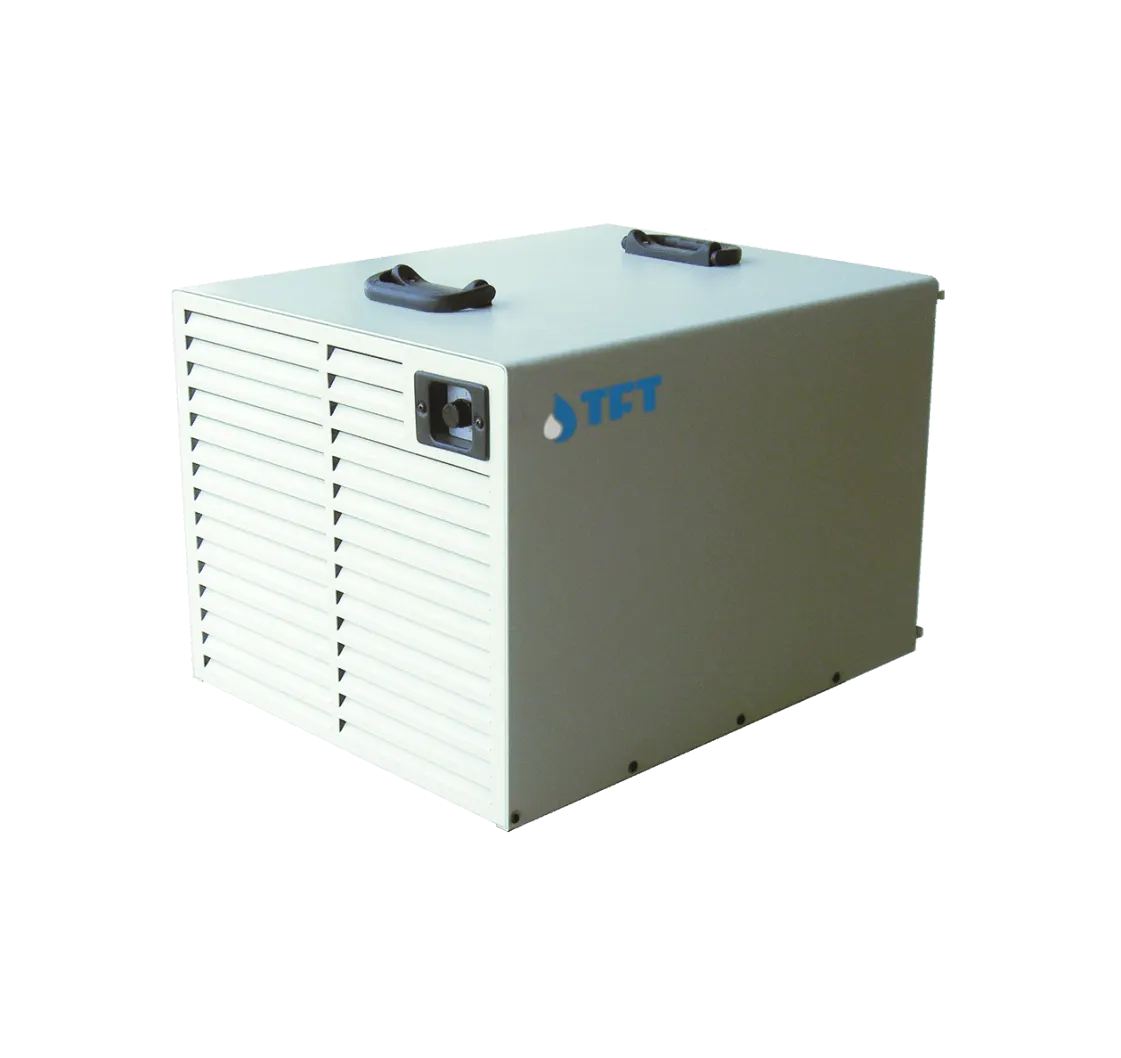
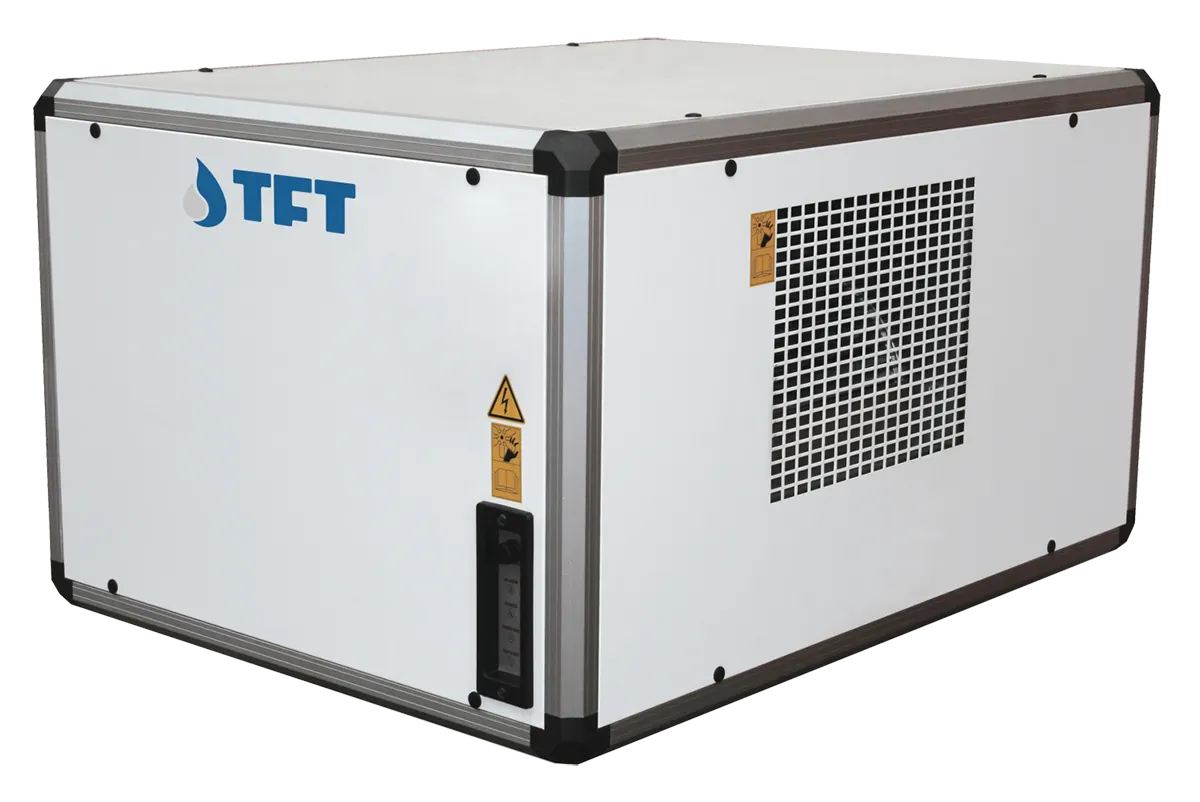
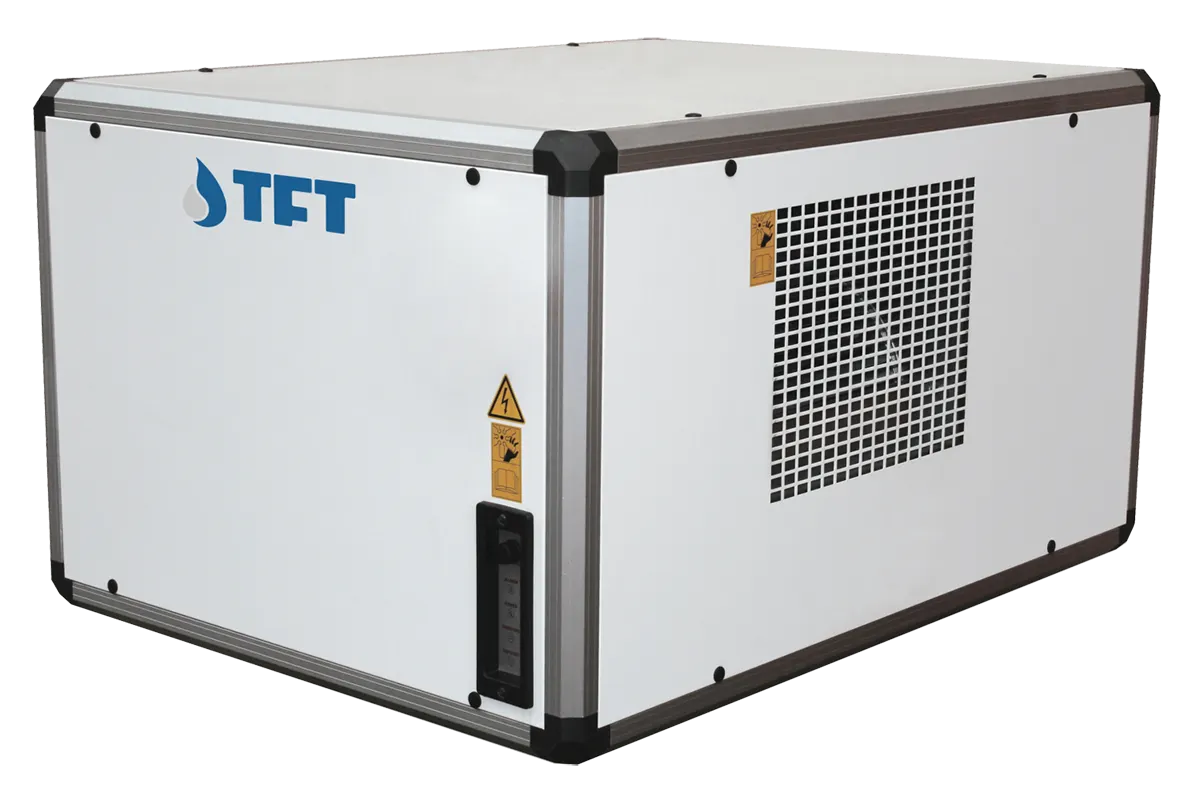
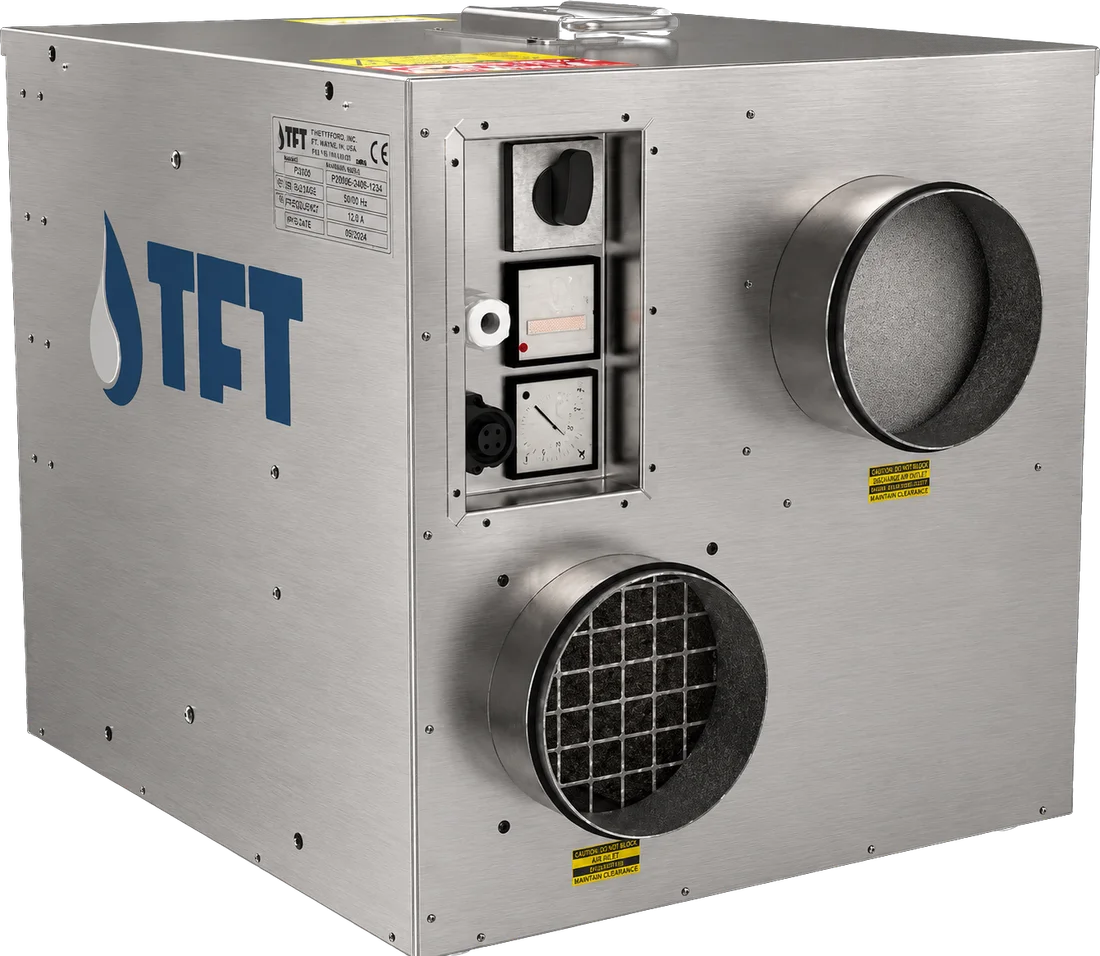
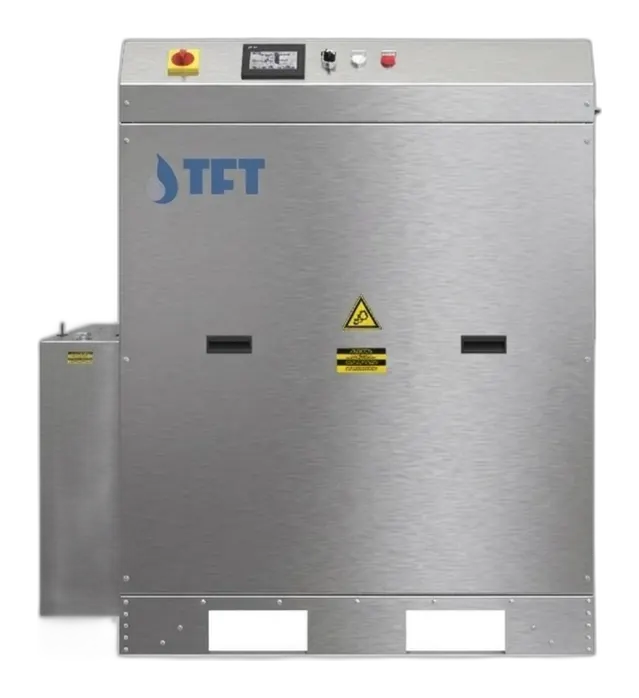
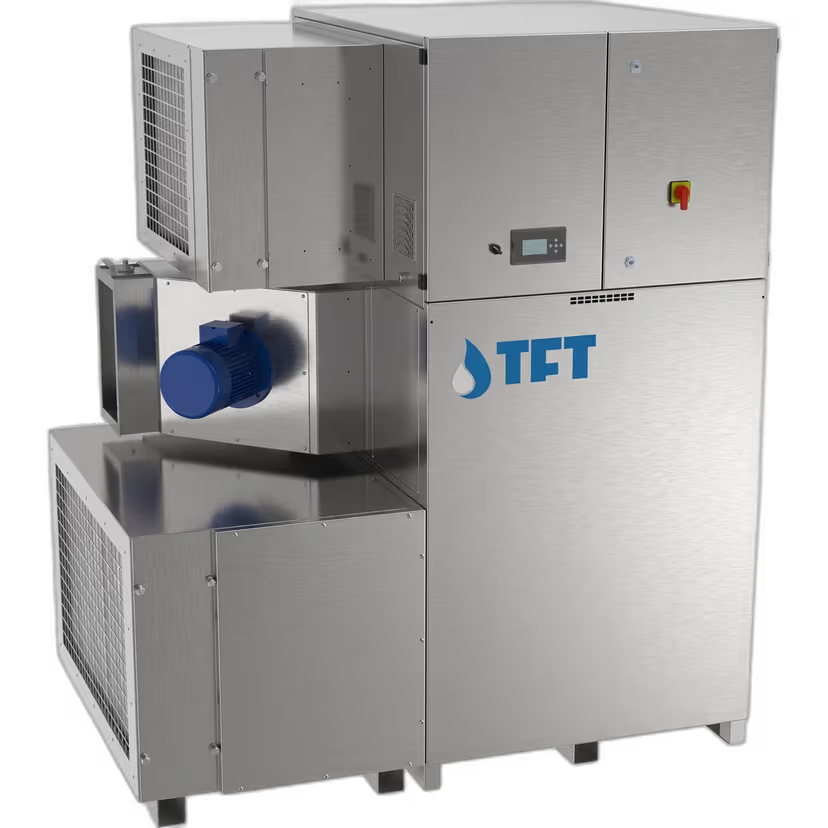
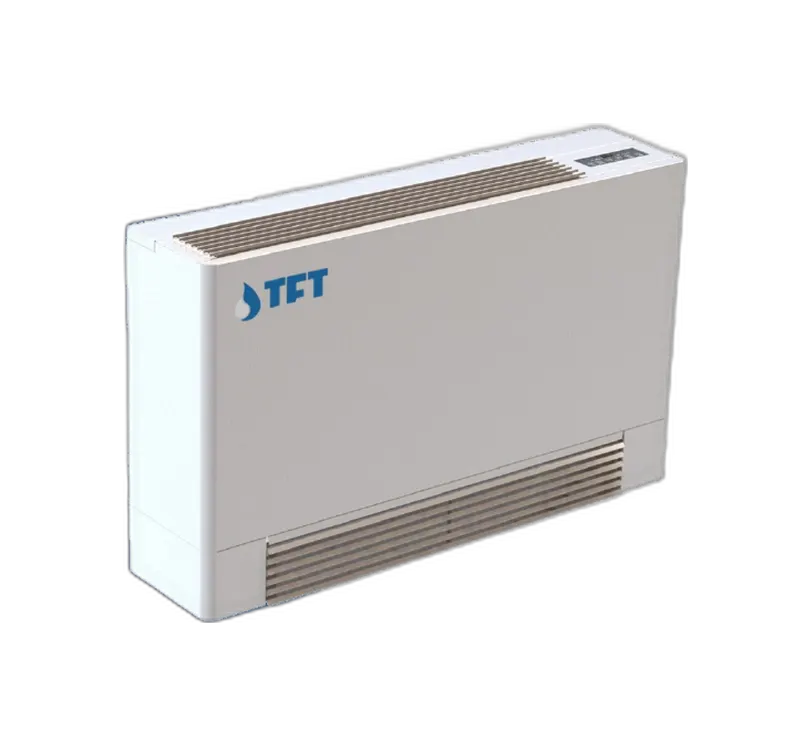
In the context of the criteria above, NKT's three main product families cover different application bands. Most-selected models per family:
5-Step Decision Flow
- Define target: Fix target RH and dew point values from sector standard and product requirements.
- Calculate moisture load: Calculate the seven moisture sources (infiltration, fresh air, personnel, process, wet surface, material, permeation) one by one, sum them, add a 20% safety factor.
- Choose technology: Target DP +12°C ↔ +20°Cdp + ambient 15–35°C → condensation (e.g. ambient 20°C / DP 14°Cdp ≈ 68% RH = classic warehouse); target DP below +12°Cdp or ambient below 15°C → silica gel rotor; DP < 0°Cdp + high outdoor moisture load → hybrid. Swimming pool halls (chlorine + moisture) are a separate unit class, solved with pool-type units, not evaluated on the condensation/silica gel axis.
- Decide reactivation energy source: If silica gel is selected, choose steam / natural gas / waste heat / electricity based on facility infrastructure. Skip this step for condensation type.
- Settle housing, automation and service: Choose material per environment (galvanised / stainless / epoxy / ATEX), BMS protocol (Modbus / BACnet), and require authorised service and spare-parts stock guarantee.
An industrial dehumidifier selection following these five steps maintains target performance across its 10–15 year economic life. As NKT, Humidity Control Technologies, we are the Türkiye representative of TFT Italy's industrial dehumidifier portfolio; our engineering team provides a detailed pre-analysis report covering all the steps above, jointly evaluating application-specific TFT silica gel rotor dehumidifier, TFT condensation dehumidifier or TFT pool-type dehumidifier, reactivation energy source, and housing material recommendations. For a detailed project analysis, contact us through the form below.
Related Glossary Terms
For deeper definitions of the technical concepts in this article, see the related pages in the NKT Glossary:


