Definition
An adiabatic humidification method that adds moisture by evaporating water into air without heating; the latent heat comes from the air itself, so the air humidifies while cooling (typical 2–10°C drop).
Detailed Explanation
Evaporative humidification feeds water onto wetted media (cellulose pads, ceramic) or as small droplets (high-pressure misting, ultrasonic atomisation) into the airstream so it vaporises directly inside the air. No external electric or gas heat is added; the latent heat (≈ 2,450 kJ/kg = 0.68 kWh/kg at around 20 °C) is drawn from the air. Result: air humidifies and cools (≈ 2.5 K per 1 g/kg added). The unit's electricity use covers only pump, fan and controls and is far below an electric steam unit's ≈ 0.75 kWh/kg; but if indoor temperature is held constant in winter, the ≈ 0.68 kWh/kg drawn from the air is made up by the heating system.
Why It Matters
Evaporative humidification is the dominant choice for high-capacity, cost-sensitive sites that want adiabatic cooling as a side benefit: textile weaving halls (Bursa, Denizli), printing and packaging plants, wood manufacturing, agriculture/greenhouses, free-cooling data centres. At 1,000 kg/h a switch from steam to evaporative drives six-figure euro annual savings plus 4–7°C summer cooling.
Practical Example
Representative example: a weaving hall with a humidification load of 150 kg/h. An electric steam unit draws ≈ 150 × 0.75 = 113 kW of electricity. In an evaporative system electricity is used only for the pump/fan; the heat of evaporation (≈ 150 × 0.68 ≈ 100 kW) is drawn from the air. In summer this comes off the cooling load; in winter, if indoor temperature is held constant, it is made up by heating. The annual difference is calculated per site from energy unit prices, operating hours and the summer-winter split.
Engineering Note
Three critical design parameters: (1) Water quality — RO pre-treatment is standard (TDS < 50 mg/L); mains water clogs nozzles and emits mineral aerosol. (2) Hygiene — direct water-air contact requires UV + continuous circulation + drain/purge for Legionella control. (3) Temperature effect — adiabatic cooling adds heating load in winter; facilities with tight indoor temperature targets must plan a reheat coil.
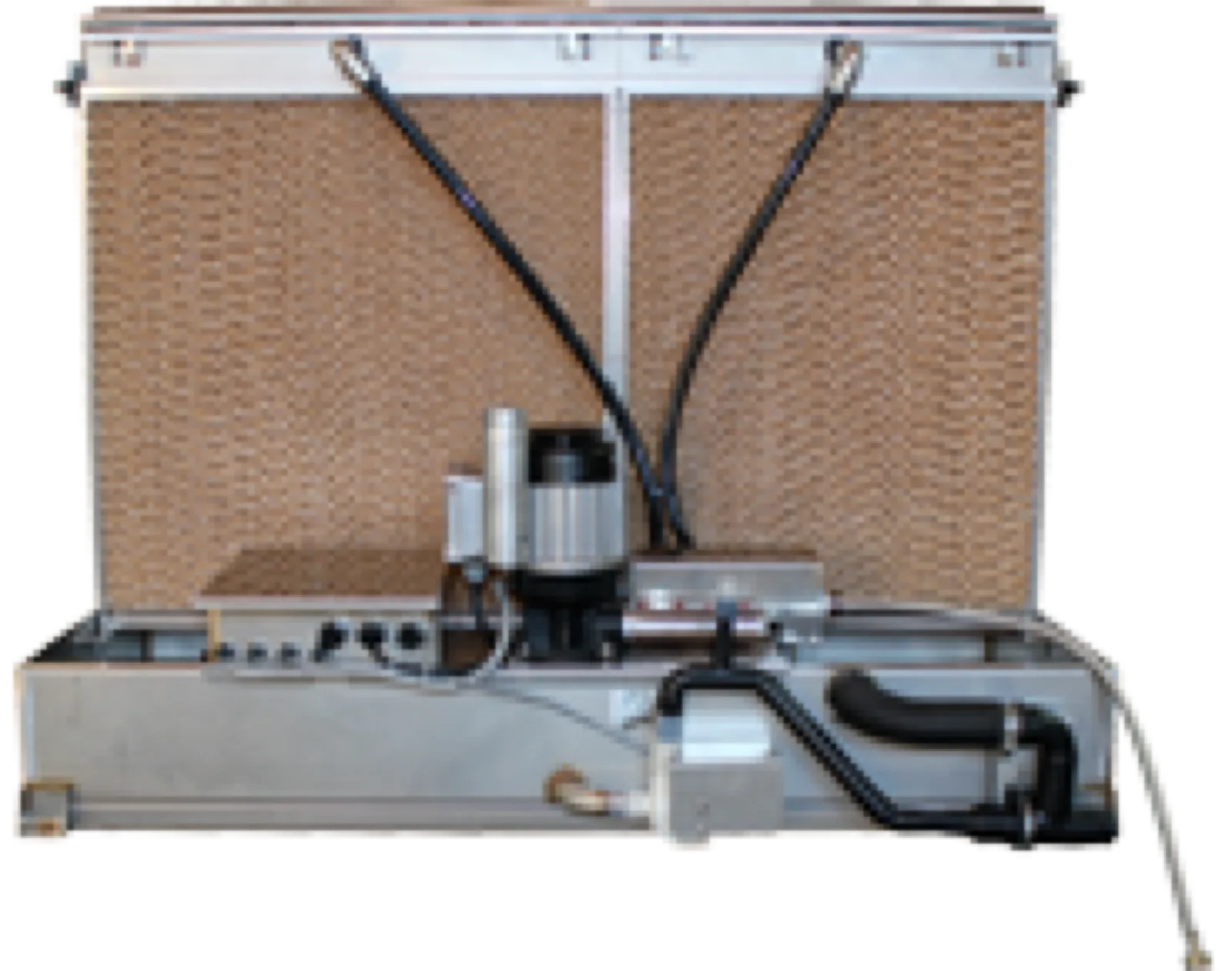
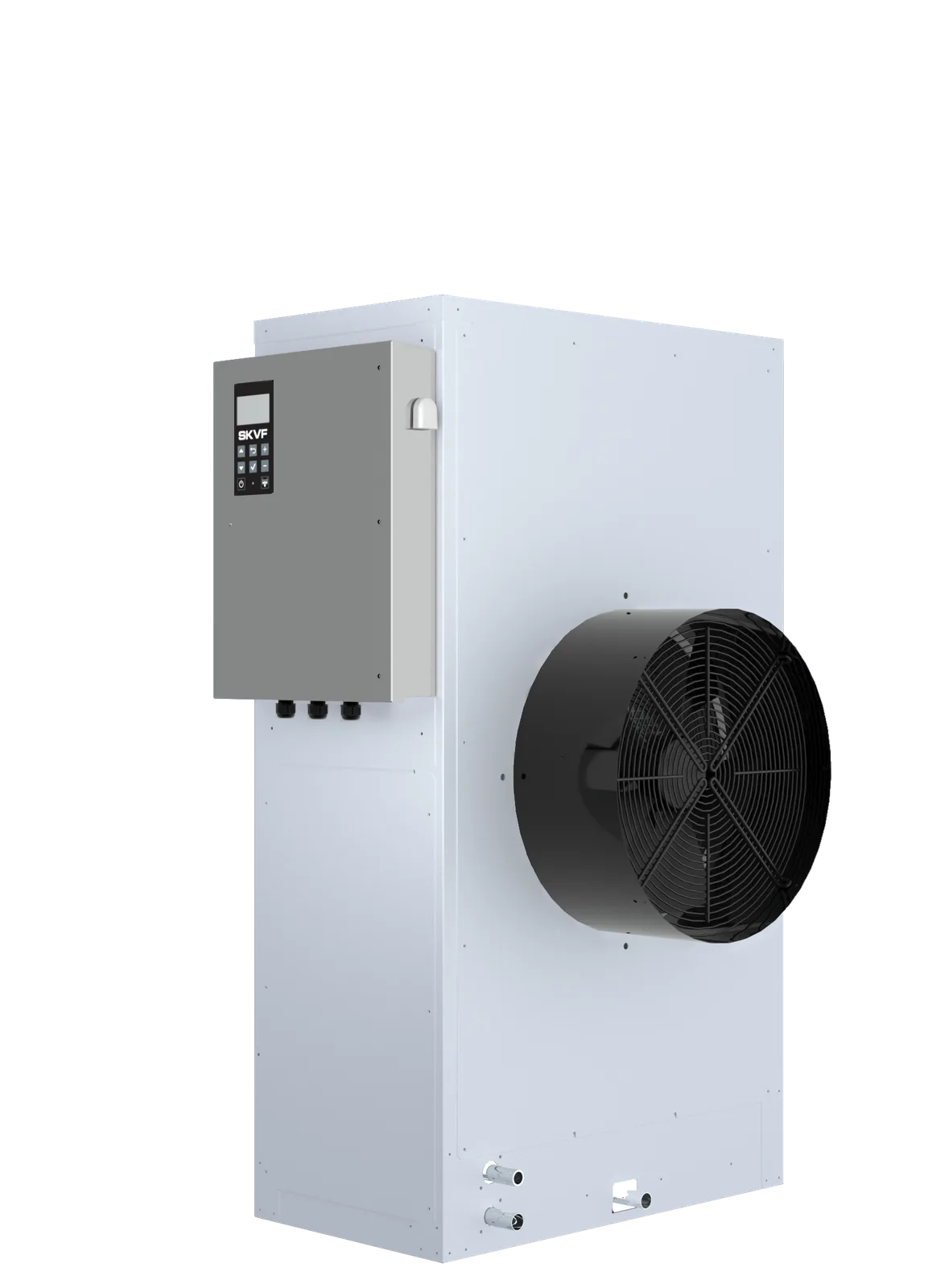
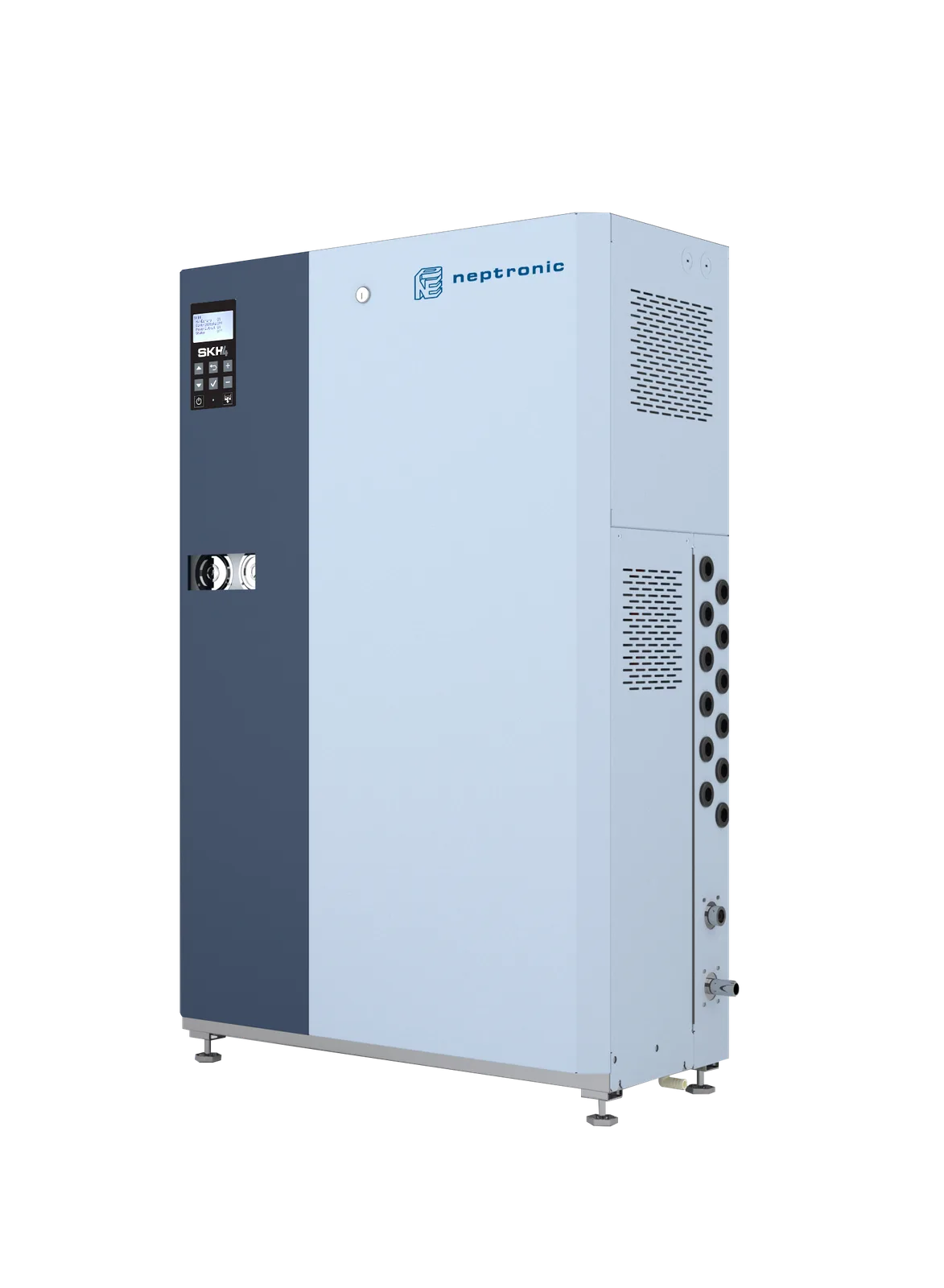
NKT Application Link
For this application NKT – Nem Kontrol Teknolojileri supplies the Neptronic SKV evaporative humidifier, the Neptronic SKVF evaporative cooler and the Neptronic SKH high-pressure atomisation system. Unit-selection support is based on space conditions, humidification load and the feed-water analysis; technical service and spare parts are provided. Design and installation of water treatment, as well as engineering design, installation and commissioning, remain within the scope of the facility's designer, contractor and water-treatment specialist.