Definition
The conversion of water to steam at 100°C using electrical or gas energy, then injecting that steam into HVAC ductwork or directly into the space to add moisture. Provides mineral-free, microbiologically clean moisture; the standard technology for pharmaceutical, hospital, semiconductor, and museum HVAC. High energy consumption (water vaporization heat), but superior in hygiene and control precision.
Detailed Explanation
Steam humidification is implemented in three main technologies:
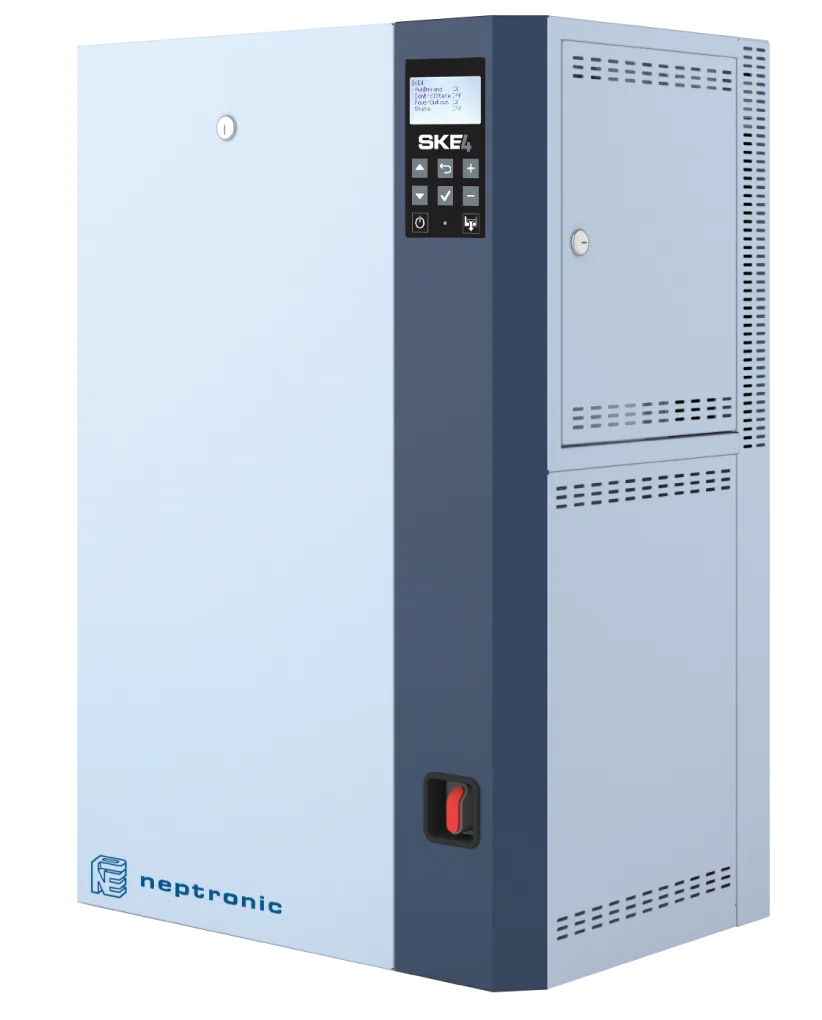
1. Electrode steam humidifier (Neptronic SKE4 class) — electrodes immersed in a water cylinder; the water heats and evaporates via electrical resistance. Standard and inexpensive; the cylinder is replaced every 6–12 months; water conductivity is important.
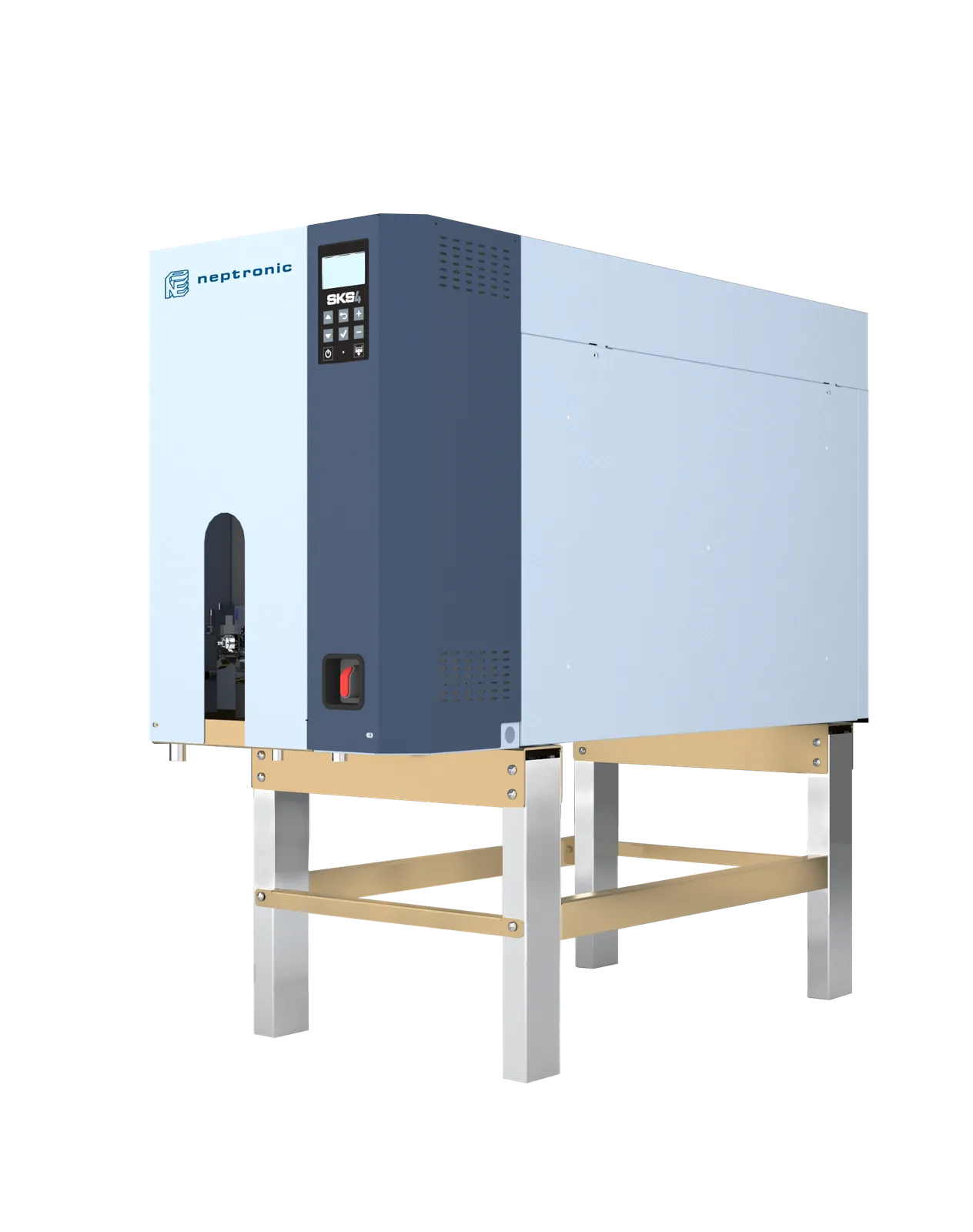
2. Resistive steam humidifier (SKS4 class) — an electric resistance heating element immersed in the water. Independent of water conductivity, runs on RO/distilled water, preferred in pharmaceutical GMP.
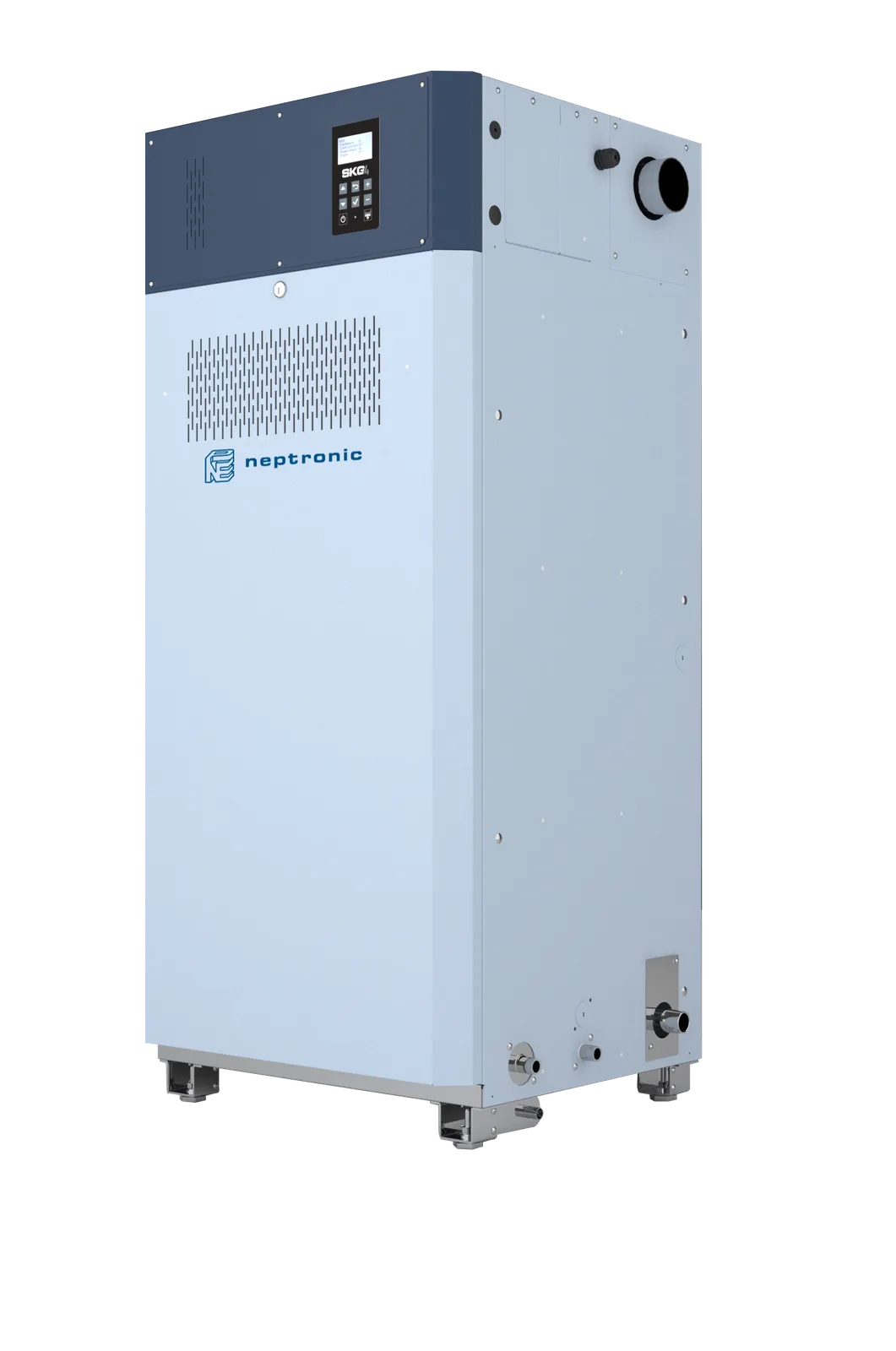
3. Gas-fired steam humidifier (SKG4 class) — natural gas/LPG burned to produce heat and steam. Advantageous when electricity infrastructure is absent or electricity is expensive; CO₂ emissions present.
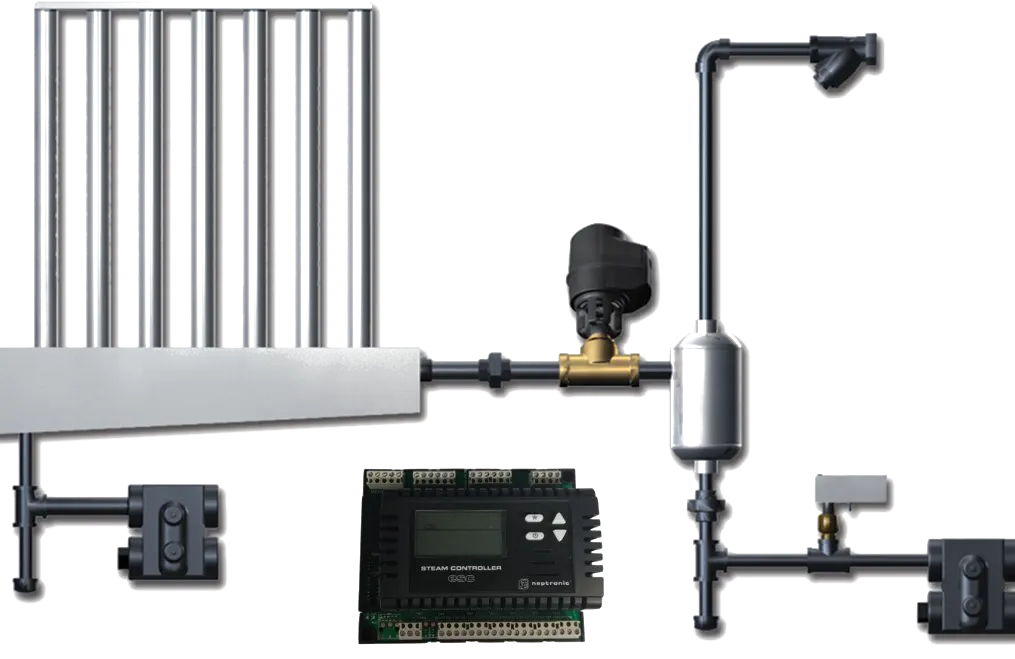
Steam distribution: • Injected into HVAC ducts via SAM (Steam Distribution Manifold) or SDU (Steam Distribution Unit) • Direct space distribution via fan (small SDU) • Multi-point distribution in large facilities
Fundamental energy balance for steam production: • ~0.75 kWh electricity per 1 kg steam (water from 25°C to 100°C + vaporization heat) • 100 kg/h capacity unit: 75 kW • 8,000 hours/year operation: 600,000 kWh • Cost (€0.12/kWh): €72,000/year
This is an energy-intensive technology — 15–20× more expensive operation than atomization. But mandatory for applications requiring hygiene and control precision.
Practical Example
Neptronic SKE4 steam humidification for a hospital operating room HVAC system:
Condition: 12 ORs, each 60 m² × 3 m = 180 m³, target 50% RH ± 5, ASHRAE Standard 170 compliant
Moisture load calculation: • 12 rooms × 20 kg/h peak load = 240 kg/h total • Annual hours: 8,760 (24/7) • Average load: 100 kg/h
Installation: • 2× Neptronic SKE4-100 electric steam humidifiers (100 kg/h each, N+1 for redundancy) • Water source: existing hospital RO system • Steam distribution: injected into AHU duct via SAM manifold • Control: per-room RH sensor → BMS → SKE4 PID • Hygiene: 316L stainless steel duct, mineral-free steam (RO water)
Annual energy: • 100 kg/h × 0.75 kWh/kg × 8,760 h = 657,000 kWh • Cost: €78,840/yr • Maintenance (cylinders + service): €4,000/yr
Hygiene advantages: • Mineral-free steam = no buildup on equipment + walls + ceilings • 100°C steam = bacteria/virus sterilization • HAI (Hospital-Acquired Infection) rate drops 15–25% (CDC studies)
Comparison: atomization is risky for hospitals (Legionella + mineral aerosol); steam is the only safe option.
Engineering Note
Six decisions in steam humidification design:
1. Technology choice: • Electrode (SKE4): standard, cheap CAPEX, mid energy efficiency, sensitive to water conductivity • Resistive (SKS4): RO/distilled water required, preferred for pharma GMP, longer life • Gas-fired (SKG4): advantage when electricity is expensive or unavailable, CO₂ emissions
2. Water quality — RO + softening + UV; water hardness for electrode 100–1,000 µS/cm; for resistive/distilled < 50 µS/cm.
3. Steam distribution — duct velocity 3–8 m/s ideal; below = droplet carryover, above = noise + erosion. SAM manifold length 75–90% of duct width.
4. Control — modulating (cascade) PID preferred over direct setpoint control; on/off cycling shortens cylinder life.
5. Redundancy — N+1 unit for critical facilities; a single unit failure must not interrupt operation.
6. Hygiene — steam equipment in 316L stainless steel; CIP (Clean-in-Place) integration is standard for pharma GMP; microbiological testing every 6 months.
At NKT, as Neptronic distributor, we offer application-appropriate technology selection + design + installation + maintenance services from the SKE4, SKS4, SKG4, and SKVF (atomization) portfolio.
Related Academy Articles
- Electrode vs. Resistive Steam Humidifier: Technical and Cost Comparison
- What Is Industrial Humidification? Where Is It Used?
- Water Quality in Humidifiers: Key Differences Between Electrode and Resistive Steam Humidifiers
- How to Calculate Humidification Capacity: A Step-by-Step Guide for Field Engineers
- How to Read a Psychrometric Chart for Humidification Systems
Related Products
NKT products related to this term