

Classic and vintage automobiles represent some of the most irreplaceable assets in the automotive world, valued both for their historical significance and their aesthetic craftsmanship. Yet the vast majority of these vehicles were manufactured without the corrosion-resistant coatings and surface treatments that have become standard in modern production. This makes an uncontrolled storage environment exceptionally hazardous for these cars. Without humidity management in a garage or dedicated storage facility, damage that is difficult and costly to reverse can develop within just a few years. An industrial dehumidifier is the most reliable and proven solution for preserving these vehicles in their original condition.
Body steel panels, chrome strips, and aluminium die-cast components begin oxidising rapidly when moisture and oxygen are present together. The thin body sheet metal frequently found on classic European vehicles is particularly vulnerable to a progression that can range from surface rust to deep structural corrosion in high-humidity environments. Chrome-plated surfaces are also at risk: once corrosion begins in the underlying steel layer beneath the plating, blistering and peeling become inevitable. A dehumidifier that maintains relative humidity between 40–50% effectively interrupts these electrochemical corrosion processes, preserving the integrity of bodywork and surface finishes over the long term.
Leather upholstery, wood trim, and textile surfaces used in classic car interiors are equally vulnerable to moisture. Under high humidity, leather can crack, warp, and develop mould staining. Cellulosic wood elements absorb moisture, causing joints to open and paint or lacquer layers to bubble and lift. Upholstery fabrics provide a hospitable substrate for mould spore colonisation and persistent odours that are exceedingly difficult to eliminate once established. When the storage environment's humidity is consistently controlled by a dehumidifier, these organic materials retain their original texture and appearance for decades.
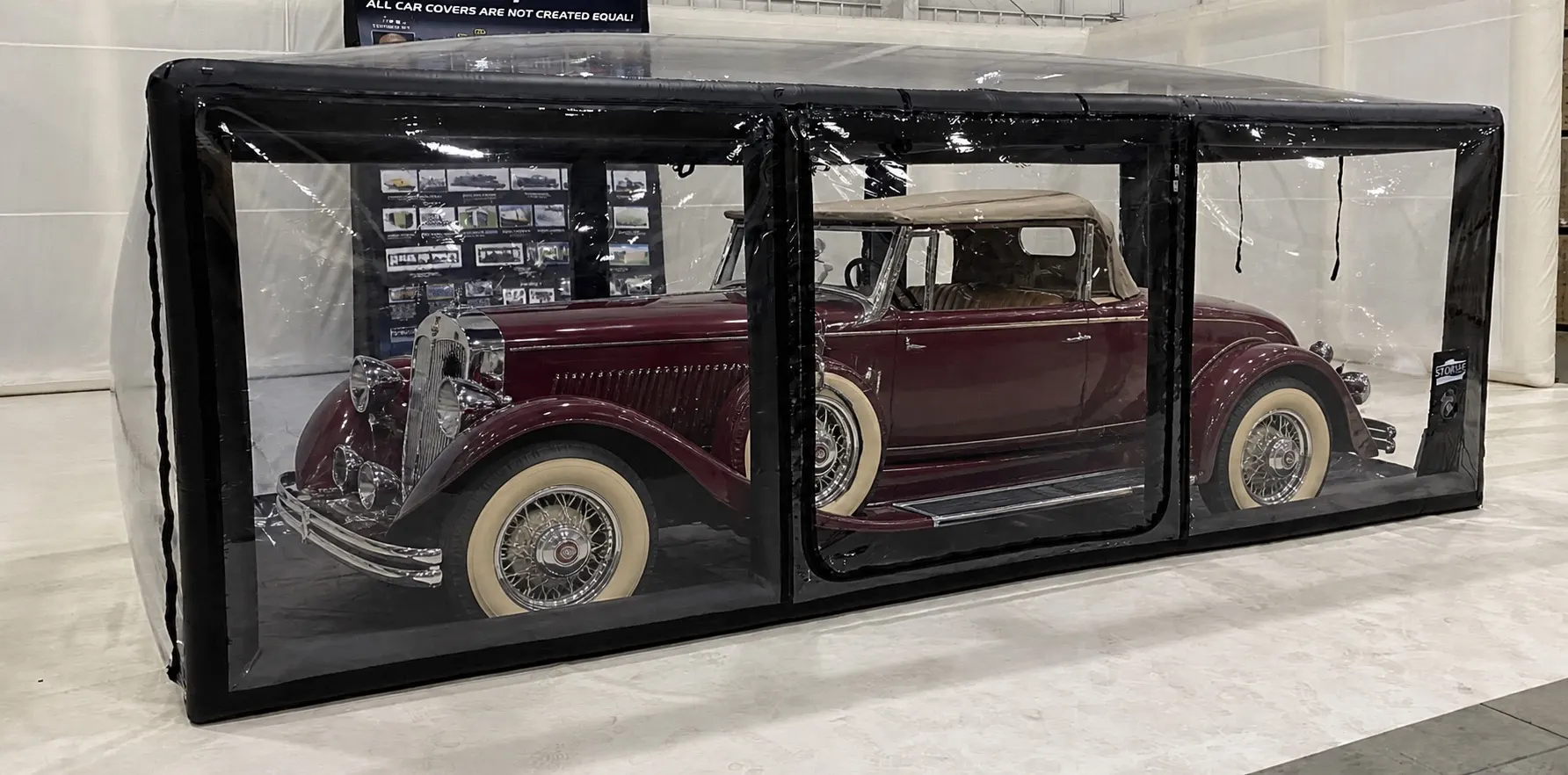
The electrical systems of classic automobiles (wiring looms, fuse boxes, connectors, and lighting units) were manufactured to moisture-resistance standards far below those of contemporary vehicles. In a damp storage environment, connection points oxidise, cable insulation hardens and cracks over time, and galvanic corrosion forms between relay and switch contacts. When a vehicle remains stationary for extended periods, these forms of degradation accumulate and frequently manifest as serious faults at the point of recommissioning. The dry, stable environment maintained by a dehumidifier extends electrical system service intervals and substantially reduces the risk of unexpected failures.
Cold weather storage conditions introduce an additional threat in the form of condensation. As a vehicle warms during the day and cools at night, the temperature of metal surfaces can fall below dew point, causing moisture droplets to form directly on those surfaces. This condensation cycle drives both visible and hidden corrosion on cast iron components in the engine bay, brake system elements, and chassis members. A silica gel rotor or condensation-type dehumidifier that maintains low relative humidity keeps the dew point well below safe thresholds, effectively breaking this cycle before it can cause damage.
The ideal relative humidity range for classic car storage is widely accepted to be 40–50%. This range sits in the optimal balance zone that minimises corrosion and mould risk while also preventing leather and wood from drying out and cracking at excessively low humidity levels. Depending on garage size and local climate conditions, this balance can be readily achieved with a compact dehumidifier unit. For collection garages housing multiple vehicles, a centralised industrial dehumidifier system can be installed to ensure homogeneous humidity distribution throughout the entire space.
At NKT – Humidity Control Technologies, our expert engineering team provides precisely matched industrial dehumidifier solutions that keep the bodywork, chrome, interiors, and electrical systems of classic and vintage automobiles preserved in their original condition for years to come. For more information, please contact us through the form below.