Adiabatic humidification (high-pressure atomisation, low-pressure wetted media, ultrasonic) evaporates water into the air without first boiling it. That structural property delivers a major energy advantage, but it also means the water loop is not exposed to a thermal-disinfection step. With the right water treatment, material selection and maintenance routine designed in together, hygiene risk stays within safe engineering limits; if any of those layers is left out, the water loop, stagnant zones and wetted media can host microbiological growth. This guide treats hygiene-risk management and water-treatment architecture for adiabatic systems as one engineering whole, without scaremongering or medical claims, just sound engineering.
Why Hygiene Is Critical
In adiabatic humidification, water enters the air as a liquid droplet (5-100 µm). These droplets evaporate within seconds, but during evaporation the dissolved minerals and any microbiological load they carry remain in aerosol form for that brief window. In steam humidification, water is already heated to 100 °C, so anything microbiological is thermally inactivated on the way. On the adiabatic side, there is no thermal disinfection step; the hygiene guarantee comes from the combined effect of water treatment + disinfection + hygienic design + maintenance routine.
So in an adiabatic system, hygiene engineering does not end with device selection; the design must address the entire path from water inlet to nozzle. Hygienic acceptability is defined in three dimensions: (1) microbiological load (CFU/ml, colony-forming units per millilitre), (2) mineral content (the airborne particulate that may remain after droplet evaporation), and (3) biofilm potential (long-term accumulation tendency on internal pipe surfaces). Without managing all three together, adiabatic design is incomplete; with all three managed, the system is hygienically safe and long-lived.
Legionella and Bacterial Risk
Legionella pneumophila and related Legionella species are a group of bacteria that can grow between 25-45 °C in warm water systems, harbour in biofilm and disperse via aerosol. Because adiabatic humidification operates in this growth-temperature band and produces aerosols, Legionella risk is a topic that must be addressed in adiabatic design. The risk can be managed structurally; if neglected, persistent colonisation can develop in the water loop. This guide treats the subject through an engineering lens, neither inflating nor minimising the risk.
Risk-management standards in industry are well established. In Europe, BS 8580-2 (2022) and VDI 6022 define microbiological control requirements specific to humidification systems; the WHO Legionella guideline (2007) lays out risk-assessment principles for warm-water and aerosol-producing systems. In Turkey, the Ministry of Health regulation for inpatient facilities and the TS EN 16798 IAQ standards frame the same approach. The common technical requirements across these standards are:
- Water-temperature management: keep tank water below 20 °C or above 60 °C (outside the risk band).
- Microbiological monitoring: quarterly/semi-annual dipping-slide testing (TVC, Total Viable Count) or PCR-based rapid tests.
- Periodic disinfection: shock-chlorination or thermal-disinfection protocol.
- Hygienic design practices: stagnant-zone elimination, material selection (stainless steel, hygienic PE), auto-flush loop.
When all of these measures are applied at the design stage, adiabatic humidification systems can be used safely even in high-hygiene applications. International case experience (international airports, shopping-mall atrium adiabatic cooling, hygienic adiabatic on textile weaving floors) shows that years of continuous operation with regular monitoring are achievable safely.
Why Stagnant Water Is Dangerous
Stagnant water sits at the top of the hygiene-risk list in adiabatic humidification systems. Water that has been motionless in a loop for longer than 24 hours can (depending on the geometry of the closed system) develop mineral concentration rise, temperature banding and conditions favourable for microbiological growth. Three typical locations create stagnant water in adiabatic systems:
- Dead legs: backup-nozzle connections, capped-off pump branches and abandoned drain lines that sit outside the normal flow. Design rule: dead-leg length must not exceed 6× the pipe diameter (the 6D rule).
- Low-turnover tanks: tanks oversized in volume but with low flow rates, where water can sit for days. Design rule: tank turnover time must be shorter than 24 hours.
- Idle nozzles: winter humidifier lines kept closed in summer or production-floor nozzles unused over weekends. Design rule: auto-flush refreshes water daily even when the line is not in use.
Figure 1. Hygienic Adiabatic Humidification: Water-Loop Topology
The design controls stagnant water not only by eliminating geometry but with continuous circulation + periodic drainage. The auto-flush loop refreshes the water 1-2× per day even when production is paused. This is especially important for seasonally-used lines and for sites that shut down overnight.
Filtration
Filtration is the first step in the hygienic water-treatment chain. Water entering the adiabatic humidification loop passes through three stages:
- Sediment filter (5 µm): captures sand, rust particles and suspended solids from the mains. Replacement monthly to 1-3 monthly depending on duty.
- Activated-carbon filter: captures chlorine, chloramines and organic odours. Chlorine destroys RO membranes, so a carbon filter is mandatory upstream of any RO unit. Replacement every 3-6 months.
- Fine filter (1 µm or 0.2 µm absolute): a microbiological barrier downstream of UV/RO and just before the point of use. Size chosen by hygiene class (0.2 µm for high hygiene).
Filter changeouts are part of the planned maintenance calendar; an over-aged filter can itself become a microbiological habitat. The NKT maintenance protocol adds a disinfection step after each filter change.
UV Disinfection
UV-C (ultraviolet, 254 nm) disinfection is the non-thermal disinfection method of choice for the adiabatic humidification water loop. The 254 nm wavelength damages the DNA/RNA of bacteria, viruses and fungal spores and prevents replication; it leaves no chemical residue, does not change mineral content and runs continuously on the flow.
Two parameters are critical for effective disinfection: dose (mJ/cm²) and contact time (s). WHO and EPA practices recommend at least 40 mJ/cm² for Legionella and other hygiene-critical microorganisms; some high-hygiene applications go to 60 mJ/cm² and above. In practice UV reactor sizing is set by flow (L/min) and target dose; lamp life is 9,000-12,000 h, so annual replacement is on the calendar.
| Application | Target UV dose | Typical lamp size | Lamp replacement |
|---|---|---|---|
| Industrial floor (general) | ≥ 30 mJ/cm² | 40 W (≤ 80 L/min) | 12 months |
| Food packaging / clean floor | ≥ 40 mJ/cm² | 80 W (≤ 150 L/min) | 10 months |
| Hospital general / medium hygiene | ≥ 50 mJ/cm² | 120 W (≤ 200 L/min) | 10 months |
| High hygiene / high risk | ≥ 60 mJ/cm² + second stage | 2 × 120 W cascade | 9 months |
UV is not sufficient on its own; combined with mechanical filtration and RO it produces an integrated hygiene assurance. The point of use should sit within 5 m of the UV outlet; recontamination risk rises beyond that distance.
Reverse Osmosis and Water Treatment
Reverse osmosis (RO) is a standard treatment step at the adiabatic water inlet. The reasons are layered: it lowers mineral content (preventing nozzle clogging and airborne mineral dust) and reduces ion density (slowing biofilm formation). RO water typically sits at 5-25 µS/cm electrical conductivity; compared with mains at 300-1,500 µS/cm, mineral load is reduced by 95%+.
Correct RO sizing depends on three parameters:
- Membrane capacity (L/h): sized to peak humidification load; 1.5× of peak is standard sizing practice.
- Recovery rate: typically 50-60%; high-permeate-yield systems reduce reject volume.
- Permeate tank: hygienic stainless or food-grade PE; minimum 30-60 minutes of peak-load reserve.
The RO reject stream can reach 40-50% of total water input; for sustainability, reuse practices for cooling-tower make-up, landscape irrigation or WC supply are applied. The RO membrane itself can become a microbiological growth surface, so periodic sanitisation (1-2× per year with sodium metabisulfite or hydrogen peroxide) is added to the protocol.
Biofilm and Piping Design
Biofilm is a long-term layer of microbial colonies and the polysaccharide matrix that protects them, accumulating on internal pipe surfaces in water systems. Once established, it becomes resistant to chemical disinfection and acts as a continuous low-level source of microbiological release through the system. In adiabatic humidification, biofilm prevention is done at the design stage through four measures:
- Material selection: stainless steel AISI 316L is first choice; hygienic PE (PE-RT or PE-X) is the alternative. Galvanised steel, copper and ordinary PVC are avoided, they are more hospitable to biofilm attachment.
- Surface roughness (Ra): hygienic design targets internal Ra ≤ 0.8 µm; rough surfaces ease microbiological attachment.
- Piping geometry: no dead legs, no horizontal flat lines (stagnant zones), 45° or 30° T-fittings instead of 90°. All lines are pitched at least 1% toward drainage.
- Continuous flow: a minimum velocity of 0.5 m/s is maintained across all piping; below that, stagnant-zone behaviour starts.
Figure 2. Piping Design: Right vs Wrong
Drain and Auto-Flush
Drainage and an auto-flush loop are the two core mechanisms that keep an adiabatic humidification water loop hygienic over time. Periodic drainage pushes fresh water through the system, preventing mineral concentration rise and stopping microbiological growth from advancing into a biofilm. Auto-flush refreshes the loop on schedule even when the system is not in production.
A typical drain and flush protocol:
- Auto-drain after peak load: after a high-production session, if the tank has dropped below 80%, auto-drain runs to keep mineral concentration under a defined threshold.
- Full auto-flush after 24 h of idle time: over weekends or holidays, the loop is fully emptied and refreshed even without production.
- Flush + UV pre-irradiation after 72 h of idle time: when a system is restarted after a long shutdown, the UV reactor runs 30 minutes of pre-irradiation; microbiological cleanliness is verified before the first production run.
- Monthly conductivity measurement: permeate conductivity is logged; degraded RO performance is caught early.
These loops run automatically under PLC control; no operator action is needed. The NKT proposal includes the auto-flush loop as part of the standard package.
High-Hygiene Applications
The following applications are classed as high-hygiene for adiabatic humidification; in these projects all the water-treatment + hygienic design + maintenance routine layers above are applied as a default package:
- Food processing and packaging (HACCP/BRC/IFS): hygienic piping, stainless steel AISI 316L, RO + UV, auto-flush. Meat, fish and cheese-packaging general-floor adiabatic applications.
- Hospital lobby and general corridor: adiabatic can be used in non-OR hospital spaces; operating theatres and sensitive hygienic rooms go to steam.
- Pharmaceutical perimeter (non-production): warehouse, logistics, administrative-building humidification; production rooms remain on steam.
- Museum lobby and outdoor exhibition spaces: public spaces outside the collection rooms; collection rooms run on steam.
- Animal-research facilities (ABSL-2/3 and above): high RH band + hygiene + biosafety constraint; special engineering required.
- Industrial cleanrooms (Class 7-8 and above): adiabatic is usable, but point-of-use HEPA is added.
Maintenance Plan
To keep an adiabatic humidification system hygienic, a planned maintenance calendar is required. The NKT standard maintenance protocol is defined across four time scales:
| Period | Action | Duration |
|---|---|---|
| Daily (automatic) | Auto-flush loop, tank level check, drain check | 0 (PLC-automatic) |
| Weekly | Visual inspection, nozzle-pattern check, manual conductivity measurement | 30 min |
| Monthly | Sediment-filter replacement, UV-lamp status LED check, pressure-gauge log | 1 h |
| Quarterly (3 months) | Carbon-filter replacement, fine-filter replacement, microbiological dipping-slide test (TVC) | 2-3 h |
| 6 months | RO-membrane sanitisation, full hygienic-tank cleaning, nozzle removal + acid wash | 4-6 h |
| Annual | UV-lamp replacement, RO performance test (flow + conductivity), full microbiological report | 1 day |
| 3 years | RO-membrane replacement (2-4 years depending on duty), full-system renewal audit | 1-2 days |
This calendar is part of the standard NKT project handover and is delivered together with operator training after commissioning.
NKT Approach
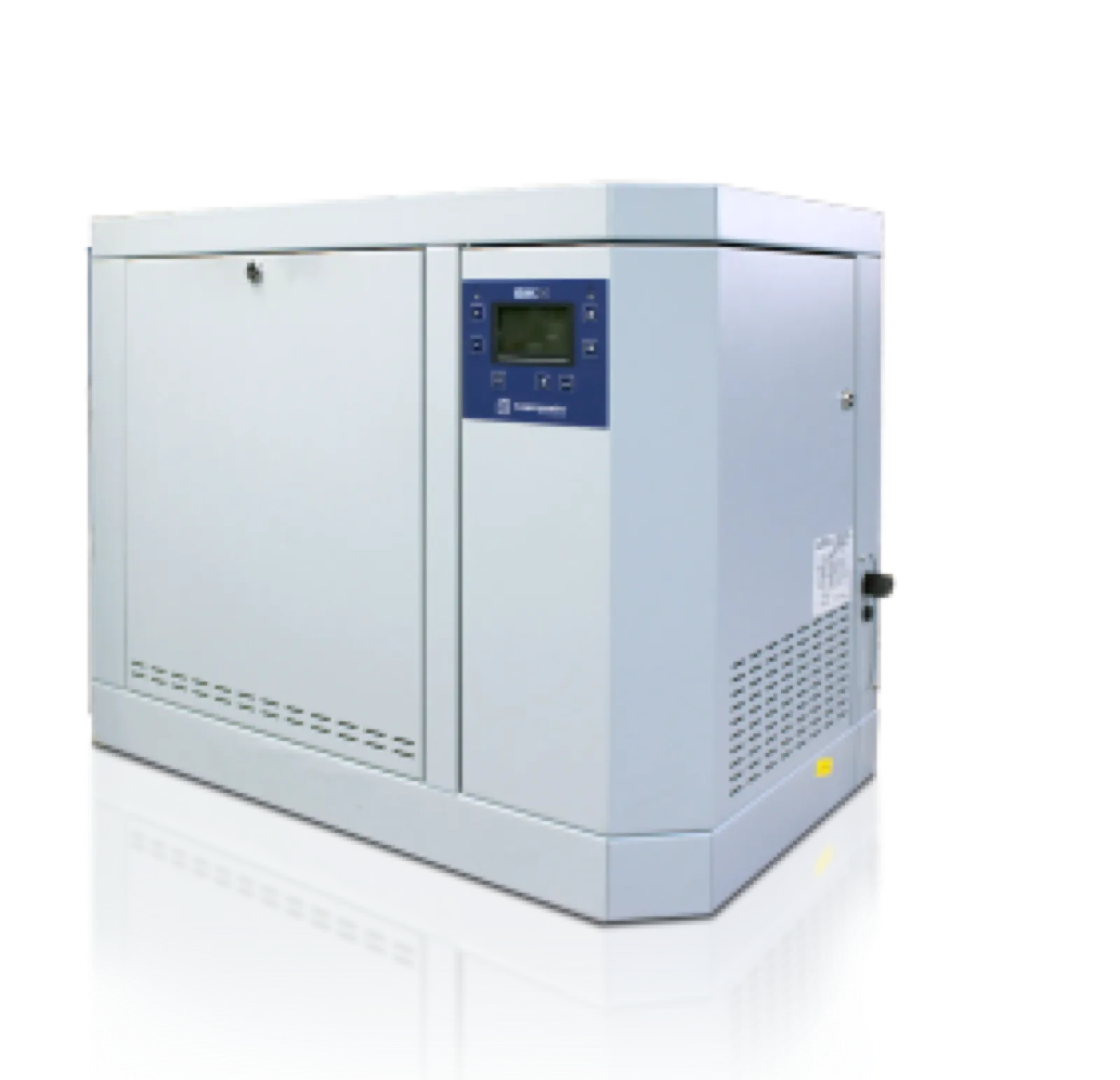
NKT, Humidity Control Technologies delivers water treatment + hygienic design + maintenance protocol as one package on adiabatic projects. The approach is grounded in the understanding that device selection alone is not enough; hygienic design is an engineering whole. In the NKT catalogue, SKH high-pressure atomisation is the primary product for hygienic adiabatic design, AISI 316L stainless piping, hygienic nozzle design, auto-flush loop and PLC-based control are part of the standard package.
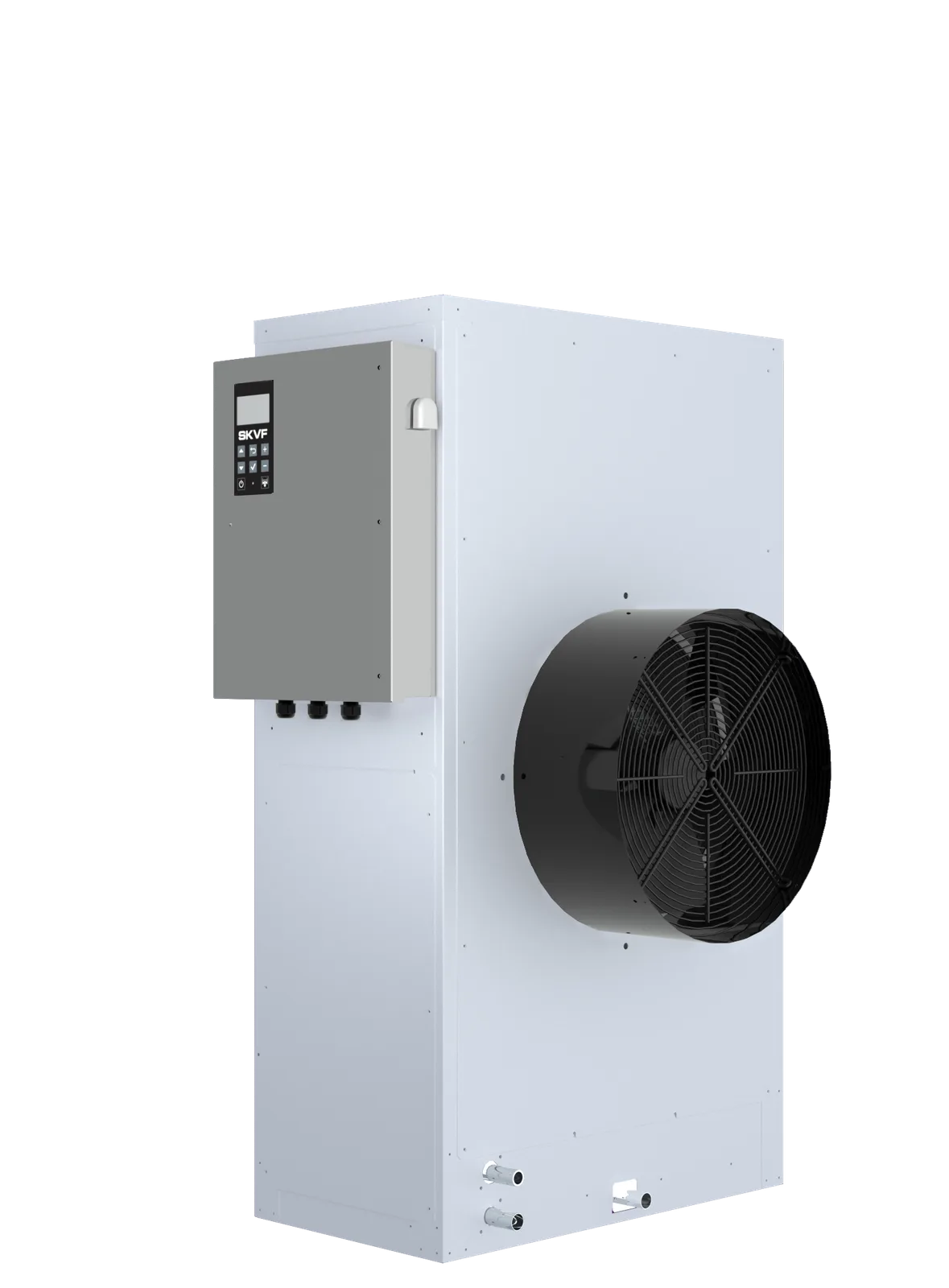
The SKVF evaporative-cooler family ships with the same hygienic design approach for low-pressure wetted-media systems; a wetted-media periodic-cleaning and replacement protocol, with RO + UV and drainage combinations, is included in the standard package.
NKT's adiabatic engineering process runs in six stages: (1) the site's hygiene class is defined (medium, high, critical); (2) a water sample is analysed across 9 parameters (conductivity, hardness, TDS, chloride, silica, alkalinity, iron, TOC, TVC); (3) the water-treatment architecture is designed (RO + UV + filtration combination); (4) a hygienic piping plan is produced (dead-leg elimination, slope, material); (5) the auto-flush loop is programmed in PLC; (6) the maintenance protocol and operator training are delivered after commissioning. Taken together, this package turns hygiene assurance into a structural property of the design.
Adiabatic humidification is an important technology for energy efficiency; because its water loop does not pass through a thermal-disinfection step, hygiene management must sit at the centre of the design. When done correctly (when RO + UV + filtration + hygienic piping + auto-flush + planned maintenance are designed together) adiabatic systems can be used safely even in high-hygiene applications. These measures are designed in as an integrated package; adding them afterwards is costly and limited in effect.
Right hygiene management starts with three questions: (1) What is the site's hygiene class and which standards apply (BS 8580-2, VDI 6022, TS EN 16798)? (2) What is the current water quality and which conditioning layers are required? (3) Who will execute the maintenance protocol and on what frequency? The answers shape the design decision; device selection follows. The NKT engineering approach treats hygiene not as an option but as a structural property of the project.