
Indoor swimming pools are among the most demanding environments for moisture management in industrial facilities. A heated body of water with a large surface area enclosed in a confined volume creates a continuous and intense evaporation process. This evaporation cannot be prevented; it can only be controlled. Uncontrolled humidity erodes the building structure, threatens user health, shortens equipment life, and increases energy costs. On the other hand, excessive dehumidification disrupts the temperature balance and user comfort. For this reason, pool humidity control is not just a technical problem but an integrated facility management issue.
Evaporation Calculation
The amount of evaporation in an indoor pool environment depends on various parameters, including the difference between water temperature and air temperature, air flow velocity, pool surface area, number of users, and activity type. To calculate the evaporation rate, a simplified formula based on the German Association of Engineers' VDI 2089 standard is used:
W = evaporation rate (kg/h) · β = mass transfer coefficient · A = pool surface area (m²) · ps = saturation vapor pressure at water temperature (Pa) · pL = partial vapor pressure in the air (Pa)
Activity Factors
The activity level in the pool raises evaporation far above the baseline value due to agitation of the water surface and wet body surfaces. The table below shows the evaporation multiplier for different activity types:
| Activity Type | Factor (Ak) | Evaporation Contribution | Description |
|---|---|---|---|
| Empty pool | 1.0 | Baseline evaporation | Surface evaporation only |
| Resting / Wetting | 1.4 | +40% | Entering/exiting, sitting at edge |
| Light swimming | 2.0 | +100% | Recreational swimming |
| Active swimming | 3.5 | +250% | Training, competition |
| Diving / Jumping | 4.5 | +350% | Very high water splashing |
| Jacuzzi / Therapy | 5.0–8.0 | +400–700% | Maximum surface turbulence |
Sample Calculation
For a pool with a 500 m² surface, assuming a water temperature of 28°C, air temperature of 30°C, 65% RH, and an average of 30 active swimmers:
Activity factor (medium swimming = 2.5): 28 × 2.5 = 70 kg/h
Wet surrounding surfaces (deck, changing rooms): + 15 kg/h
Total: ≈ 85 kg/h → ≈ 2,040 L/day
Effects of Humidity Problems
Health effects: The combination of chlorine + high humidity forms chloramines (especially trichloramine, NCl₃). These compounds cause respiratory tract irritation, worsening of asthma symptoms, and eye and skin irritation. The risk of occupational respiratory disease increases significantly in professional swimmers.
Structural damage: Concrete carbonation and rebar corrosion, drywall moisture absorption and swelling, surface rusting on metal profiles, condensation and moisture accumulation on window frames, and paint peeling occur.
Comfort and equipment: High humidity increases the perception of heat; users feel a stifling environment. Mold and fungal growth on walls and ceilings leads to respiratory problems. Corrosion in electrical panels, moisture penetration and early failure in lighting fixtures, shortened control panel and sensor life, and condensation-related early failure in HVAC equipment are observed.
Chlorine Damage Mechanism
The free chlorine (hypochlorite ion ClO⁻) and combined chlorine compounds in pool water pass into the pool atmosphere through evaporation. In a high-humidity environment, these compounds are transported more easily and accumulate on building surfaces.
Chloramines — especially nitrogen trichloride (NCl₃) — are acidic in character. On concrete surfaces, they cause a drop in pH, carbonation, and increased porosity. On metal surfaces, the chloride ion breaks down the passive oxide layer, initiating galvanic and pitting corrosion. For this reason, the dehumidification equipment used in a pool environment must be specially protected against corrosion.
Standard drywall (gypsum) should not be used in an indoor pool environment. Moisture absorption sets the stage for swelling, loss of structural integrity, and mold growth. Non-hydrophilic surface coatings or special cement-based panels should be preferred in pool areas.
VDI 2086 Standard
The German Association of Engineers' VDI 2086 standard defines comprehensive technical requirements for indoor swimming pools. This standard is a fundamental reference document in many countries and addresses humidity control, air change, and comfort parameters together.
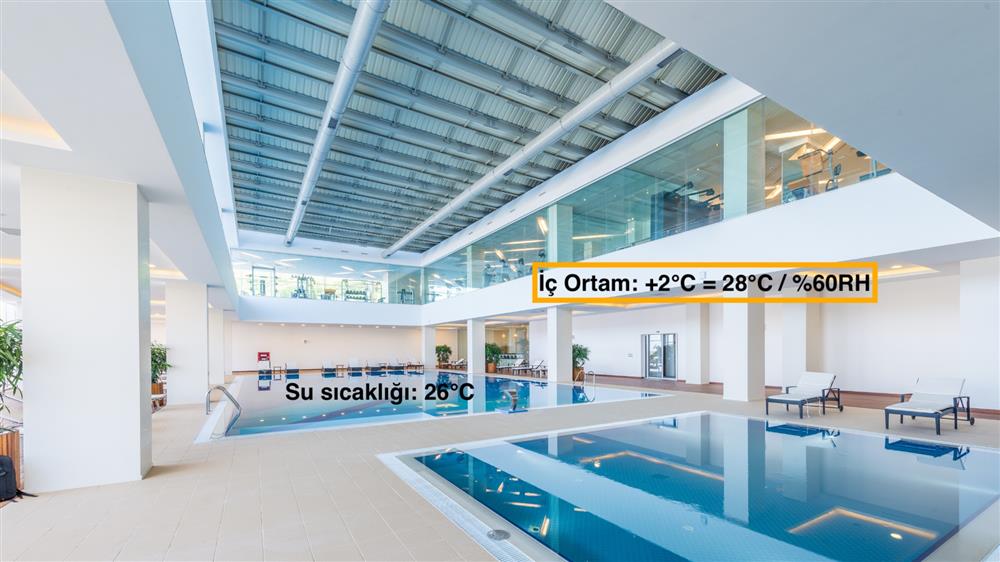
In indoor swimming pools, relative humidity should be kept in the 50–65% range; the air temperature should be 1–2°C higher than the water temperature. These conditions provide comfort and prevent condensation.
| Parameter | Value / Range | Description |
|---|---|---|
| Air relative humidity | 50–65% | Swimming area target RH |
| Air-water temperature difference | +1°C ~ +2°C | Air should be slightly above water temperature |
| Air change rate (min.) | 1–3 room volumes/hour | CO₂ and chloramine removal |
| Fresh air per swimmer | 30–40 m³/h | Minimum air per person |
| Air flow velocity (swimmer zone) | Max. 0.2 m/s | Preventing the sensation of cold |
| Window surface | Should be minimized | Condensation and heat loss risk |
Pool Types and Requirements
Each pool type requires different moisture loads and target conditions depending on water temperature and usage profile. The table below summarizes design values for common pool types:
| Pool Type | Water Temp. (°C) | Air Temp. (°C) | Target RH (%) | Moisture Load |
|---|---|---|---|---|
| Olympic pool | 26–28 | 28–30 | 50–60 | High |
| Therapy / Rehabilitation | 32–36 | 34–38 | 55–65 | Very High |
| Children's pool | 30–32 | 32–34 | 55–65 | High |
| Jacuzzi / Hot tub | 36–40 | 38–42 | 60–70 | Very High |
| Diving pool | 26–28 | 28–30 | 50–60 | Medium |
| Hotel / SPA pool | 28–32 | 30–34 | 55–65 | High |
Dehumidification System Design
Capacity Calculation
In pool dehumidifier design, the following components are summed to determine the total moisture load:
- Pool surface evaporation: The baseline load according to the formula.
- Activity load: Number of swimmers and activity factor.
- Wet surrounding surfaces: Deck, changing area, showers, and corridors.
- Infiltration load: Door openings and building leakage.
- Safety factor: 15–25% additional capacity.
Air Flow Design
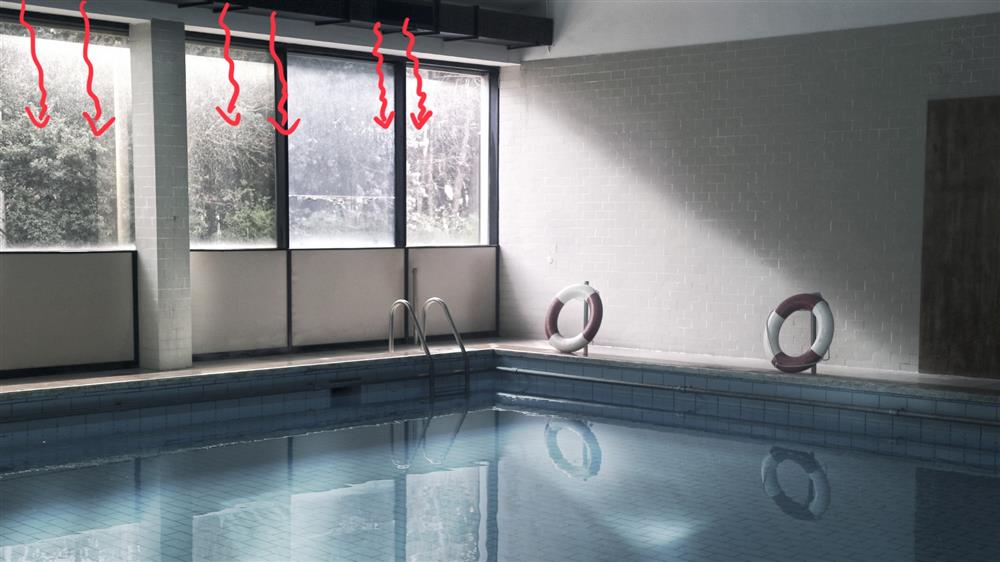
Air flow design is critically important in the pool environment. Incorrect air distribution both reduces dehumidifier performance and negatively affects user comfort. Basic design principles:
- Air inlet and outlet points should be placed asymmetrically; short-circuit flow should be prevented.
- Air flow sliding along the pool surface should carry away moisture without accelerating evaporation (without supplying cold air).
- A warm air curtain in front of windows prevents condensation.
- The exhaust outlet should be placed at a low point near the water surface where chloramine accumulation is highest.
Special Coating Technologies
The indoor pool environment — high humidity + chlorine + acidic pH — exceeds the durability limit of standard aluminum or steel coatings within 1–2 years. Equipment with Blue Fin or cataphoretic coating can operate without problems for 10+ years in this environment.
Blue Fin Coating
Blue Fin is a protective coating applied to aluminum coil surfaces. Under chloramine-laden, moisture-heavy, and acidic conditions, aluminum surfaces erode rapidly; this both degrades heat transfer and shortens equipment life. The Blue Fin coating is specifically designed against these conditions:
- Chemical resistance: High resistance to chloramine and acidic vapor environments.
- Heat transfer efficiency: The thin coating layer does not affect heat transfer.
- Application: Possible under factory conditions or as a field application.
- Expected life: 3–5 times longer life compared to an uncoated coil.
Cataphoretic Coating
Cataphoresis (electrophoretic painting) is based on the principle of immersing metal parts in a paint bath and drawing paint particles to the surface with an electric current. The result is a homogeneous, pin-hole-free coating layer on all surfaces — including curved geometries:
- Homogeneity: Equal-thickness coating even on recessed and protruding geometries.
- Salt spray resistance: 1000+ hours of salt fog test performance.
- Flexibility: The coating does not crack during thermal expansion/contraction.
- Pool-specific criticality: Standard paint coatings degrade rapidly in a chloramine environment; cataphoresis is the only real solution.
Energy Recovery
Pool dehumidifiers can be used to heat the pool water or the facility's hot water circuit if the condenser temperature is high enough. This feature allows the system to operate not only as a dehumidifier but also like a heat pump. Energy recovery efficiency can be in the 60–100% range; that is, almost all of the heat released during dehumidification is returned to the facility.
Although systems with an energy recovery module require a higher initial investment, the operating cost advantage typically pays back the investment within 2–4 years.
Maintenance and Service
A special maintenance protocol should be applied for dehumidifiers in the pool environment:
- Monthly: Surface cleaning of the condenser and evaporator coil (acid-containing solvents should be avoided; a pH-neutral cleaner should be used on Blue Fin coated coils).
- Quarterly: Filter replacement, drain cleaning, control panel and sensor calibration.
- Annually: Compressor pressure check, refrigerant charge check, coating integrity check.
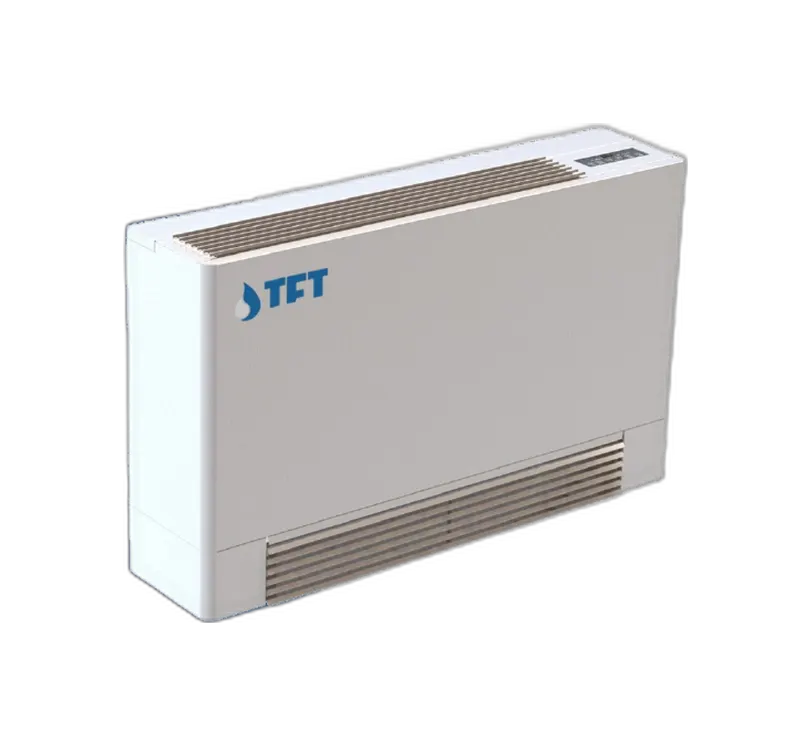
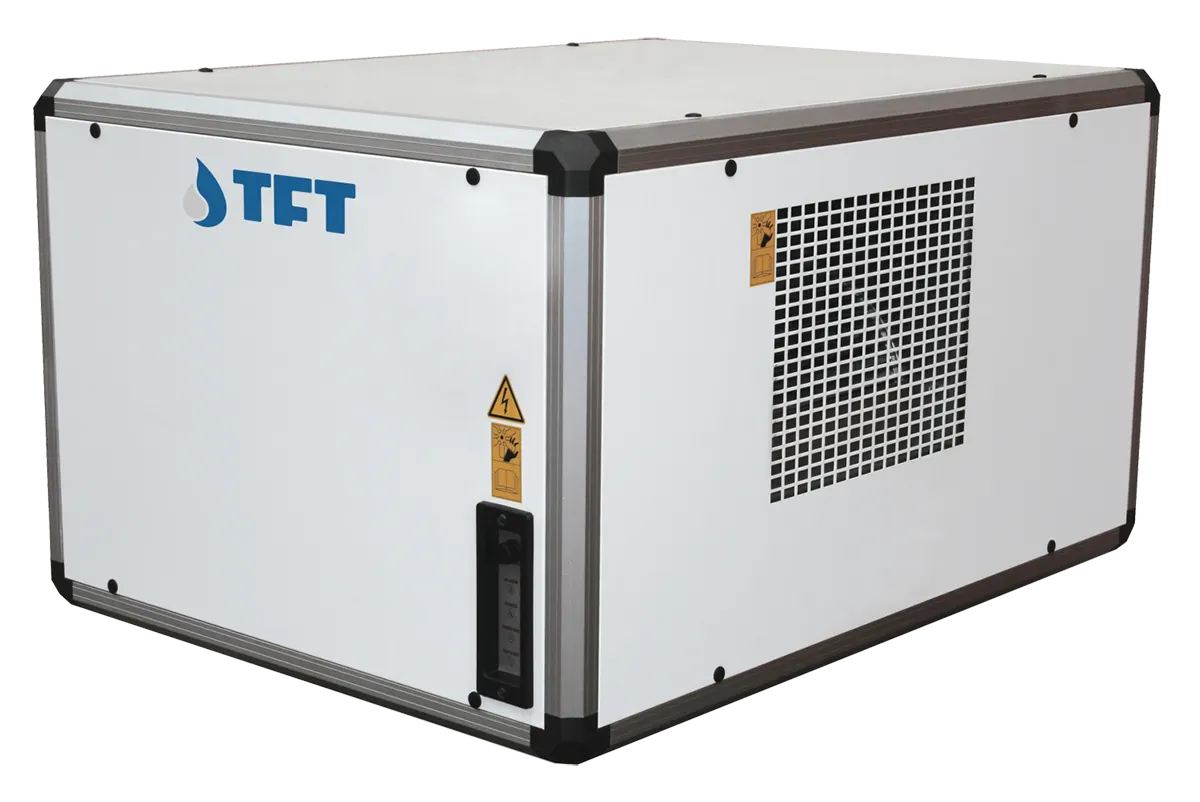
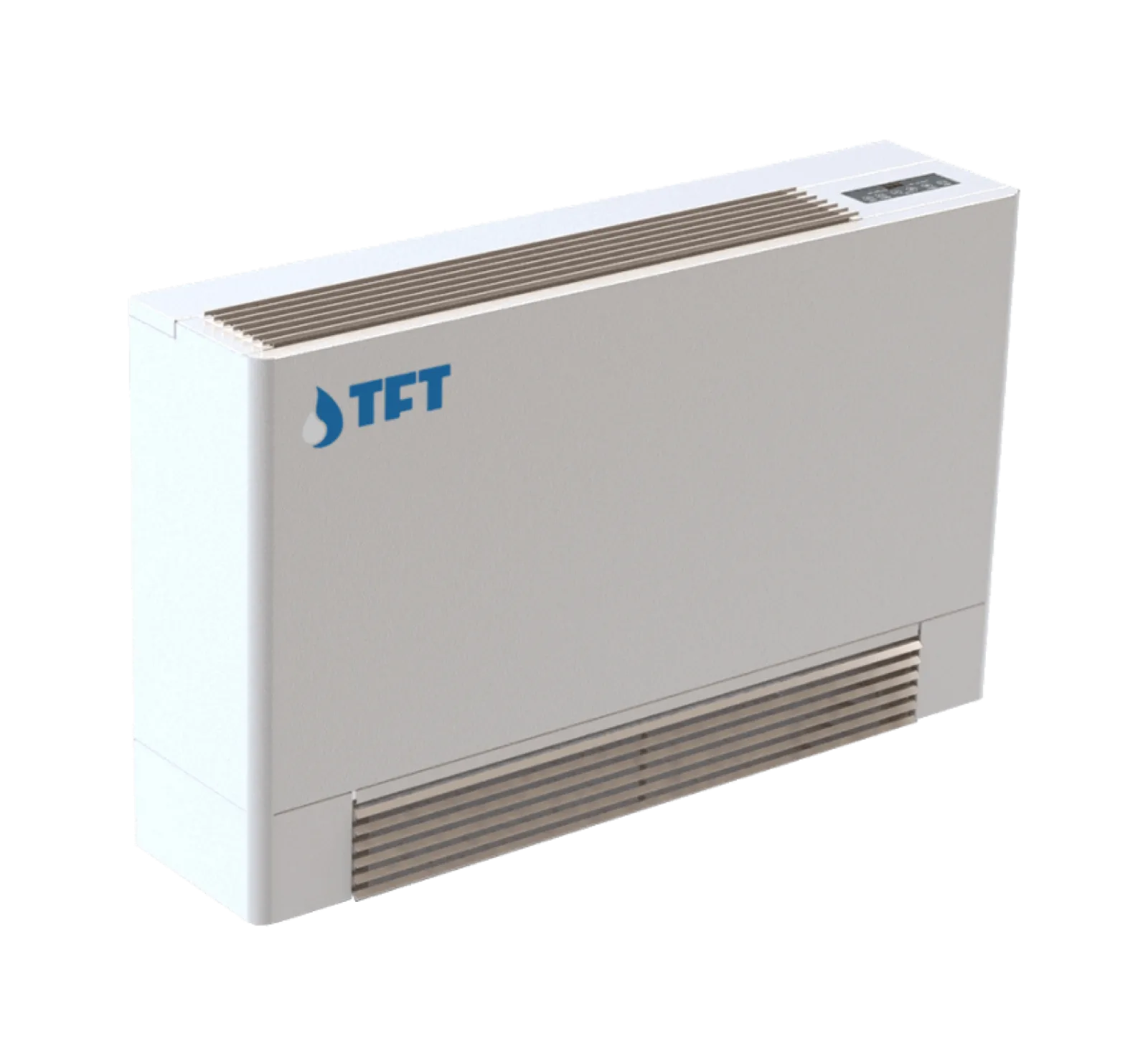
- CWS Series: In the pool-specific CWS series units, maintenance intervals are extended thanks to the corrosion-resistant enclosure body.
Indoor pool humidity control is achieved by correctly performing the evaporation calculation, determining target humidity and temperature values according to standards such as VDI 2086, selecting the right corrosion-resistant equipment, and carefully designing the air flow. When all these elements are addressed together, the structure is protected, user comfort is ensured, and energy costs are minimized.
As NKT - Humidity Control Technologies, we offer Blue Fin and cataphoretic-coated, energy-recovery pool-type dehumidification solutions for your indoor swimming pools, therapy pools, and SPA facilities. Share your project with us, and let us determine the right system for your pool together.


