

Indoor ice skating rinks and hockey arenas are facilities that require specialized air conditioning design not only in terms of cooling, but also in moisture removal. The use of integrated dehumidification equipment in these structures and the continuous control of humidity by dehumidifiers is a critical detail that must not be overlooked during the design phase in terms of protecting a quality ice surface, providing comfort within the facility, energy efficiency, and building safety. When warm and humid air enters the ice arena from external doors due to vapor pressure differences, it rapidly condenses when entering the cooled rink environment, producing undesirable consequences. As NKT - Humidity Control Technologies, this article will examine the necessity of dehumidification equipment in ice rinks, the integration of dehumidifiers without compromising system integrity, and why humidity control is important in ice skating rinks and hockey arenas. The types and working principles of dehumidification equipment used during humidity control will be discussed. Additionally, common practices and case studies from around the world will be mentioned, and finally, the fundamental considerations that must be taken into account when integrating dehumidification equipment in ice rinks will be addressed.
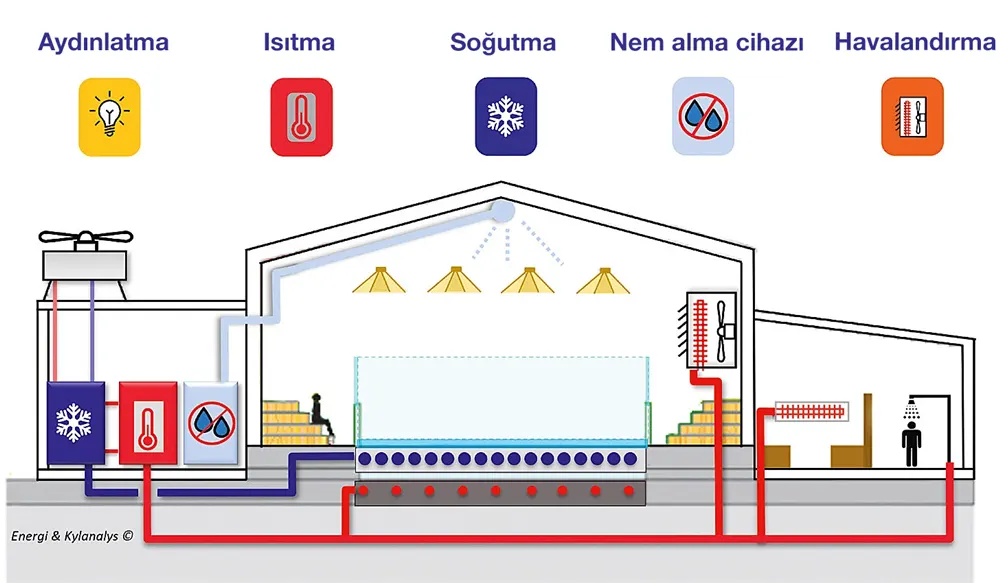
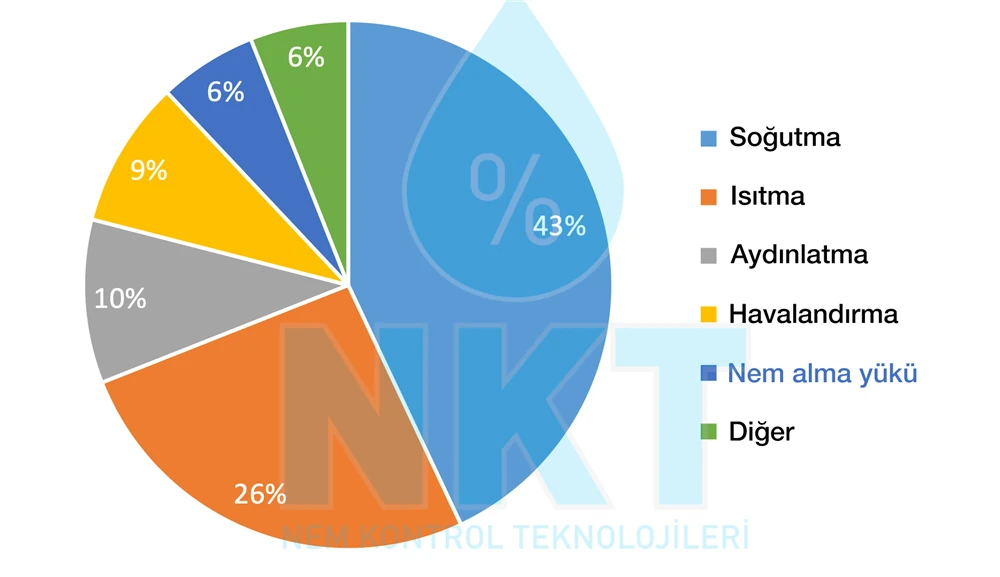
Maintaining the correct humidity level in the air of enclosed ice rinks is directly critical to ice quality and the operational energy efficiency of the facility. Although humidity control ranks fifth after cooling, heating, lighting, and ventilation in terms of facility operating efficiency, even a minor oversight in the dehumidification system can cause cascading problems throughout the entire control system.
How High Humidity Affects Ice Quality
Elevated humidity levels in the air of enclosed ice rinks directly affect both ice quality and the facility's operational efficiency. Particularly factors such as actively moving ice hockey players, spectators in passive positions, and air leakage from the external environment (infiltration) are direct contributors to increased humidity levels within the rink. Increasing humidity condenses on the cold ice surface, creating a thin layer of water or frost. Especially on surfaces exposed to excessive relative humidity, frosting occurs. As a result of frosting, the ice's gliding quality rapidly decreases, and after deformation, the surface inevitably transforms into a rough structure called slow ice. Ice that should normally be smooth and hard becomes rough due to humidity; this causes athletes to experience sudden speed changes, makes gliding movements difficult, and negatively affects their performance. In sports such as figure skating and ice hockey, athlete safety is at serious risk. An uneven ice surface can cause athletes to accelerate unevenly, decelerate unpredictably, fall, and become injured.Condensed water that accumulates on the ice surface eventually freezes, causing unintended thickening of the ice layer. The thickening ice layer typically does not create a homogeneous surface form, resulting in different heights in different areas of the rink. This not only damages surface smoothness but also causes anomalies in athlete movements. Additionally, increased ice thickness places additional load on the cooling system working beneath the rink. To keep the thick ice mass cold, the cooling system must work harder, which increases energy consumption and shortens the lifespan of cooling equipment.
The use of an industrial dehumidification unit with the correct capacity and proper configuration stands out as one of the most effective solutions in protecting ice quality and ensuring operational system integrity. In ice rinks without dehumidification equipment, the ice surface must frequently be scraped and resurfaced (ice resurfacing). In a typical ice rink, surface resurfacing is performed 5 to 10 times daily, and each time 400 to 700 liters of water are consumed. Surface scraping and water resurfacing operations result in both time and significant cost loss.
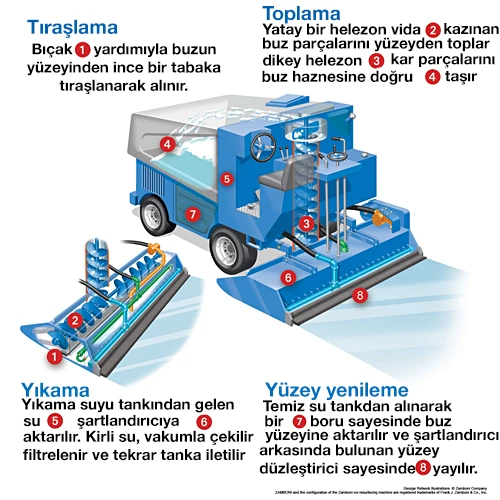
Especially in ice hockey rinks meeting international standards, ice samples are collected by measuring ice thickness from 25 different points to preserve ice quality. Modern resurfacing machines measure ice thickness with the help of ultrasonic sensors while smoothing the surface. In advanced ice rinks, the correlation between water consumed during resurfacing and energy consumed for ground cooling is monitored, allowing the direct measurement of dehumidifiers' contribution to system integrity.
On the other hand, high humidity affects not only the ice surface but also other structural elements of the facility. If condensation occurs on ceilings, bleachers, and walls, it eventually leads to serious problems such as corrosion, mold formation, and structural deterioration. In the long term, these problems increase the facility's maintenance costs and shorten the lifespan of equipment. Cold and humid air creates an uncomfortable environment for spectators and facility staff. Due to the meeting of high humidity levels with the cold floor surface, fog formation occurs, restricting the field of view not only of athletes but also of spectators.
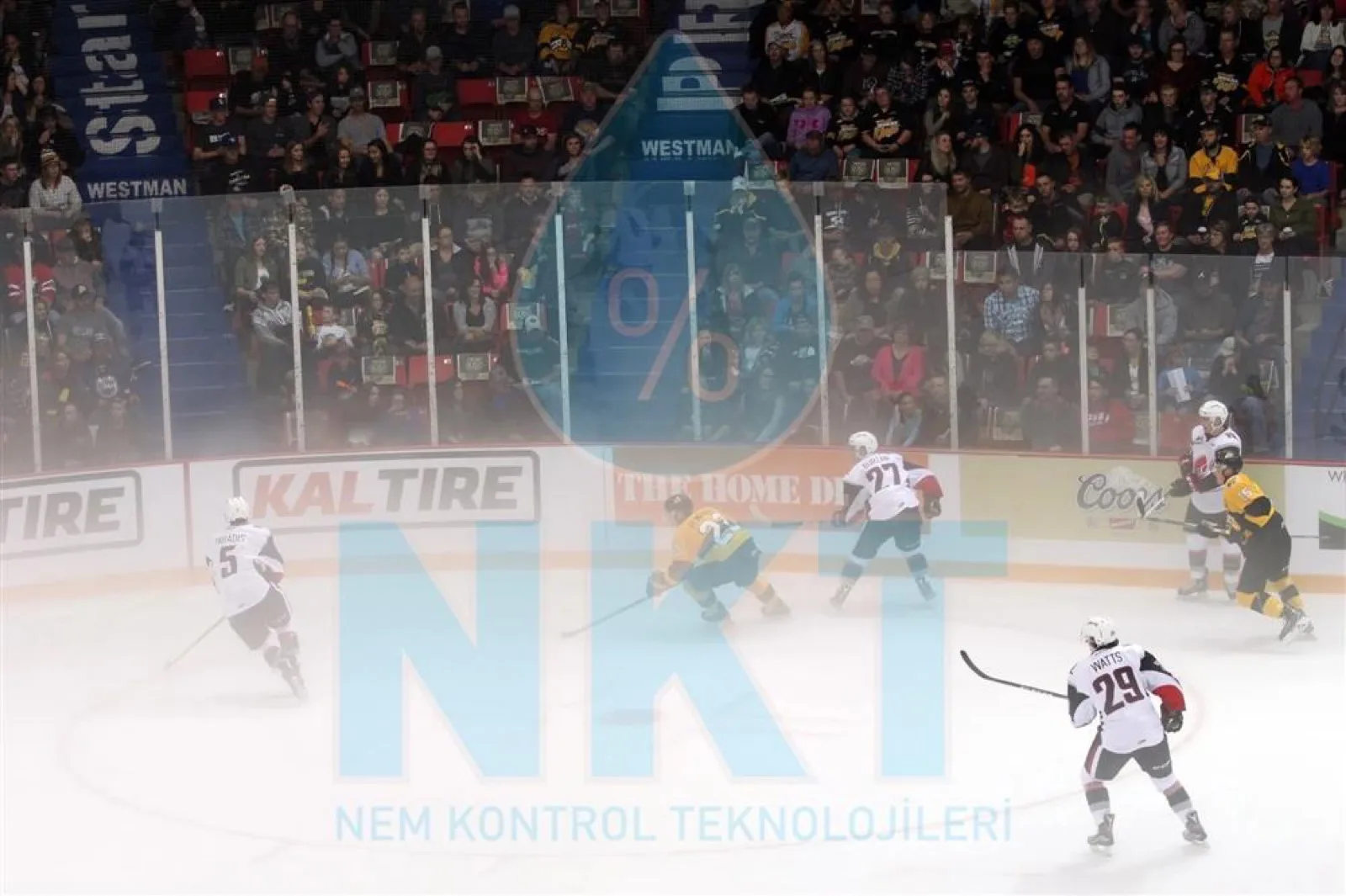
When ambient air is maintained at the desired dew point level using TFT - Italy industrial type silica gel rotor dehumidifiers, both ice quality and viewing comfort are preserved. To ensure humidity control in an ice rink, a rotor-type industrial dehumidification unit must be used. Additionally, in large facilities, solutions where these dehumidifiers are integrated with HVAC components or included as separate units in the ventilation system are also common. The working principles, advantages, and disadvantages of these systems are discussed below.
How a Silica-Gel Rotor Dehumidifier Works
Chemical (industrial type rotor) dehumidification units work on the principle of retaining moisture in the air using a hygroscopic (moisture-attracting) material. For this purpose, rotary wheel systems called desiccant rotors are commonly used. A desiccant rotor is a drum with a honeycomb porous structure and a surface coated with a drying material such as silica gel. When the system operates, humid air flow (process air) is passed through a specific section of this rotating rotor. Water vapor in the air adheres to the desiccant material, which acts like a super absorber, separating it from the air. While dry air is blown toward the rink, the rotor continuously rotates, carrying the moisture-laden surface to a second air channel within the unit. In this second section, the rotor is dried by a hot air stream called regeneration (reactivation) air: Heated regeneration (reactivation) air evaporates the moisture captured by the rotor and transfers it to the external environment, thus renewing the desiccant material (making it able to absorb moisture again). In a typical desiccant dehumidifier, electric heaters or natural gas/steam coils are used to heat the regeneration air. When the process is repeated continuously, the unit returns the humid air taken at its inlet to the environment in a continuously dry and slightly warmer state.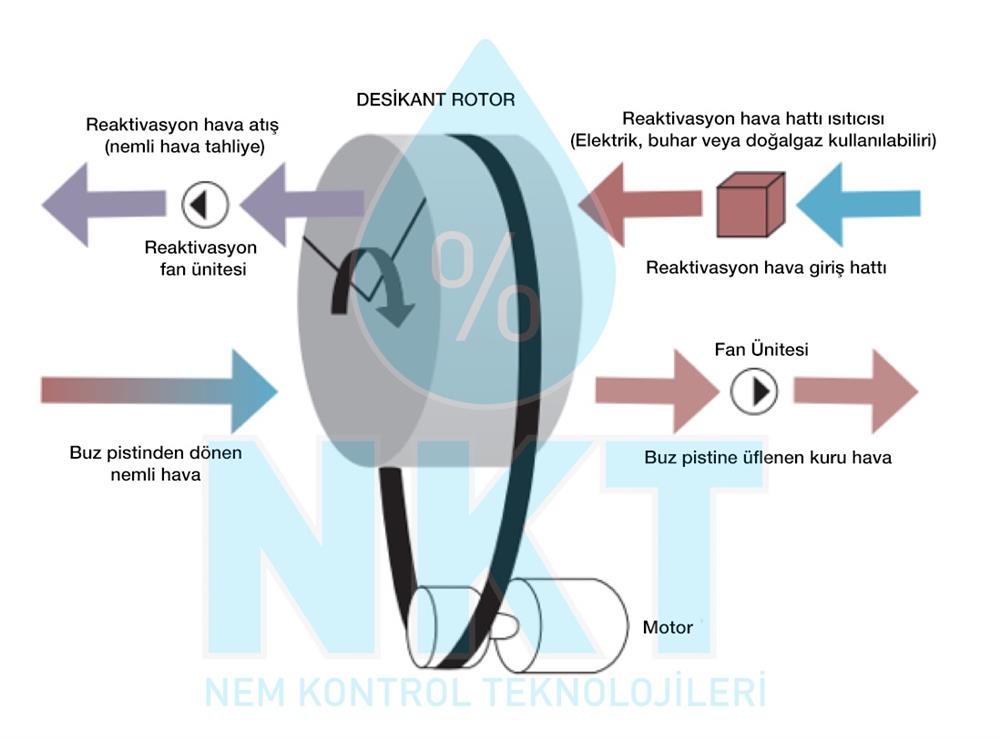
Figure 1: Schematic representation of a rotary rotor industrial desiccant dehumidification unit.
Advantages of Desiccant Systems
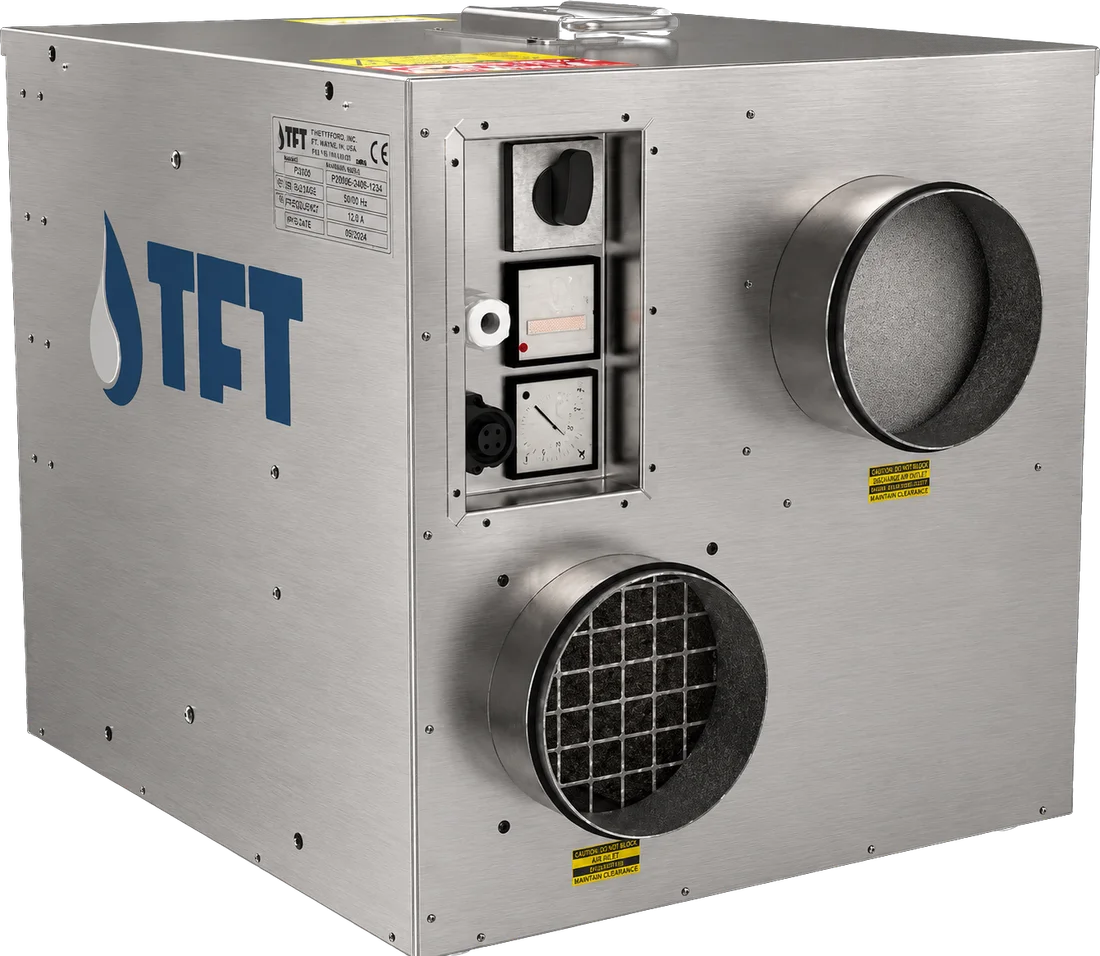
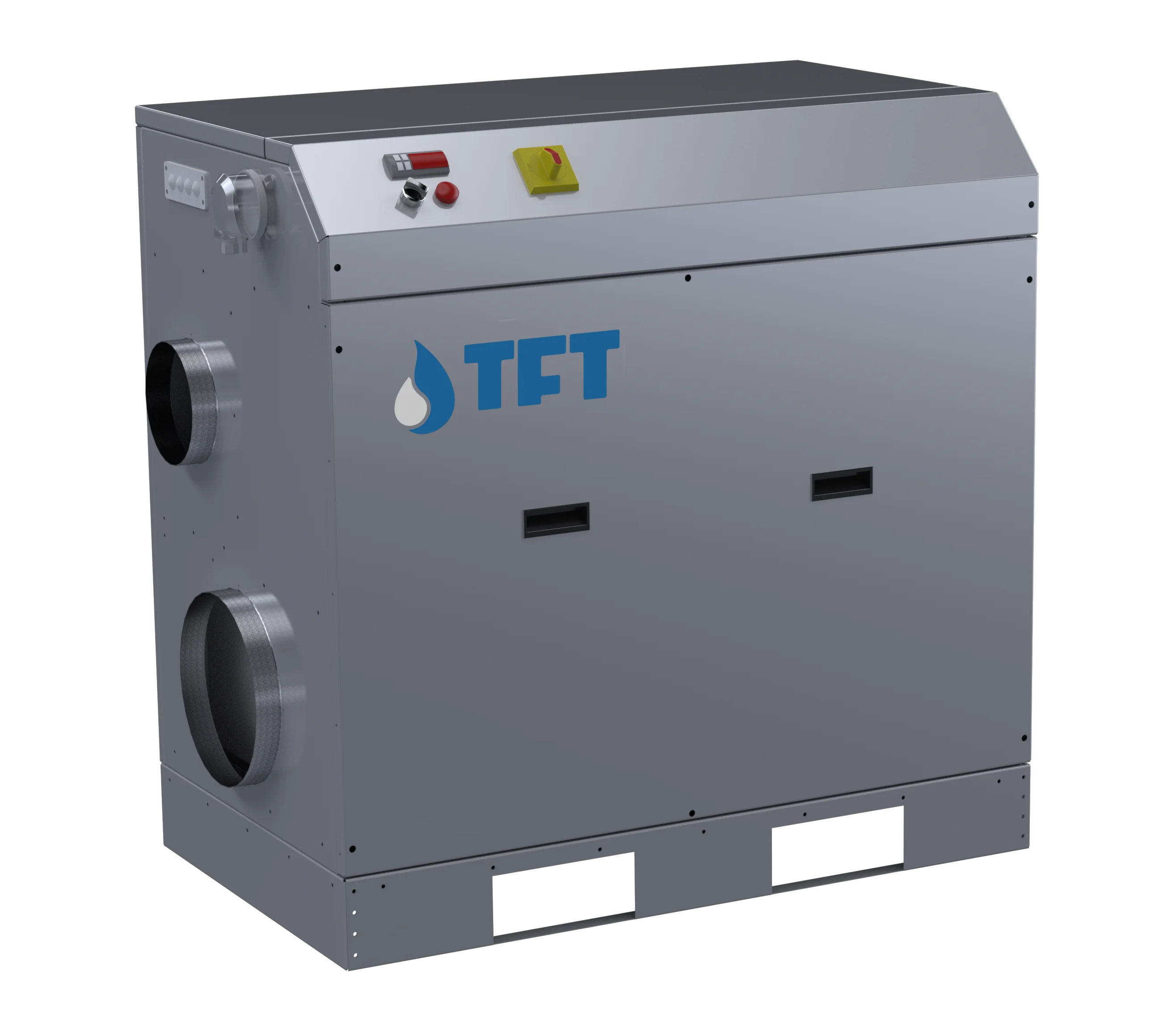
The advantages of desiccant systems (rotor-type industrial dehumidification units) become particularly evident in low-temperature environments such as ice rinks. Since these systems can operate independently of ambient temperature and do not use a refrigerant to discharge humidity, they provide high moisture removal capacity even in cold air conditions. Since chemicals such as silica gel can attract moisture down to very low dew points, it is possible to dry air with desiccant units down to 30-40% relative humidity. In fact, today with a commercially available desiccant dehumidifier of appropriate capacity for industrial applications, 30-40% relative humidity can be provided in the rink environment year-round, free from external air conditions, without fog and condensation.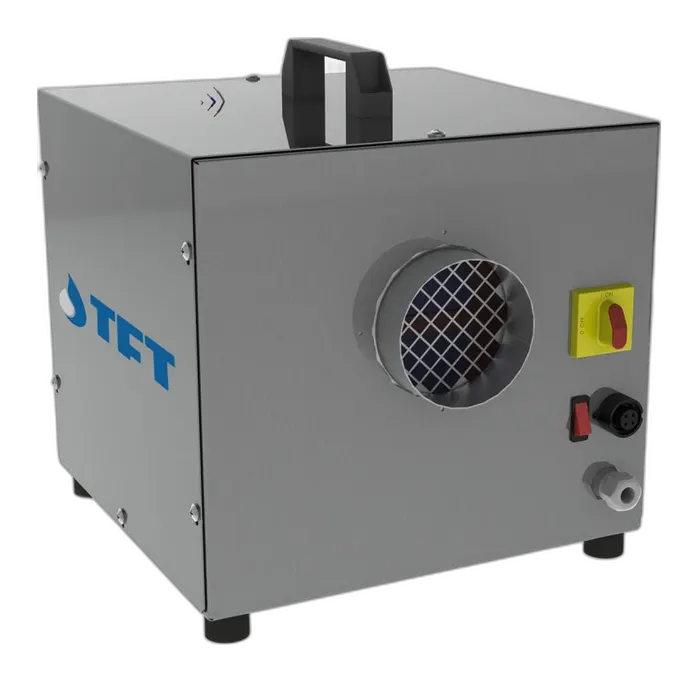
Target Dew Point and Ideal Humidity Level
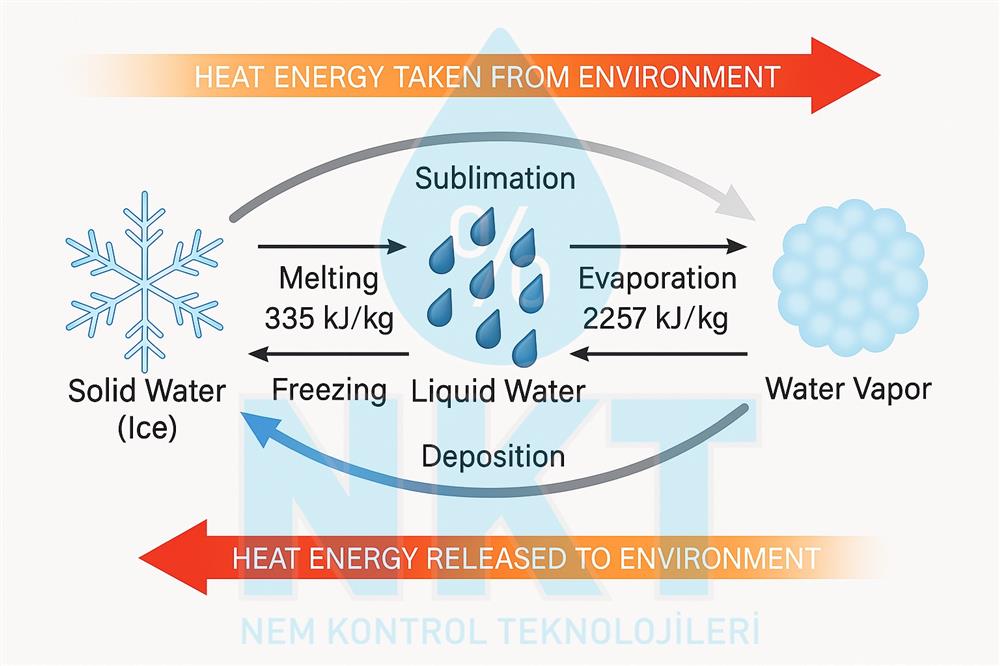
In a typical ice skating rink, the humidity level in the ambient air must be kept below a certain level to prevent excessive condensation on ice surfaces. The recommended upper limit for this purpose is a maximum of 4.3 grams of water vapor per kilogram of air. The dew point temperature corresponding to this value is approximately 2 degrees C.If the humidity level in the ambient air drops below 3.7 grams of water vapor/kg of air (which means a 0 degrees C dew point), there is no need to actively perform dehumidification. Because when air is this dry, water evaporation from the ice surface increases instead. This can lead to unintended thinning of the ice and degradation of surface quality.
One of the principal mistakes made by designers is targeting a dew point below the freezing temperature of water's dry bulb temperature. For this reason, the ice surface is continuously thinning, and analysis has shown that disproportionate depressions form on the ice rink surface. Excessively low partial vapor pressure causes water applied to the surface during resurfacing to evaporate before freezing. Therefore, water must be in equilibrium with air that has controlled dryness and low dew point.
Choosing the Right Sensor: Dew Point or Relative Humidity?
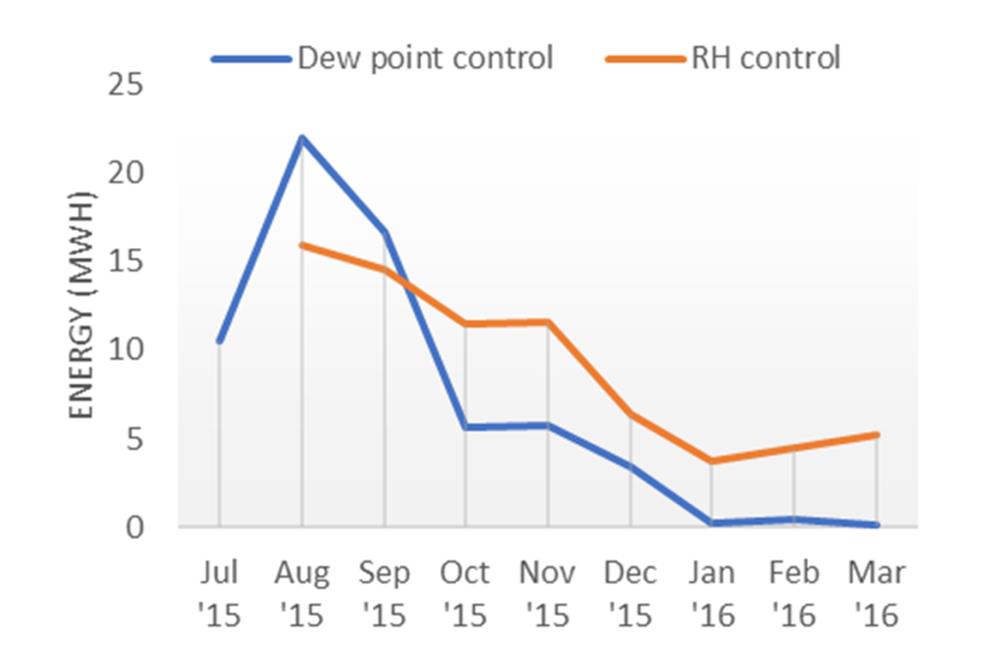
One of the common mistakes is also the selection of sensors integrated with industrial dehumidifiers. When the working principle of rotor-type industrial dehumidification units is examined, systems controlled by dew point or humidity ratio (absolute humidity) automatically stop working when the environment's humidity need decreases. In contrast, systems working only with relative humidity (RH) control generally continue to operate and require very precise PID adjustments.The fundamental reason for this is a condition that emerges in the low air temperatures in ice rinks. In cold weather, even though the amount of water vapor in the air (absolute humidity) and dew point are already low, the relative humidity (RH) value can appear high because the air temperature is very low. In other words, even if the air is almost dry, because it is cold, the RH ratio appears high. This causes dehumidifiers working only according to RH values to unnecessarily continue operating. However, systems that work according to dew point or actual humidity levels activate only when the environment truly needs to be dried and stop when there is no longer a need. For this reason, when configuring industrial dehumidifiers for ice rinks, adding a dew point sensor or preheater emerges as an important factor in the unit's ability to perform stable humidity control.
Energy Efficiency and Heat Recovery
Another important advantage is the ability to increase the efficiency of industrial rotor-type desiccant dehumidifiers through heat recovery and waste heat utilization. For example, in many ice rinks, waste heat from the condenser of the rink's cooling system or hot gas from compressors is used as preheating for the regeneration air of the desiccant rotor. Thus, dehumidification is performed with much lower energy expenditure. Thanks to such integrations, industrial dehumidifiers can provide significant operational cost savings compared to traditional cooled systems. In a rink used in Europe, the use of industrial dehumidification with air conditioning can reduce energy consumption by an average rate of up to 70% compared to an equivalent cooled system. Additionally, with stable humidity control, other equipment and surfaces within the facility are not exposed to humidity, so it has been found that maintenance and repair costs are also reduced in the long term.Looking at the disadvantages of rotor-type dehumidifiers, first of all, apart from recovery heat, these units require additional energy input for heating purposes. When electrical resistances are used to heat the regeneration (reactivation) air, energy consumption can be high; therefore, most facilities prefer natural gas burners or steam as a cheaper energy source. Additionally, the presence of moving parts such as the rotating rotor and fans within the unit creates mechanical maintenance requirements (e.g., rotor bearing maintenance, belt changes, filter maintenance, periodic inspection of desiccant material, etc.)
Today, in many countries, exceeding certain humidity limits in ice skating or ice hockey facilities is also prevented by legal regulations.
Neglecting humidity control can also have devastating effects on the structural integrity of the facility. Water vapor condensing on cold surfaces eventually leads to corrosion in ceiling beams, walls, and metal surfaces, and in wooden structures, mold and fungal growth. If humidity control is not performed, serious damage to the facility's structural elements is inevitable within a few seasons. Such risks increase both maintenance costs and shorten the facility's lifespan if an effective dehumidification system is not established.
Global Applications and Examples
The importance of humidity control systems in enclosed ice rinks has been recognized on a global scale for many years. As much as in cold climate countries, stable humidity control in year-round operating ice arenas in hot and humid regions is subject to standard protocols. Especially in places where ice sports are widespread such as Northern Europe, Canada, and the USA, almost all modern facilities have professional dehumidifiers.
Global Applications and Examples
When examining ice rinks hosting major sporting events worldwide, it is generally observed that integrated humidity control solutions are implemented. For example, in the 2006 Turin Winter Olympics curling arena, special desiccant dehumidifiers were used to obtain high-quality ice and the ambient dew point was kept under continuous control. Similarly, after early fog and dripping problems experienced in NHL (North American National Hockey League) team arenas, a shift to mostly chemical dehumidifiers occurred from the 1990s onward.Humidity control in ice rinks is technically mandatory, operationally profitable, and critically important for user experience. It is an undisputed fact that high humidity damages ice quality, endangers safety, and disrupts facility operations with fog and condensation. Dehumidifiers developed to combat these problems have a single goal: to keep the rink's air dry and stable. Global applications show that properly designed humidity control returns to rink operators lower energy bills, less maintenance requirements, and more satisfied users. As ice rinks become more widespread, awareness in this field is increasing and integrated systems with integrated modern dehumidification technologies are being preferred. Whether it is an Olympic-level hockey arena or a public ice rink, humidity control is indispensable for ideal ice quality and a safe environment. This is made possible through appropriate dehumidifier investment and correct operational strategies. Thus, ice sports enthusiasts can enjoy the ice under the best conditions at any time of the year.
HVAC Integrated and Hybrid Solutions
HVAC-Integrated and Hybrid Solutions
In large-scale ice facilities, humidity control is often performed either through the use of industrial dehumidifiers as mentioned above or through use integrated with the general HVAC system. HVAC integrated solutions mean the inclusion of a dehumification unit in the rink's ventilation, heating, and cooling system. For example, cooling coils placed in the rink's fresh air units cool the air as it enters the system and remove moisture, while a dehumidification unit directly working in the interior environment integrated via automation with the central HVAC system can be used outside the duct system. In such a system, hot and humid air coming from outside is first passed through a cooler-dehumidifier cooling coil and made dry and cold, while at the same time an industrial dehumidifier provides air with low dew point to the interior environment, helping achieve optimal humidity conditions. In this way, with a single air conditioning unit, fresh air supply and heating-cooling are provided, while interior humidity balance is maintained with a single dehumidifier.Hybrid solutions are special systems created by combining HVAC systems and chemical dehumidifiers in a single unit. In some advanced units, a cooling circuit working on the heat pump principle is integrated to provide pre-heating for the reactivation of the desiccant rotor contained in the chemical dehumidifier. The unit contains exchangers that serve as both evaporator and condenser. Process air passes through a pre-cooling battery, condensing a portion of its moisture, and then the desiccant rotor dehumidifier absorbs the remaining moisture. The air on the regeneration side of the rotor is pre-heated with waste heat from the system's condenser, allowing lower regeneration energy expenditure. Although these types of hybrid systems have high investment costs, they are currently considered one of the highest energy efficiency solutions. These systems, produced by TFT - the Italian dehumidifier manufacturer, offer solutions providing energy savings of up to 65%. In modern ice rinks, the most efficient and effective humidity control is often provided through energy recovery and hybrid systems. Which method is preferred is shaped according to the facility's size, external climate conditions, budget, and operational needs.
As NKT - Humidity Control Technologies, with our expert engineering team and superior Italian quality equipment portfolio, we work continuously to provide our clients with reliable and sustainable solutions tailored to their needs in ice rink projects.


